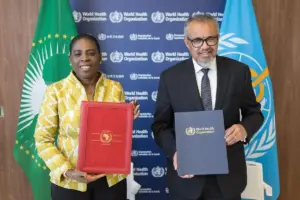






As the global health community prepares to convene in Geneva for the Seventy-seventh World Health Assembly, a significant diplomatic and humanitarian milestone has been reached to fortify the world’s frontline defense against health crises. The Qatar Fund for Development (QFFD) and the World Health Organization (WHO) have officially formalized a Core Contribution Agreement, marking a renewed commitment to strengthening global health systems and ensuring the implementation of the WHO’s extended Thirteenth General Programme of Work (GPW13).
The agreement, which facilitates a US$ 4 million contribution from the State of Qatar to the WHO via the QFFD, serves as a cornerstone for collaborative international efforts aimed at addressing the most pressing health challenges of the modern era. This infusion of capital is designed not merely as a transaction, but as a strategic investment in the organizational capacity of the WHO, allowing the global health agency to navigate the complexities of a post-pandemic world while remaining responsive to localized and regional emergencies.
For the State of Qatar and the QFFD, this partnership is a direct reflection of a long-standing national policy to prioritize human development and health equity as pillars of their foreign aid strategy. By directing resources through the WHO’s core funding mechanisms, Qatar is emphasizing the necessity of supporting the overarching mission of the organization rather than limiting aid to fragmented, siloed projects. This approach ensures that the WHO maintains the agility required to tackle both chronic, systemic health issues and sudden, acute outbreaks that threaten to destabilize vulnerable populations.
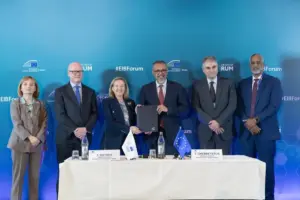
Mr. Sultan Ahmed Al-Aseeri, Acting Director-General of the Qatar Fund for Development, highlighted the moral and strategic imperatives behind the donation. “Our partnership with WHO is a testament to our dedication to leaving no one behind in the pursuit of health equity worldwide,” Mr. Al-Aseeri stated. “By supporting WHO, we aim to empower communities, enhance healthcare access, and contribute to a healthier future for all.” His remarks underscore a broader philosophy within the QFFD: that global stability is inextricably linked to the health outcomes of the most marginalized populations. Through this support, the QFFD seeks to bridge the gap between resource-rich nations and those struggling to provide basic care to their citizens, thereby fostering a more equitable global environment.
The timing of this agreement is particularly poignant. As the Seventy-seventh World Health Assembly approaches, delegates from across the globe are tasked with evaluating the progress of the extended Thirteenth General Programme of Work. This program, which acts as the roadmap for the WHO’s activities, is ambitious in its scope. It seeks to tackle the dual burden of communicable and non-communicable diseases, bolster the resilience of national health systems, and promote health throughout the entire life course—from neonatal care to geriatric support.
For the WHO, the influx of flexible funding from partners like Qatar is a critical lifeline. In a global landscape defined by volatile health threats, the ability to pivot resources quickly is often the difference between a contained outbreak and a full-scale regional crisis. Dr. Tedros Adhanom Ghebreyesus, the Director-General of the WHO, expressed his gratitude for the commitment shown by the State of Qatar, noting the strategic importance of the funding’s flexibility.
“Flexible funds are critical for WHO’s life-saving work,” Dr. Tedros explained. “With thanks to long-standing partners like the Qatar Fund for Development, WHO can use these funds to swiftly respond to global health needs as they arise. I am grateful to the State of Qatar for their support and for allowing us the flexibility we need to carry out our mission and mandate.”
The flexibility Dr. Tedros refers to is essential for addressing the realities of the modern health landscape. Unlike earmarked funding, which is restricted to specific projects or regions, core contributions allow the WHO to address gaps in service, fund administrative necessities that underpin global health coordination, and react to emergencies—such as natural disasters or civil conflicts—where the need for medical intervention is immediate and unpredictable.
The extended Thirteenth General Programme of Work, which this contribution will support, is a comprehensive framework that acknowledges the interconnectedness of modern health challenges. It moves away from the traditional, narrow focus on specific diseases to a more holistic view of health as a fundamental human right that requires robust social, economic, and medical infrastructure. By addressing the social determinants of health—such as access to clean water, nutrition, and education—the GPW13 seeks to build systemic resilience.
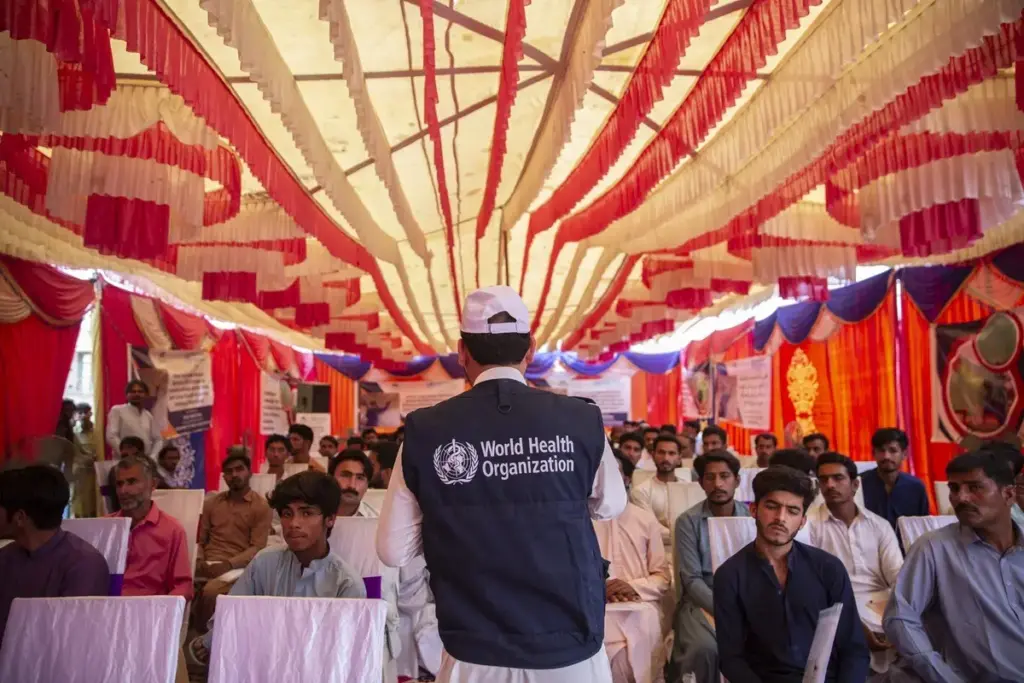
A key focus of the partnership between QFFD and the WHO will be the delivery of aid to countries in crisis and post-crisis contexts. This is a focal point for both organizations. In regions where health systems have been decimated by war, climate change, or political instability, the presence of the WHO is often the only link to essential medical services for millions of people. By aligning the QFFD’s mandate to provide aid where it is needed most with the WHO’s operational expertise, the two entities are creating a model of humanitarian cooperation that emphasizes efficiency and impact.
The collaboration also reflects a growing recognition that global health security is a collective responsibility. In an era of interconnected travel and trade, the health status of one nation can rapidly impact the security of others. Consequently, the QFFD’s investment is not just an act of altruism; it is a contribution to a global security architecture that relies on the WHO as its central pillar.
As the international community prepares to gather in Geneva, this agreement serves as a clear signal of the collaborative spirit required to meet the challenges of the coming decade. The partnership between the Qatar Fund for Development and the World Health Organization acts as a beacon of hope, demonstrating that through sustained commitment and strategic alignment, significant progress can be made toward achieving the shared goal of a healthier, more resilient world.
The impact of this funding will be measured in the coming years by the WHO’s ability to sustain its programs, scale its response to crises, and fulfill its mandate to promote the highest attainable standard of health for all people. As the world continues to navigate the complexities of climate-induced health shifts, antimicrobial resistance, and the persistent threat of emerging pathogens, such partnerships remain the bedrock of the global response.
The agreement serves as a template for how bilateral partnerships can effectively support multilateral institutions. By trusting the technical expertise of the WHO and providing the necessary fiscal flexibility, the State of Qatar and the QFFD are helping to ensure that the WHO remains a nimble, effective, and empowered advocate for health worldwide. As discussions begin at the Seventy-seventh World Health Assembly, the success of this collaboration will likely be cited as an example of how targeted, flexible, and strategic partnerships are essential to maintaining the integrity and efficacy of the global health system.
Ultimately, the goal remains the same as it has always been for the World Health Organization: to ensure that every individual, regardless of their location or economic circumstances, has access to the care they need to lead a healthy and productive life. With the support of partners like the Qatar Fund for Development, the WHO is better positioned to transform that aspiration into a reality, navigating the turbulent waters of global health with the resources and the flexibility required to save lives and build a more stable future for the global community.