


For the vast majority of the public, the inner workings of a research laboratory remain a complete mystery. While the medical and scientific communities often frame animal research as a necessary, albeit complex, pillar of modern progress, the day-to-day reality of the facilities where this work occurs is rarely glimpsed by the outside world. It was this veil of secrecy that prompted award-winning writer and investigator Lindsay Oliver to go undercover. Her objective was not to manufacture outrage, but to document the unvarnished truth of how animals are treated and how human beings reconcile their personal ethics with the demands of such an environment.
The result of her investigation is a riveting new book, Marshmallows Are Their Favorite: Undercover at a Primate Lab. Through her narrative, Oliver provides a rare, firsthand account of the nonhuman residents trapped behind laboratory walls and the complex, often conflicted humans who serve as their primary caretakers.
The Motivation Behind the Mask
In a recent conversation with researcher and author Marc Bekoff, Oliver reflected on the driving force behind her work. When asked why she chose to write the book and how she settled on its evocative title, Oliver was candid about the emotional weight of her experience.
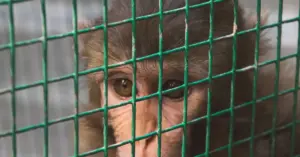
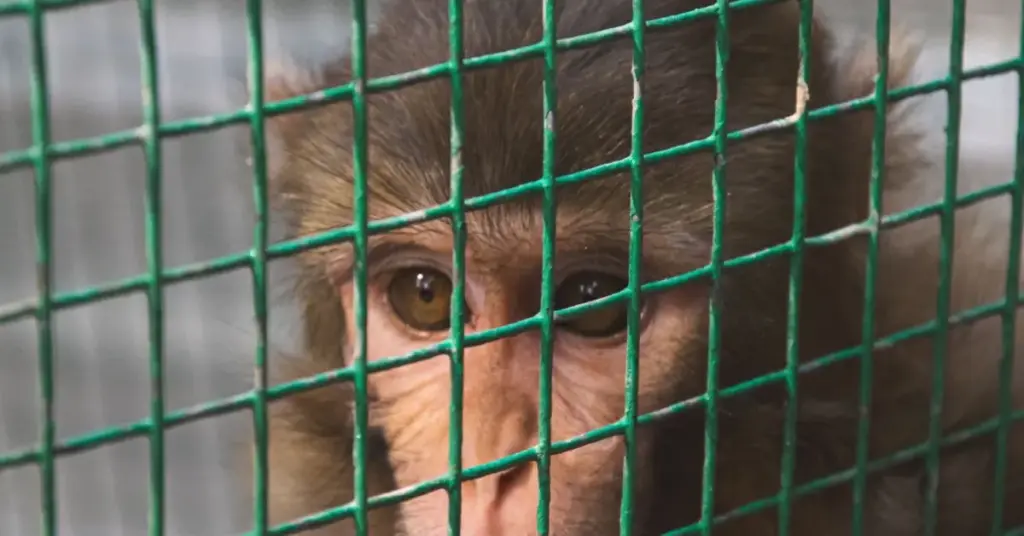
"Honestly, I wrote this book because I owe it to the monkeys," she explained. "When I first walked into that facility and saw cages lining the cinderblock walls, with monkeys watching me through the bars, I knew almost immediately that I needed to write about it."
For Oliver, the title Marshmallows Are Their Favorite was a deliberate choice designed to humanize the subjects of her investigation before a reader even opened the cover. "We all have favorites, and a favorite is personal," she noted. "It tells you there is an individual there with preferences, opinions, and things they look forward to. I wanted readers to see the monkeys as individuals."
Oliver’s journey toward this investigation was deeply personal, rooted in a childhood aspiration to become a veterinarian—a dream that collided head-on with the realities of animal testing during her college years. As a student who had once walked out of a high school science class to protest the dissection of a frog, she found herself unable to reconcile the path of a veterinarian with the requirements of laboratory science. She chose to walk away from that career path, instead dedicating her life to becoming an undercover animal cruelty investigator. This particular laboratory case, which forms the basis of her book, was her first of its kind, and she admits that she was unprepared for the profound connection she would form with the primates she encountered.
Bridging the Gap Between Public and Laboratory
When discussing the intended audience for her book, Oliver rejects the idea that such a story is only for activists or those already invested in animal welfare. "I know ‘everyone’ is an obnoxious answer, but that’s what the monkeys deserve," she said. She aims to reach the person who would instinctively shy away from a book about a primate lab, assuming it is either too heavy or too niche for their interests. By weaving in the tension of her undercover work—the covert cameras, the double life, the high-stakes close calls, and the surprising, nuanced relationships she built with her coworkers—she hopes to draw in a broad readership.
Importantly, Oliver also hopes the book reaches those currently working within the industry. She addresses those who may feel conflicted about their roles or those who have been discouraged from expressing empathy, fearing that caring too much might be perceived as a professional liability. "It isn’t true," she asserts. For the reader who feels intimidated by the subject matter, Oliver emphasizes that the book was written with them in mind, designed to be an accessible, human-centric narrative rather than a dry academic report.
The Normalization of the Abnormal
A central theme of the book is the chilling ease with which profound ethical concerns become, quite literally, "just another day at the office." Oliver describes the facility as being located in a mundane setting—a town with a Target on one corner and a Starbucks on another—underscoring how easily this hidden world exists in plain sight.
"The lab is a workplace, which sounds obvious until you are standing inside it," Oliver observed. "People clocked in, complained about schedules, gossiped, flirted, and planned their weekends while monkeys screamed and pounded on the walls of their cages. What felt surreal to me was just another Tuesday at the lab."
This normalization is sustained by language that dehumanizes the animals, such as referring to them by ID numbers or as "subjects." However, Oliver’s account challenges this clinical detachment. She highlights the distinct personalities and individual quirks of the monkeys—such as "Bo," who refused to eat pretzels, signaling his dislike with a gesture that felt like a personal affront. These moments of connection were transformative, shifting the investigator’s perspective and highlighting the intelligence and sensitivity of the beings caught in the cycle of research.
The humans, too, were more complex than she initially assumed. While some employees adopted a hardened, indifferent persona, others struggled with their duties, finding small, quiet ways to alleviate the suffering of the animals in their charge. The book captures the strange, often dingy reality of undercover work, stripping away the glamorous "James Bond" tropes in favor of the reality of microwave meals, malfunctioning equipment, and the relentless pressure of maintaining a cover.
A New Perspective on Research Ethics
Oliver differentiates her work from previous literature by moving away from purely scientific or policy-based analysis. While she acknowledges the importance of existing research on ethics and animal experimentation, her book offers something different: an undercover employee’s perspective.
"I became the inexperienced new technician, learned the routines, wore hidden cameras, made friends, and tried to help the monkeys without revealing why I was really there," she explained. By documenting her journey from being hired to her final shift, she invites readers to experience the laboratory environment alongside her, navigating the same workplace dynamics and ethical dilemmas.
Ultimately, Oliver hopes that by sharing the lives of these animals, she can encourage a re-evaluation of the use of nonhumans in research. She points to a shifting landscape in the scientific community, citing the FDA’s 2025 roadmap for reducing animal testing. The FDA has noted that over 90% of drugs that appear safe and effective in animal models fail in human trials, a statistic that challenges the long-held narrative that animal testing is an essential, high-success-rate component of life-saving medical advancement.
"Continuing to rely on methods that poorly predict human outcomes harms animals and delays the cures we all want," Oliver stated. As science increasingly pivots toward technologies that prioritize human biology, the challenge remains in translating that policy into day-to-day practice. For Oliver, the most effective way to spark that change is to bring the public face-to-face with the reality behind the laboratory doors, hoping that by meeting these individuals—the monkeys—people will find a reason to act.