










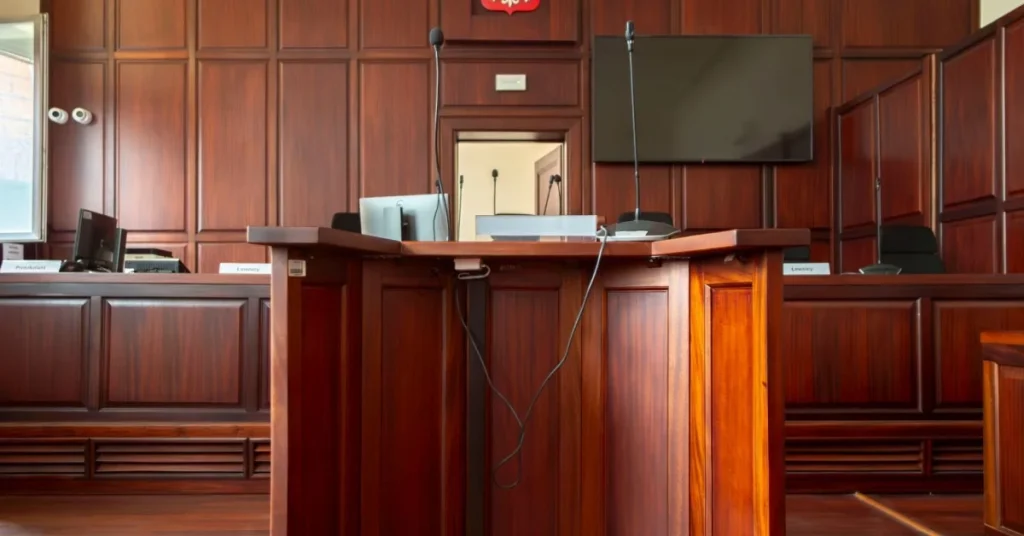
High-profile legal cases—ranging from complex murder trials to contentious deportation hearings—frequently dominate the modern news cycle. They capture the public imagination, sparking intense debate and social media discourse. However, obscured by the legal maneuvers, courtroom theatrics, and the relentless churn of headlines are the human beings at the center of these processes. While the public consumes these cases as narratives of justice or scandal, the individuals involved are undergoing a profound, often life-altering experience that extends far beyond the final verdict.
The reality of any major legal proceeding is that it is inherently costly, exhausting, and deeply stressful. Yet, when one looks past the procedural surface, specific psychological stressors emerge that can make the experience profoundly damaging. Trauma, a term often used loosely in contemporary society, is a reality for many caught in the gears of the justice system. For those involved in lengthy, high-stakes litigation, the psychological impact can be severe, characterized by an internal experience of instability that transcends the specific circumstances of the case itself.
It is a common misunderstanding that trauma is solely defined by an external event. In truth, trauma is fundamentally about the internal experience—how an individual processes, reacts to, and internalizes a situation. While two people may experience the same external conditions, their internal landscapes may differ significantly. Nevertheless, intensive court involvement represents a set of circumstances that are almost universally taxing, creating a unique environment where the potential for psychological trauma is heightened. Three specific facets of the courtroom experience serve as catalysts for this deep-seated distress.

The Erosion of the Just-World Hypothesis
Central to human psychological stability is the "Just-World Hypothesis," a cognitive bias that functions as a bedrock for our sense of security. Most people operate under the inherent belief that good things happen to those who are virtuous and that bad things are reserved for those who deserve them. This belief allows individuals to navigate their daily lives with a sense of order and fairness. When an individual is suddenly thrust into a legal nightmare—whether they are a victim of a crime or someone facing false accusations—this fundamental worldview is often shattered.
The realization that one’s actions, kindness, or conscientiousness do not guarantee safety or fairness can be profoundly disorienting. When a life-changing event turns an individual’s world upside down, the shock of that transition can leave them dazed and unable to reconcile their previous understanding of the world with their new reality. This cognitive dissonance often leads to a sense of helplessness. Once an individual loses the belief that they can influence their own safety or protect their families, they may spiral into a state of "learned helplessness."
This transition from a trusting to a distrusting stance is often a slow, agonizing process. As individuals attempt to make sense of their situation, they frequently construct narratives and seek out motives in an effort to regain control. However, these attempts to find meaning in a chaotic legal environment are often based on mistaken assumptions or incomplete information. The result is a persistent feeling that the safety net they relied upon has vanished, leaving them exposed to a system that appears indifferent to their sense of justice.
The Dehumanizing Impact of Legal Language
The language of the court is fundamentally different from the language of everyday life. Designed to be precise, statute-driven, and technical, legal jargon serves the necessary function of upholding the law and ensuring a degree of procedural consistency. However, this clinical precision often feels profoundly cold, impersonal, and overly simplified to the individuals whose lives are being parsed. While legal counsel must maintain a professional distance to function effectively, this detachment can leave the human beings involved feeling misunderstood and reduced to mere data points or fragments of evidence.
For those outside the legal profession, the court environment can feel like a foreign land where the inhabitants speak an entirely different dialect. Navigating the nuances of courtroom communication—understanding the intent behind specific questions, determining how to respond without compromising one’s position, and deciphering complex filings—is an overwhelming endeavor. The bureaucratic buffer of "legalese" acts as a barrier, often making the individual feel as though their personal, life-shattering trauma is being sterilized or minimized.
This reduction of human experience into statutory components can be deeply demeaning. When an individual’s lived experience is translated into a set of arguments or defenses, the personhood of the individual is often lost in the shuffle. This lack of connection between the human reality of the situation and the sterile environment of the courtroom can lead to a significant loss of confidence, heightened trepidation, and a pervasive sense of distress. The legal system, while designed to protect individuals from arbitrary judgment, can paradoxically feel like it is ignoring the very humanity it is meant to serve.
The Destabilizing Nature of Long-Term Uncertainty
Perhaps one of the most debilitating aspects of any serious legal proceeding is the prolonged period of uncertainty. Legal battles are rarely quick; they often stretch across months or years, requiring individuals to exist in a state of suspended animation. This constant waiting, preparing, and navigating a complex legal labyrinth forces the human nervous system into a chronic state of hypervigilance. Humans are not evolutionarily designed to remain in a sustained "fight-or-flight" response, yet this is exactly what an ongoing legal case demands.
The psychological toll of this state manifests in several ways, including anticipatory anxiety—the fear of what might happen in the future—and anticipatory grief, which involves the dread of potential loss. In some cases, individuals experience "ambiguous loss," a type of grief that occurs when a situation remains unresolved and the outcome is unclear. This state of limbo is inherently destabilizing, as it interferes with an individual’s ability to plan for the future, invest in their community, or maintain a sense of stability in their daily life.
The effort required to carry on with professional and personal responsibilities while a potentially life-changing decision hangs over one’s head is Herculean. When the brain cannot rely on routines or predictable outcomes, the resulting stress can wreak havoc on an individual’s physical and mental health, affecting their relationships, their mood, and their overall sense of self-confidence. Like being trapped in an endless maze with no visible exit, the state of ongoing limbo forces the mind and body to endure a level of tension that is unsustainable in the long term.
Cultivating Perspective
In an era of instantaneous news cycles and constant social media commentary, it is easy to become caught up in the drama of a high-profile case. The public often forms opinions based on the initial narrative, the most sensational photos, or the most aggressive headlines. However, understanding the human factors involved in these cases is essential. While perspective cannot alter the facts of a legal dispute or change the final rulings of a court, it does allow for a more empathetic approach to the individuals involved.
Recognizing the trauma inherent in the legal process does not require one to take sides in a case, nor does it require one to ignore the legal arguments at hand. Instead, it encourages a shift in focus from the spectacle of the drama to the reality of the human beings affected by the system. By acknowledging that the courtroom is not just a stage for justice but also a crucible of human suffering, we can cultivate a more sensitive, informed, and balanced view of the legal proceedings that shape our society. Understanding that behind every headline is a person struggling to maintain their sense of self in a system that often seems indifferent to their humanity is a vital step in navigating the complex world of modern justice.