

The human capacity for language serves fundamentally to improve understanding and trust, fostering collaboration instead of ruthless competition. This foundational reality directly contradicts capitalist interpretations of evolution and reinforces the growing recognition of human collaboration as our primary biological and cultural driver. Yet, modern society’s hierarchical structures and conventional wealth-creation methods continue to perpetuate widespread exploitation, generating a pervasive societal sickness. According to researchers and cultural anthropologists, the path to healing requires rediscovering our faith in humanity, rejecting hypercompetitive dogmas, and focusing instead on building trustworthy, life-affirming relationships within human-scale ecologies of care.
Being Human
Framing evolutionary processes in terms of collaborative niche construction rather than pure competition is solidly grounded in what behavioral science observes in the collaborative tendencies of human toddlers. The notion of life as a strictly competitive game only found its way into the science of biology by interpreting Charles Darwin’s theory of evolution through the specific cultural lens of nineteenth- and twentieth-century capitalism. The complementary perspective of life and evolution as a cooperative game—as famously described by Pyotr Alexeyevich Kropotkin in his 1902 work, Mutual Aid: A Factor of Evolution—was largely ignored in so-called developed capitalist societies throughout most of the twentieth century.
Through the lenses of evolutionary biology and cultural evolution, small groups consisting of twenty to one hundred people are the primary organic units within human society, standing in sharp contrast to isolated individuals, massive corporations, and centralized nation-states. The implications of this realization for modern civilization are profound. Humanity is currently experiencing a critical phase transition catalyzed by a combination of rapid communication technologies, toxic levels of social and economic inequality, and compounding existential crises. Analysts argue that it is time to put ubiquitous global digital connectivity to good use, curate and share the vital lessons embedded in marginalized perspectives, and reflect critically on the human evolutionary journey alongside the real possibilities and limitations of human agency.
In books such as The Beauty of Collaboration at Human Scale, scholars argue that becoming conscious of human cognitive and emotional limits—and recognizing that these limits are just as real, immutable, and relevant for our survival as the laws of physics—may finally allow human societies to embark on a necessary path of radical energy descent. The journey of exponentially accelerating cultural evolution spans several hundred thousand years, tracking humanity from its earliest origins right up to the structural crises of the early twenty-first century. This body of work aims to equip communities and grassroots individuals with the conceptual tools needed to foster functional, life-affirming enterprises capable of channeling value out of a dying ideological system and into an emerging, more sustainable world.
Being Part of a Healthy Cultural Organism
The human capacity for language would not have provided any evolutionary adaptive advantage if it did not primarily serve to improve our ability to understand, trust, and rely on one another. Within a functional cultural organism, every human being contributes unique capabilities and lived experiences to the collective whole. Healthy cultural organisms reject the fragmented, hyper-individualistic models promoted by modern industrial paradigms. In fact, the relational nature of the broader cycle of life is obscured for as long as we attempt to define cultural organisms merely as isolated groups of people or segregate human life from the rest of the living world.

Humans and all other conscious beings make sense of the world in entirely relational terms. When we pay attention, we realize we even relate deeply to the food we consume and to many elements of the natural world that Western, Educated, Industrialized, Rich, and Democratic (WEIRD) societies refuse to recognize as alive. The extent to which human beings feel healthy, well, and truly alive is a direct reflection of the health and aliveness inherent in all our relationships, as well as our ability to minimize cognitive dissonance across those connections.
Values and preferences do not develop in social isolation. Rather, they emerge dynamically within an evolving social context. Values are best understood as a second-order cultural process—the derivative that emerges from our ongoing attempts to minimize cognitive dissonance across our interpersonal relationships. Conversely, the concept of the sovereign, isolated "self" is largely a cultural artifact of WEIRD societies, denoting an abstract individual that neoliberal and neocolonial dogmas instruct us to value above all else. A far healthier approach is to understand the self in terms of deeply held values that reflect lived experiences within a functioning ecology of care.
Appreciating Timeless Patterns of Human Limitations
Modern industrial societies have been deliberately constructed in a manner that deems certain forms of systemic exploitation entirely acceptable, legal, and necessary, while arbitrarily branding other forms of interpersonal harm as unacceptable and illegal. Upon closer inspection, this boundary is entirely artificial. Laws and social norms in industrialized nations are shaped more than most people realize by the pervasive metaphor of society as a factory and people as replaceable machines.
Mainstream education in WEIRD societies is heavily focused on transforming naturally playful and curious children into hyper-conscious, self-conscious individuals equipped to survive in a cutthroat, competitive marketplace. Consequently, orthodox psychology is largely concerned with developing a robust, defensive self-prepared for the grueling game of earning a living in direct competition with peers. Modern medicine increasingly finds itself treating the long-term physiological and psychological effects of chronic stress experienced by individuals who are no longer anchored in a healthy ecology of care.
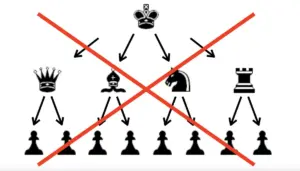
In the digital technoverse, biological life is frequently treated as an inconvenient friction point. The unhelpful industrial metaphor of human beings as biological machines confuses first-order biological realities—such as the innate human inclination toward mutual aid and collaborative niche construction—with second-order cultural effects, which routinely normalize steep social power gradients. Specifically, economic systems that rely on interest-bearing debt and ubiquitous fungibility drive exploitation by normalizing the extraction of personal gain from the labor and vulnerability of others.

People equipped with an intact moral compass often learn the hard way that conventional investment, charitable endeavors, and traditional entrepreneurship frequently reinforce the existing socioeconomic status quo and exacerbate inequality. Honest individuals, and particularly neurodivergent people, are frequently disabled both economically and socially within a modern society whose institutional norms have adapted entirely to serve the dominant economic paradigm. Autistic individuals, for instance, frequently work continuously at the very edge of performance limits that far exceed what non-autistic populations can sustain, thereby inviting systemic exploitation under the guise of meritocracy.
Denying the Timeless Patterns of Human Limitations
This civilizational dynamic fosters a culture of normalized denial, often encapsulated by the engineering and financial mantra to "shut up and calculate." The systemic nature of wealth inequality and entrenched social power gradients generates profound suffering, yet mainstream economic disciplines institutionalize this denial by dismissing widespread human and ecological damage as mere "insignificant externalities." Addressing severe wealth inequality is a vital imperative, but it alone cannot heal the broader spectrum of human and environmental damage wrought by centuries of fossil-fuel-driven consumption.
Eliminating wealth wealth disparities without a fundamental shift in cultural values and daily practices—without a radical reduction in consumption and a profound transformation in how humanity relates to the living planet—will do little to reverse ecological overshoot. Humanity is currently consuming natural resources at a rate 1.7 times faster than Earth’s ecosystems can regenerate. Modern addictions to convenience, endless economic growth, and hyper-materialism have systematically sidelined quality of life in favor of sheer quantity, ultimately rendering the concept of "enough" entirely foreign to modern industrial culture. Observers argue that tinkering with yet another configuration of hierarchical, powered-up institutions is futile; instead, individuals and communities must learn the art of de-powered dialogue and deliberately dismantle exploitative relationship dynamics without seeking permission from traditional authorities.
Living in a Sick, Addicted Culture
In a hypernormative society, neurodivergence inevitably takes on a political dimension. Framing neurodivergence and alternative modes of being as pathological conditions allows institutional power structures to dismiss critical insights from neurodivergent thinkers simply because those perspectives are ideologically inconvenient to the status quo. For decades, economic models rooted in the archetype of homo economicus have acted as an effective filter, ensuring that only indoctrinated and compliant adherents rise to positions of influence.
This anthropocentric paradigm—which treats nature as a mere warehouse of resources and human beings as units of economic production—is increasingly recognized as a catastrophic cultural choice rather than an unalterable law of nature. As scholars and critics have long pointed out, human beings possess a deep psychological need not only to be cared for, but an even stronger innate drive to care for others and for the living world around them. When societies strip away these communal care structures, individuals suffer profound psychological distress. Rebuilding human civilization requires breaking away entirely from the production-consumption paradigm and centering our social structures around care, freedom, and mutual support.

Having Faith in the Living Planet
Human survival in the face of formidable predators and environmental challenges was never secured through hyper-competition, but rather through sophisticated collaboration and the use of symbolic language to coordinate actions and share intentions. The biological evolutionary heritage of our capacity for culture and language depends entirely on our ability to establish deep, unshakeable trust during life-and-death situations.
As ecological thinkers like Janine Benyus point out, the true biological definition of success is the long-term continuity of life—not merely surviving for a single generation, but creating the conditions conducive to life for thousands of generations to come. Across the globe, numerous small-scale, community-led initiatives are already re-conceptualizing human societies in compassionate, life-affirming ways that draw upon timeless indigenous wisdom and a deep understanding of ecological interconnectedness.
Ultimately, healing begins with rediscovering our faith in humanity and reconnecting with the sacred, cyclical flow of life. By rejecting the life-denying mono-cult of hyper-competition and embracing trustworthy, human-scale relationships within resilient ecologies of care, communities can lay the groundwork for a regenerative future. We have nothing to lose by stepping outside the failing paradigms of modern civilization, and a living planet to regain.