









For millions of individuals living with chronic low back pain, the simple act of rising from a chair, reaching for a glass, or taking a brisk walk can trigger a sudden, debilitating surge of agony. This phenomenon, where mundane physical movement becomes a source of unpredictable suffering, has long frustrated both patients and clinicians. Now, a groundbreaking study conducted by researchers at the University of California San Diego School of Medicine has unveiled a startling biological explanation: these painful flare-ups appear to hijack a specific, profound network in the brain—one that is intrinsically linked to our sense of identity and personal self-reflection.
The study, published on October 5, 2026, in the British Journal of Anaesthesia, provides a potential paradigm shift in how the medical community understands and treats chronic pain. By identifying that persistent back pain becomes deeply intertwined with the brain’s "self-network," the findings help explain why traditional, symptom-focused medical interventions—such as opioids or anti-inflammatory drugs—often fail to provide long-term relief for those suffering from chronic conditions.
The Default Mode Network and the Pain Experience
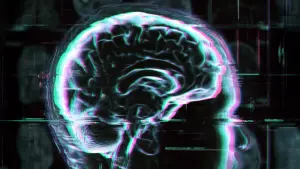
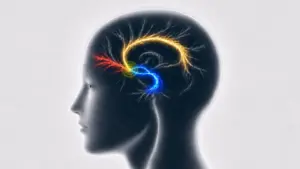
To understand the significance of this discovery, one must look at the brain’s Default Mode Network (DMN). The DMN is a complex web of interconnected regions spanning the frontal, parietal, and temporal lobes. In healthy brain function, this network serves as the command center for our internal life. It is most active when we are not focused on the external world, but are instead lost in thought—reflecting on personal memories, evaluating our life experiences, considering our emotions, or contemplating our identity.
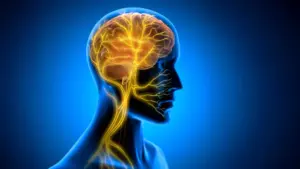
Under normal circumstances, when an individual experiences acute pain—such as stubbing a toe or touching a hot surface—the brain undergoes a predictable shift. The DMN powers down, effectively pushing aside internal chatter and self-reflection so that the brain can dedicate its full processing power to the immediate external threat. This is a survival mechanism, allowing the mind to prioritize the physical sensation of danger above all else.
However, the UC San Diego researchers discovered that for patients with chronic low back pain (cLBP), this biological rule is inverted. When movement triggers a flare-up of chronic pain, the DMN does not deactivate; instead, it lights up. This paradoxical response suggests that for chronic sufferers, the pain is not merely a signal of tissue damage or a nerve firing; it has become an integrated part of the individual’s internal narrative. The pain is no longer just a physical sensation occurring to the person; it has become a defining component of how the person experiences themselves.
Clinical Evidence: Brain Scans During Flare-ups
The research team, led by corresponding author Fadel Zeidan, PhD—a professor in the Department of Anesthesiology and director of the Pain Health and Mindfulness Laboratory at UC San Diego—sought to observe this mechanism in real-time. To do so, they recruited 114 patients diagnosed with chronic low back pain, defined by the World Health Organization as pain persisting for more than 12 weeks.
The methodology utilized a standard clinical "leg raise test," a procedure specifically designed to provoke the characteristic back pain associated with chronic conditions. During these movements, the researchers utilized a highly specialized form of functional MRI (fMRI) known as arterial spin labeling. Unlike standard fMRI, which often requires contrast agents, this technique allows for the precise, non-invasive measurement of cerebral blood flow, providing a clear map of brain activity as the pain flare occurred.
To create a comparative baseline, the researchers also exposed the same participants to an acute, external pain stimulus—a harmless but sharp heat sensation applied to the calf. The results were starkly different between the two scenarios. When exposed to the heat, the patients’ brains behaved normally, with the DMN deactivating as they focused on the external discomfort. Yet, when the chronic back pain was triggered by movement, the DMN became hyper-active.
"In every pain study, when you’re experiencing pain, the DMN deactivates," Dr. Zeidan explained. "What we show for the first time ever is that when you have a pain flare, it turns on instead. You start to identify the experience with who you are."
The Emotional Toll of Persistent Pain
This discovery offers a profound insight into the psychological and emotional burden of chronic pain. If the DMN is involved in memory, emotion, and self-identity, its activation during a pain flare suggests that the experience is being filtered through the lens of a patient’s entire history.
For a chronic pain patient, the sensation is rarely "just" physical. It is contaminated by the anticipation of the next flare-up, the memory of past failed treatments, the frustration of physical limitations, and the fear of movement. When the brain links pain to the self-network, the physical ache becomes inseparable from the person’s broader existence. This explains why patients often describe the experience as all-consuming. The embarrassment of being unable to participate in social activities, the anxiety surrounding daily tasks, and the constant mental rehearsal of potential pain become part of the "self" that the brain is processing.
This cycle is likely why traditional pain management, which remains largely fixated on blocking physical pain signals, falls short for so many. While medication might dampen the nerve signal, it does nothing to silence the brain’s internal, identity-based reinforcement of that pain.
A New Direction for Future Treatment
The realization that chronic pain involves the DMN opens the door for a new generation of therapeutic approaches. Rather than focusing exclusively on the "symptom" (the physical pain), researchers are now looking toward treatments that address the "relationship" the brain has with that pain.
Dr. Zeidan and his team have been investigating two promising avenues: mindfulness meditation and the use of the psychedelic compound psilocybin. These approaches are not intended to act as "silver bullets" that miraculously erase the physiological cause of the pain. Instead, they aim to decouple the physical sensation from the neural pathways that anchor it to the individual’s sense of self.
Mindfulness meditation teaches patients to cultivate a non-judgmental awareness of the present moment. By observing physical sensations without immediately attaching them to narratives of fear, worry, or identity, patients may be able to alter the DMN’s response to pain. Early findings suggest that this practice can significantly reduce the subjective intensity of pain by effectively "breaking the link" between the sensation and the internal "self" network.
Similarly, research into psilocybin focuses on its potential to "reset" the neural systems that integrate trauma, past experiences, and future anxieties. By facilitating a temporary reorganization of these networks, psilocybin may help patients move past the emotional weight that has historically amplified their physical suffering.
"They’re not a silver bullet—you’re not necessarily getting rid of the pain, but you’re changing the relationship you have with that pain so it doesn’t contaminate your everyday life," Zeidan noted.
As the UC San Diego laboratory continues its clinical trials, the medical community is beginning to view chronic back pain not just as an orthopedic issue, but as a complex neurological condition that fundamentally alters the patient’s internal experience. By understanding that chronic pain is a disorder of the self as much as it is a disorder of the spine, researchers hope to eventually offer relief to the millions for whom current treatments are simply not enough. The study was supported by funding from the National Institutes of Health’s National Center for Complementary and Integrative Health and the UC San Diego Sanford Institute for Empathy and Compassion.