







For decades, the state of general anesthesia has been equated with a total "switch-off" of the brain’s higher-order functions. When a patient is rendered unconscious for surgery, the medical assumption has been that the theater of the mind goes dark, ceasing its complex work of language processing and environmental monitoring. However, a groundbreaking new study from Baylor College of Medicine, published in the journal Nature, is forcing the scientific community to reconsider this fundamental assumption. Researchers have discovered that even when a patient is fully anesthetized and lacks any semblance of conscious awareness, the brain remains remarkably busy—analyzing patterns, interpreting linguistic nuances, and even actively anticipating the future.
The study, led by Dr. Sameer Sheth, a professor and Cullen Foundation Endowed Chair of Neurosurgery and a McNair Scholar at Baylor, suggests that the neural machinery responsible for cognition does not merely go dormant. Instead, it persists in a sophisticated, ongoing dialogue with the world, even when the person inhabiting that brain is entirely unreachable. This revelation challenges the long-held boundary between consciousness and the unconscious, providing new evidence that the architecture of thought is far more resilient than previously understood.
Peering Into the Unconscious Hippocampus
To reach these findings, Dr. Sheth and his colleagues, including neurosurgeons at Baylor St. Luke’s Medical Center, leveraged a rare clinical opportunity. By studying patients already undergoing surgery for epilepsy, the team was able to place advanced recording technology within the brain itself—specifically the hippocampus. The hippocampus is a vital structure nestled deep within the temporal lobe, long known as the brain’s "librarian" for its central role in organizing information, learning, and the formation of new memories.
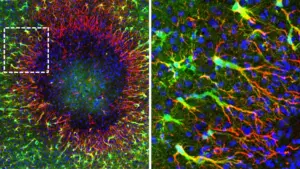
The precision of this research was made possible by the use of Neuropixels probes. These state-of-the-art devices are miniature, high-density silicon probes that can monitor the electrical output of hundreds of individual neurons simultaneously. Unlike older technologies that could only offer a blurry, aggregate view of brain activity, Neuropixels allowed the team to capture the firing patterns of individual nerve cells with granular detail. According to the researchers, this level of scrutiny had never before been applied to this particular region of the brain during an anesthetized state, offering a rare, high-definition look at how the hippocampus handles incoming data when the conscious mind is offline.
Neural Plasticity in the Dark
The research team began their investigation by testing the brain’s reaction to basic sensory input. As the patients lay unconscious, they were played a sequence of repeating, uniform tones, which were occasionally punctuated by an unexpected, different sound. The goal was to see if the brain could register a deviation from a pattern without the help of conscious attention.
The results were immediate and startling. The neurons within the hippocampus did not simply sit idle; they reacted to the odd-one-out sounds with distinct firing patterns. More remarkably, as the experiment progressed, these neural cells actually improved at distinguishing between the repetitive tones and the disruptive, unusual ones. This phenomenon is a hallmark of neural plasticity—the brain’s ability to modify its own connections and responses based on experience. Even in the absence of awareness, the brain was learning. The basic mechanisms that allow humans to adapt to a changing environment remained fully operational, suggesting that "learning" is a more autonomous process than neuroscientists had traditionally theorized.
Anticipation and the Language of the Brain
Having established that the unconscious brain could handle simple auditory patterns, the researchers decided to increase the complexity of the challenge. They moved from simple tones to the nuanced, structural demands of human language. By playing short stories to the anesthetized patients, the team continued to record activity within the hippocampus to see if the brain was merely "hearing" sound or actually "processing" meaning.
The data indicated that the hippocampus was doing far more than recording noise. The team observed distinct patterns of neural activity that corresponded to specific grammatical categories—nouns, verbs, and adjectives. This indicated that the brain was parsing the incoming information for meaningful features, extracting structure from the syntax of the stories.
However, the most profound discovery was the brain’s ability to predict the future. The researchers found that neural activity in the hippocampus carried information that could be used to anticipate which words were likely to follow in a sentence. This is known as "predictive coding"—a sophisticated cognitive process where the brain relies on past experience and current context to "guess" the incoming flow of information. While this type of anticipation is typically associated with a person who is wide awake, attentive, and actively engaged in a conversation, it was occurring here in a state of total unconsciousness.
"The brain appears to anticipate what comes next in a story, even without conscious awareness," explained Dr. Sheth, who also serves as the Director of The Gordon and Mary Cain Pediatric Neurology Research Foundation Laboratories at the Duncan Neurological Research Institute at Texas Children’s Hospital. Dr. Benjamin Hayden, a professor of neurosurgery at Baylor, added, "This kind of predictive coding is something we associate with being awake and attentive, yet it’s happening here in an unconscious state."
Redefining the Boundaries of Consciousness
These findings spark a vital conversation about the nature of consciousness itself. For years, neuroscientists have debated whether consciousness is a property of the whole brain acting in concert or if it is merely the "tip of the iceberg" of a massive, mostly unconscious cognitive system. The Baylor study suggests that the latter may be true: many of the neural tasks we associate with "thinking"—such as understanding grammar or predicting future events—can function perfectly well without the subjective feeling of being awake.
This discovery implies that consciousness might not be the engine of these processes, but rather a separate, higher-level coordination. Under this framework, the hippocampus continues its meticulous work of processing and prediction regardless of whether the broader neural networks, which facilitate conscious experience, are online or suppressed by anesthesia. It is as if the brain’s "operating system" continues to run its background tasks even when the user interface is disabled.
Potential for AI and Clinical Application
The study also provides an intriguing parallel to the world of artificial intelligence. Large language models (LLMs), such as those powering modern AI chatbots, function by identifying patterns in massive datasets to predict the most likely next word in a sequence. The fact that the human hippocampus engages in a similar form of predictive coding suggests a shared logic between biological systems and artificial ones. By comparing how the brain anticipates language with how AI models generate text, researchers may gain new insights into the fundamental mechanics of prediction, which could eventually refine our understanding of both natural and synthetic intelligence.
Beyond the theoretical implications, there is a tangible potential for clinical advancement. If the brain’s language-processing signals can be decoded during periods of injury or unconsciousness, this could pave the way for a new generation of brain-computer interfaces (BCIs). For patients who have lost the ability to speak due to stroke, trauma, or other neurological conditions, these findings suggest that the internal mechanisms for language may still be intact and measurable.
"Can we use these signals to deploy and run a speech prosthetic for some of the parts of the brain that are damaged by stroke or injury?" asked Dr. Vigi Katlowitz, the study’s first author and a neurosurgery resident at Baylor. "These are questions that we can now consider in relation to this part of the brain."
A Foundation for Future Inquiry
While these findings are transformative, the researchers are careful to emphasize the scope of the study. These experiments were conducted under specific anesthetic conditions, and it remains to be seen whether these same predictive abilities hold true across other forms of sedation, sleep, or states of coma. Furthermore, the study focused heavily on the hippocampus; whether other regions of the brain are engaging in similar high-level, unconscious processing remains a question for future investigation.
Despite these necessary caveats, the study stands as a significant milestone in neuroscience. It strips away the illusion that our minds are entirely silent when we are unconscious, revealing a brain that is constantly, quietly working to make sense of the world. As Dr. Sheth noted, the work forces a fundamental rethink of what it means to be conscious, suggesting that the brain is doing far more "behind the scenes" than science had ever dared to assume. The dark silence of anesthesia, it seems, is not quite as empty as we once believed.