







For many children and adolescents navigating the complexities of social interaction and academic life, the simple act of asking and answering questions can feel like an insurmountable hurdle. Whether in a bustling classroom or during a quiet conversation at home, the ability to engage through inquiry is fundamental to learning and connection. However, when a young person struggles to decode the intent behind a question or fails to formulate a clear, relevant response, the impact can ripple across their entire educational and social experience. Recent developments in therapeutic practice suggest that the key to unlocking these vital communication skills lies not in broad, abstract practice, but in a deliberate, granular approach that begins at the most basic level of language comprehension.
The challenge, according to specialists in the field of speech and language development, often stems from a lack of differentiation between the various question forms that populate our daily vocabulary. When a child or teen hears a query, they may process it as a singular, overwhelming request for information rather than a specific prompt for a particular type of detail. To address this, therapeutic interventions are increasingly shifting toward a methodology that isolates each question form—who, what, where, when, why, and how—and treats them as distinct linguistic units that require individual mastery before they can be synthesized into fluid conversation.
By stripping away the complexity of conversational context, therapists are finding that they can help youth identify the specific "target" of an inquiry. For instance, when a student is taught that the word "where" acts as a beacon for location-based information, they are no longer guessing at what the speaker wants; they are learning to categorize the world into actionable data points. This process of isolating question words allows the individual to see that each interrogative pronoun serves as a signpost, directing them toward a specific category of information. "Who" points to people, "where" points to places, and "why" points to the underlying causes or motivations. By breaking communication down into these foundational blocks, the fog of uncertainty that often surrounds social and academic interaction begins to lift.

This structural approach to questioning is particularly critical for students who find themselves struggling in academic settings. In a classroom environment, the pace of instruction is often rapid, and the ability to interpret a teacher’s question—or to formulate a pertinent question of one’s own—is essential for keeping up with the curriculum. When a student lacks a firm grasp on the distinction between these question forms, they may provide answers that are factually correct but contextually irrelevant, or they may remain silent altogether, fearing the frustration of a misunderstanding. By teaching them to pause and identify the question word first, the pressure to provide an immediate, complex answer is reduced. Instead, the student learns to analyze the query, isolate the necessary category of information, and then retrieve the appropriate data from their memory.
The transition from this clinical, isolated practice to real-world application is a crucial phase of the therapeutic process. Once a child or teen demonstrates that they are paying attention to the nuances of question words, the therapeutic focus shifts toward integrating these skills into their daily interactions. This is where the true value of the methodology becomes apparent. It is one thing to identify a question word in a controlled, one-on-one session; it is quite another to utilize that skill while interacting with peers on a playground or participating in a group discussion in a classroom.
To bridge this gap, practitioners are emphasizing the importance of consistent, low-stakes practice. By creating environments where asking and answering questions is encouraged without the fear of judgment, young people can build the confidence necessary to utilize their new linguistic tools. As they become more adept at identifying the intent behind questions, they find that their ability to participate in conversations improves significantly. They are no longer just passive listeners; they are active participants who can seek clarification, provide detailed information, and engage with the world around them in a more meaningful way.
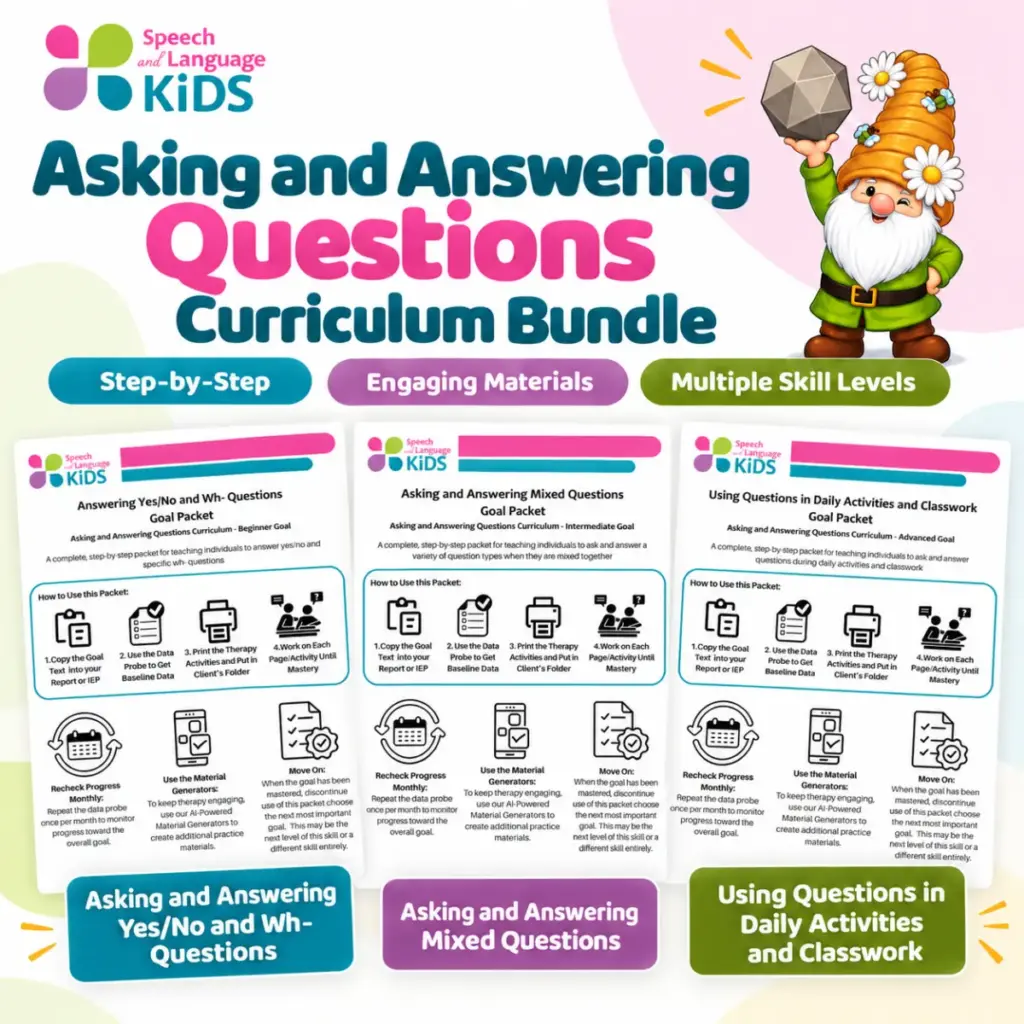
This therapeutic walkthrough of the process—demonstrating how a specialist interacts with a child or teen who is struggling with these core skills—highlights the importance of patience and precision. The practitioner does not simply lecture the student on the definitions of "who" or "why." Instead, they guide the student through a series of exercises that require them to actively engage with these concepts. This might involve sorting images or scenarios based on the question that would best elicit them, or role-playing scenarios where the student must identify the hidden "category" within a prompt. By making the process interactive and responsive, the therapist ensures that the student is not just memorizing rules, but internalizing the logic of communication.
The success of this approach is measured not just in academic grades or clinical milestones, but in the qualitative improvement in the student’s quality of life. When a child is able to ask a question that gets them the information they need, or when they can confidently answer a teacher’s inquiry, the reduction in stress and the increase in self-efficacy are profound. The frustration that often accompanies communication delays is replaced by a sense of competence. This, in turn, fosters a more positive attitude toward learning and social engagement, creating a virtuous cycle where better communication leads to better outcomes, which in turn motivates further communication.
As the therapeutic field continues to refine these techniques, the focus remains firmly on the individual needs of the student. While the framework of breaking down question forms is consistent, the delivery is highly personalized, taking into account the unique communication style, age, and interests of the person receiving the therapy. For a young child, this might involve play-based activities and visual aids that make the abstract nature of question words more concrete. For a teenager, the approach might involve discussing more complex topics or analyzing social dynamics, helping them to see how the ability to ask and answer questions is essential for navigating the adult world.
Ultimately, the goal is to equip these individuals with the skills they need to be autonomous, effective communicators. By stripping away the mystery of the question-answer exchange and providing a clear, logical structure for navigating it, therapists are helping children and teens reclaim their voice. Whether they are struggling with basic language development or more nuanced social-communication challenges, the principle remains the same: by understanding the components of a question, they gain the power to understand the world around them and to make their own contributions known. Through this methodical, step-by-step approach, the path to improved communication is made clear, one question at a time.