








Educators, parents, and pediatric occupational therapists are increasingly turning toward specialized social-emotional learning frameworks to help children navigate daily stressors. Among these tools, the "Size of the Problem" activity has emerged as a cornerstone strategy for building executive functioning, self-regulation, and metacognition in children. Developed to address rising concerns over emotional overwhelm, the concept helps young learners accurately evaluate the magnitude of challenges they face and pair them with proportionate, measured responses.
The methodology bridges a vital gap in child development, showing youngsters that while it is entirely normal to experience big feelings, not every minor inconvenience requires an explosive reaction. By categorizing disruptions into distinct tiers—ranging from minor daily setbacks to significant life emergencies—children learn to ground themselves, assess situations objectively, and develop actionable game plans for resolution.
Understanding the Mechanics of the Size of the Problem
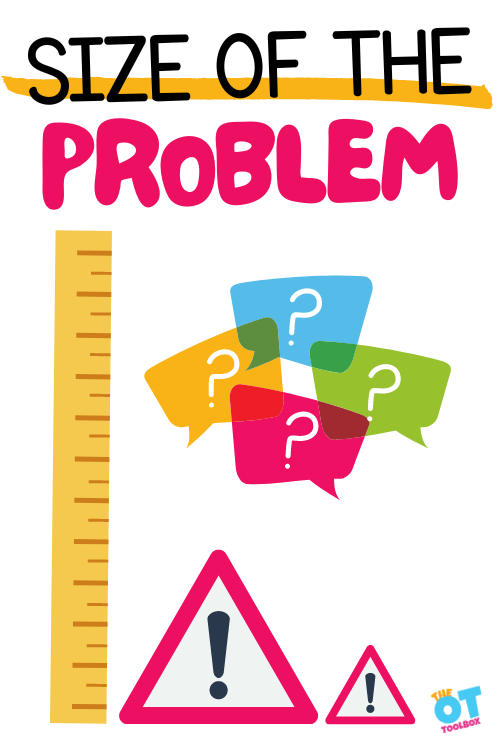
At its core, the Size of the Problem is a social-emotional learning framework designed to foster perspective-taking and self-awareness. Children who struggle with emotional regulation frequently have difficulty distinguishing between a minor mishap, such as dropping a crayon during art class, and a major crisis, such as a family emergency or sudden life transition. Without an objective framework, a minor inconvenience can trigger an outsized emotional reaction, leading to frustration, mel

tdowns, and social friction.
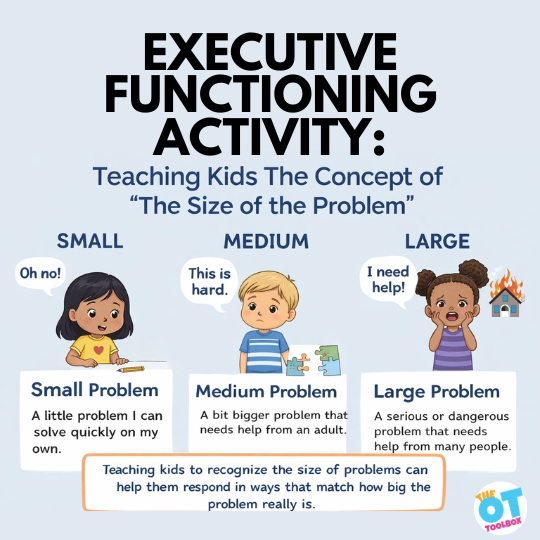
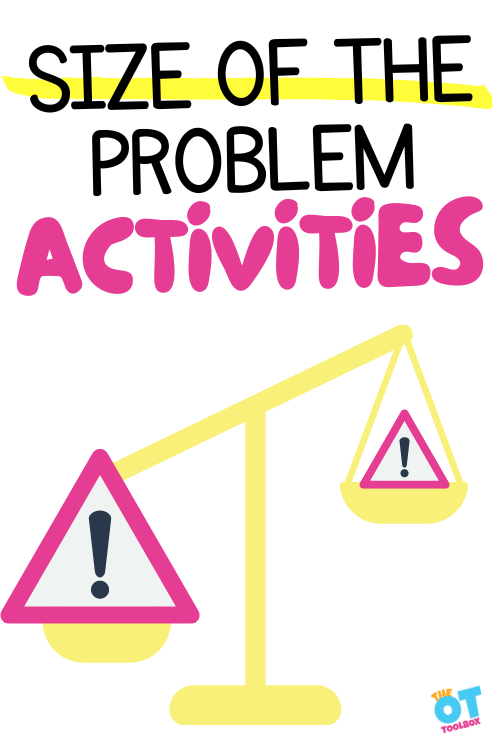
The strategy teaches children to categorize challenges into distinct scales, typically broken down into small, medium, and large problems. Small problems are viewed as everyday inconveniences that can generally be solved quickly and independently, requiring only a minor reaction. Medium problems involve situations that might require assistance from an adult or a peer but do not constitute an emergency. Large problems encompass safety concerns, serious disruptions, or major life changes that demand significant adult intervention and intensive coping mechanisms.
Because executive functioning skills develop gradually over a long period, children require repeated opportunities to practice these comparisons. Identifying a problem, selecting an appropriate regulation strategy, and deploying it successfully is a complex neurological process that takes time to mature.
Implementation Across Home and School Environments
The versatility of the Size of the Problem framework allows it to be integrated seamlessly across diverse environments, including family homes, traditional classrooms, and clinical therapy settings. Everyday life offers a continuous stream of organic teaching moments where parents and educators can model co-regulation and constructive problem-solving.
In a home setting, unexpected daily disruptions provide prime opportunities for skill-building. For instance, misplacing a necessary item, such as a school uniform or a sports accessory, can quickly derail a morning routine. Rather than allowing panic to dictate the household atmosphere, parents can guide children through evaluating the actual impact of the missing item, determining whether alternative solutions exist, and managing the accompanying frustration. Similarly, running late for a school bus or discovering a missing ingredient for a meal presents teachable moments where children can practice cognitive flexibility and emotional modulation.
Educational environments present an equally rich landscape for applying these concepts. In schools, missing an assignment, struggling with a difficult academic concept, or experiencing a disagreement with a peer at recess can trigger strong emotional responses. Teachers and school-based occupational therapists utilize calm-down corners, emotions check-ins, and visual sorting activities to help students process these events. By incorporating structured visual supports, such as problem-sorting charts and task cards, educators provide concrete representations of abstract emotional concepts. This allows students to categorize issues visually and select matching coping strategies, promoting a unified language around emotional regulation throughout the school day.
Building Emotional Vocabulary and Coping Flexibility
A critical component of the Size of the Problem curriculum involves expanding a child’s emotional vocabulary. When children possess a nuanced repertoire of words to describe their internal states, they are better equipped to communicate their needs accurately. Moving beyond basic descriptors like "mad" or "upset" enables children to articulate specific feelings, which in turn facilitates the selection of appropriate, appropriately scaled coping strategies.
Experts emphasize that teaching children to gauge problem sizes is never intended to invalidate their genuine emotional responses. Experiencing frustration or disappointment over a lost remote control or a minor inconvenience is entirely natural. The objective of the framework is not to suppress feelings, but to acknowledge them while simultaneously offering constructive pathways forward.
By treating emotional regulation as a functional life skill, professionals and caregivers can equip children with the resilience needed to navigate unpredictable environments. Whether applied in a small therapeutic group or integrated into daily classroom routines, the Size of the Problem framework continues to serve as an essential tool for fostering independence, self-monitoring, and emotional maturity in developing minds.