








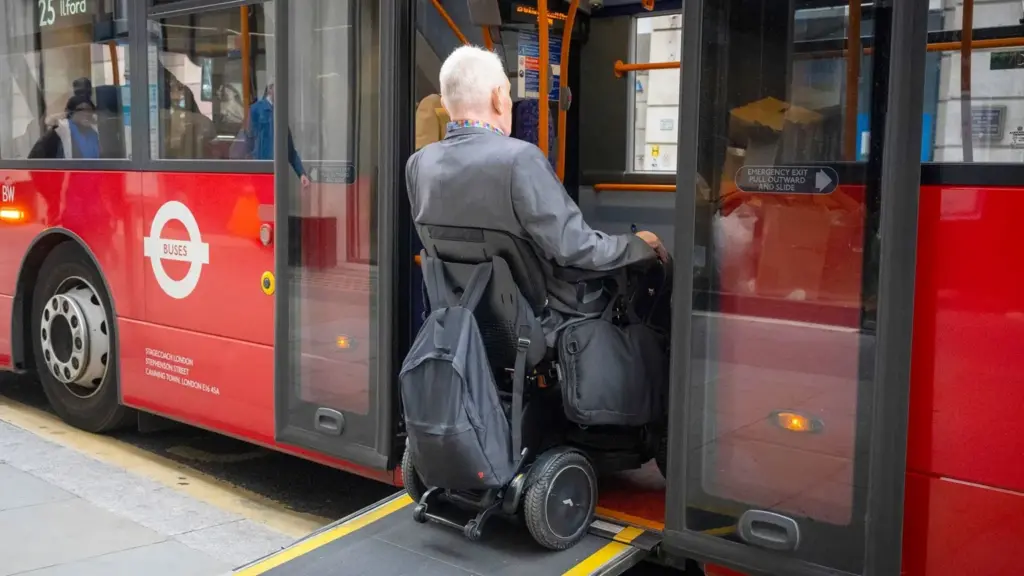
LONDON — Starting April 1, disabled people across England will be able to travel by bus for free at any time of day, transforming public transit access for approximately one million pass holders nationwide.
Under the previous concessionary travel framework, free bus passes were strictly restricted to off-peak hours on weekdays, running only between 09:30 and 23:00. This long-standing limitation created significant barriers for pass holders attempting to commute to standard morning jobs, arrive early for educational opportunities, or attend late-night cultural, social, and professional events. By removing these time limits entirely, the policy turns the national bus pass into a true full-time lifeline, granting disabled commuters the same schedule flexibility as the general public.
The sweeping policy reform follows a highly successful trial conducted within Greater Manchester’s integrated “Bee Network.” It also marks a major victory resulting from years of persistent campaigning by prominent disability rights organizations, including Scope and Transport for All. Advocates have widely celebrated the policy shift for eliminating what they long criticized as an unfair “postcode lottery,” a fragmented system where the validity of a travel pass depended heavily on local council boundaries and arbitrary regional rules.
However, while disability advocates have praised the removal of time restrictions, organizations emphasize that this landmark decision is only a crucial first step. Campaigners note that eligibility requirements and administrative processes across different regions still require broader standardization to ensure truly equitable access for all disabled residents regardless of where they live in the country.
To secure the long-term future of the program and make the transition permanent, the £60 million scheme is being funded jointly through the Department for Transport and the Department for Work and Pensions. Government officials are framing the reform as an essential workforce participation and cost-of-living initiative. This latest transit measure complements existing government efforts, such as the nationwide £2 single-fare cap, and brings England into alignment with similar 24/7 concessionary transit programs that have been successfully operating in Scotland and Wales for years.
Global Takeaways: How Other Countries Can Make Accessible Commuting Possible
Making daily commuting accessible and affordable for disabled citizens requires a careful and deliberate combination of forward-thinking policy design, modern digital systems, and targeted public investment. Examining the structural elements behind the United Kingdom’s policy shift offers valuable insight into how accessible transit systems are built and sustained on a national scale.
Why Was the UK Able to Do It?
The realization of a nationwide, around-the-clock free bus pass scheme in England stems from a convergence of systemic political commitments, sustained advocacy, and regional framework testing. By leveraging pilot programs like Greater Manchester’s Bee Network, policymakers were able to gather concrete empirical data demonstrating the economic and social viability of removing off-peak time restrictions. Furthermore, coordinated financial backing from central government bodies—specifically the Department for Transport working in tandem with the Department for Work and Pensions—provided the robust fiscal foundation necessary to absorb the operational costs across municipal transit networks. This centralized funding model helped overcome the traditional budgetary hurdles that often leave local authorities unable to expand concessionary programs on their own.
Does It Depend on Existing Infrastructure?
Yes, heavily. Free transit passes only truly work if the underlying public transport network is both physically and technologically accessible to begin with. Concessionary fare policies cannot exist in a vacuum; they must be supported by tangible infrastructural investments. This includes ensuring that bus fleets are equipped with functioning ramps, designated wheelchair spaces, and clear audio-visual announcement systems for passengers with sensory impairments. Additionally, integrated digital ticketing systems, real-time vehicle tracking, and accessible transit stops are critical components that allow pass holders to actually reach and board the vehicles. Without these foundational infrastructural elements, financial concessions lose much of their practical value for individuals with severe mobility or sensory challenges.
What Is Needed to Make Commuting Affordable for People with Disabilities?
Achieving true affordability and accessibility in public transportation requires a multi-layered approach that goes beyond simply waiving ticket prices. Policymakers must first establish unified, standardized eligibility criteria to eliminate regional disparities and ensure that disabled travelers receive consistent treatment regardless of their geographic location. Concession programs must also be paired with predictable, long-term government funding models that protect transit operators from sudden budget cuts. Finally, robust public-private cooperation between national transit authorities, local governments, and disability advocacy groups remains essential to continuously identify service gaps, update infrastructure standards, and adapt public transportation systems to the evolving needs of disabled communities.