








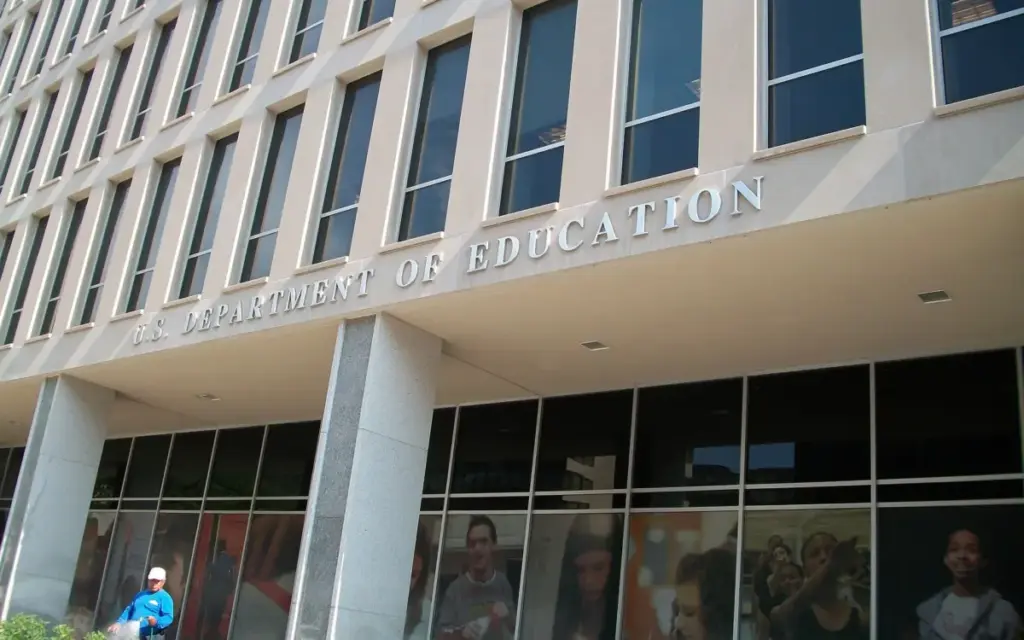
For months, advocacy groups, educators, and researchers have harbored mounting concerns that the U.S. Department of Education could allow millions of dollars earmarked for special education research to lapse permanently. Now, a federal judge is stepping into the fray to demand accountability and transparency from the federal agency.
U.S. District Judge Allison D. Burroughs is actively intervening in the matter, ordering the Education Department to provide her with a formal status update by Monday detailing the exact condition and allocation plans for the government’s education research funds.
The judicial scrutiny centers on the Institute of Education Sciences, commonly known as IES, which functions as the primary statistics, research, and evaluation arm of the Education Department. According to Judge Burroughs, approximately $180 million in funding for the agency remained unallocated as of last week. With the federal fiscal calendar moving forward, these vital resources are officially set to expire at the end of September. While the broader total encompasses general educational research and statistics, it remains unclear precisely how much of that $180 million is specifically intended for special education initiatives.

This tense legal and administrative standoff follows an alarming investigative report published this spring. That report warned that out of a $77 million federal budget specifically designated for the government’s special education research and evaluation program, a staggering sparse amount—just $11 million—had been spoken for or committed to projects.
The alarming realization prompted swift legal action. A coalition comprising the National Center for Learning Disabilities, the Massachusetts Teachers Association, and other key education stakeholders filed a lawsuit against the Education Department in an effort to prevent the millions in critical funding from lapsing and vanishing from the federal ledger.
In her handling of the case thus far, Judge Burroughs noted that she initially opted to take a measured, soft-touch approach based on verbal and written assurances from the Education Department. Specifically, agency officials assured the court that they fully intend to obligate the funds at issue before the fast-approaching statutory deadline.
However, the judge has made it explicitly clear that her patience is finite and conditional. She cautioned that if it appears, as the September 30 deadline rapidly approaches, that the defendants have misled the court and the funds will not be properly obligated by the cutoff date, the court stands ready to reconsider the situation. Under such circumstances, she warned, the judiciary may find that there has been an undue delay warranting formal injunctive relief to force the agency’s hand.
Despite the federal agency’s formal assurances delivered to the court, the true status of the funding remains murky, opaque, and deeply concerning to those on the front lines of special education.
Meghan Burke, a professor of special education at Vanderbilt University, pointed out that the tangible output from the funding pipeline has noticeably slowed down. According to Burke, there have only been five awards issued so far this year from the National Center for Special Education Research, which serves as the specialized special education funding arm of the broader IES. Compounding the issue, all of those grants only just began this month. That volume of awards is substantially lower than what occurs during a typical academic and fiscal year, she noted.
Jacqueline Rodriguez, the chief executive officer of the National Center for Learning Disabilities—an organization directly involved as a plaintiff in the ongoing litigation—expressed a cautious outlook. She stated that she believes it is technically realistic for the funds to be released in a timely manner given the government’s assurances to the court, but added that advocates are operating with severely limited information.
“We don’t have a current number for exactly how much special education research funding remains unspent because the government has not publicly updated those figures,” Rodriguez said. Nevertheless, she noted that the agency has recently begun issuing requests for proposals. In her assessment, this sudden movement was very likely spurred directly by the pressure of the ongoing lawsuit.
Preventing the funding from expiring before it can be put to work is an absolute necessity, according to Rodriguez. The stakes for students, families, and educators are simply too high to allow the money to return to the Treasury unspent.
“This funding supports research that gives us a much clearer picture of what students with disabilities are experiencing in schools and where they are not getting the support they need,” Rodriguez explained. She further emphasized that the investments also support broader work that ultimately benefits students in general education classrooms, alongside vital technical assistance programs designed to help families understand and actively participate in the often-complex special education process.
“If we don’t have that research and support, we’re making decisions without the information we need to know whether we’re actually serving students well,” she added.
When contacted for comment regarding the litigation and the exact state of the budget, the Department of Education did not respond to direct questions concerning how much special education research funding still remains unallocated.
Instead, a department spokesperson offered a brief statement regarding the agency’s overarching plans for the fiscal year. “IES intends to use its remaining FY25 funds to fully fund existing research grants, as well as to support other high-quality statistical and evaluation activities in service of its statutory obligations,” the spokesperson said.
The unfolding legal battle over education research funds arrives as federal courts are increasingly being asked to intervene in the Education Department’s management of grants and funding programs. In a separate, high-profile case brought by a coalition of states, a different federal judge recently ruled that the Education Department erred significantly in the manner in which it abruptly canceled hundreds of millions of dollars in grants intended for educator training programs. Those canceled grants included essential funding designed to prepare teachers to work effectively with students with disabilities.
The ruling in that separate teacher training case was widely celebrated by advocacy groups who have watched federal support fluctuate or face sudden administrative disruptions.
“The ruling is a victory for students, teachers and schools and common sense as our nation’s schools struggle with teacher training, hiring and retention,” said Stephanie Smith Lee, co-director of policy and advocacy at the National Down Syndrome Congress. Lee brings deep federal experience to the ongoing discussions, having previously served as the director of the Education Department’s Office of Special Education Programs under President George W. Bush.
Yet, despite that judicial victory, the broader legal landscape remains fraught with unresolved battles. Another major lawsuit brought by states concerning Individuals with Disabilities Education Act grants—specifically focusing on funding for special education teacher training—has yet to reach a final decision in the courts.
As Judge Burroughs awaits the updated status report from the Education Department by Monday, students, families, educators, and advocacy organizations continue to watch the clock, hoping that the court’s intervention will ultimately secure the millions of dollars needed to sustain special education research and support across the nation’s schools before the September 30 deadline locks the vault.