







People who speak more than one language may possess brains that appear significantly younger than their chronological age, according to groundbreaking research presented at the Federation of European Neuroscience Societies (FENS) Forum 2026. The findings provide compelling evidence that the cognitive effort required to navigate multiple linguistic systems may act as a protective buffer against the natural decline of neural connectivity that typically accompanies aging.
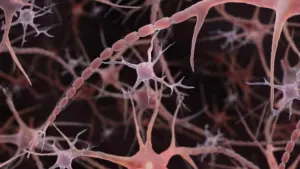
The human brain is a marvel of biological engineering, relying on an intricate, high-speed network of billions of nerve cells that constantly communicate to process information, store memories, and facilitate thought. As individuals progress through the natural life cycle, these neural connections can begin to weaken or degrade, a process that is frequently associated with a gradual slowing of cognitive processing speed and a decline in memory retention. For decades, neuroscientists have searched for lifestyle interventions that might mitigate these age-related changes, and the latest study suggests that the consistent practice of multilingualism may be a powerful tool for maintaining neural integrity.
Multilingualism and Brain Aging
The research was spearheaded by Dr. Lucia Amoruso of the Basque Center on Cognition, Brain and Language in San Sebastián, Spain. Her team collaborated with a distinguished group of international experts, including researchers from the Latin American Brain Health Institute at the Universidad Adolfo Ibáñez in Chile, the Cognitive Neuroscience Center at the Universidad de San Andrés in Argentina, and the Global Brain Health Institute at Trinity College Dublin in Ireland.
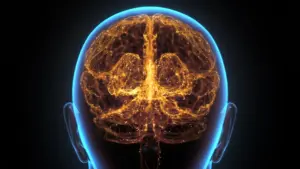
Building upon previous studies that suggested residents of countries with high levels of multilingualism tend to exhibit slower rates of age-related cognitive decline, the researchers focused their latest investigation on a cohort from the Basque region of Spain. This unique demographic provided an ideal environment for the study, as participants frequently utilize various combinations of Spanish, Basque, French, and English in their daily lives. The study examined individuals who spoke between one and four languages, allowing for a comparative analysis of how varying degrees of linguistic exposure influence brain structure and function.
To quantify the effects of multilingualism on the aging process, the research team first established a "brain aging clock." This diagnostic tool was developed by observing 728 participants using magnetoencephalography (MEG), a sophisticated non-invasive technology that detects the faint magnetic fields generated by active nerve cells in the brain. By utilizing artificial intelligence to analyze patterns of neural activity across a wide age spectrum, the researchers successfully modeled the trajectory of typical brain connectivity as it changes over the course of a human life. Once this baseline was established, they applied the clock to a separate, independent group of 144 participants to estimate their biological "brain age."
Four Languages Linked to a 13-Year Difference
When the researchers compared the participants’ actual chronological ages with their estimated brain ages, they uncovered a striking and consistent pattern. The data suggested a clear, dose-dependent relationship between the number of languages spoken and the preservation of youthful brain activity.
Participants who were bilingual—speaking two languages—exhibited brains that appeared approximately six years younger than those of monolingual participants. This protective effect increased among those who spoke three languages, whose brains appeared seven years younger than their chronological age. Perhaps most remarkably, among individuals who spoke four languages, the difference widened to an estimated 13 years.
Dr. Amoruso emphasized that these findings go beyond a simple count of languages. "In simple terms, people who spoke more languages tended to have brains that looked younger than expected for their chronological age," she explained. "The effect was not only related to the number of languages spoken. Higher language proficiency and earlier acquisition of a second language were also associated with more delayed brain aging. This suggests that multilingual experience matters as a gradient: it is not simply about being bilingual or not, but about the depth and duration of language experience."
The research team carefully adjusted their analysis to account for potential confounding variables, including age, sex, and formal education levels. While the correlation remained robust, the scientists cautioned that other factors—such as social engagement, lifestyle choices, and overall physical health—likely play a contributing role in the observed differences. The study does not claim that language is the sole determinant of brain health, but rather that it represents a significant component of cognitive reserve.
Could Language Learning Support Brain Resilience?
The implications of this research are particularly significant for the field of neurodegeneration. Dr. Amoruso and her colleagues are now looking toward the future, with plans to investigate whether these same protective patterns emerge in populations affected by neurodegenerative conditions such as Alzheimer’s disease. In these cases, understanding how to enhance brain resilience is of paramount importance, as the ability to maintain cognitive function despite underlying pathology could fundamentally change how these conditions are managed and treated.
Furthermore, the team hopes to explore the specific neurological mechanics of switching between languages. They hypothesize that speaking two or more closely related languages might yield an even stronger effect, as the brain must perform more intensive cognitive work to navigate competing vocabulary and grammatical systems. This "effortful learning" is a recurring theme in contemporary neuroscience, where the challenge of navigating complexity is seen as a form of mental exercise that strengthens the brain’s resilience.
Professor Christina Dalla, chair of the FENS Forum communication committee and a professor at the National and Kapodistrian University of Athens, Greece, who was not involved in the study, underscored the broader context of these findings. "We know that many factors can influence our brain health and mental abilities as we age," she stated. "For example, we know that not smoking, eating well, social and artistic engagement, as well as being active, can help. How we use our brains throughout life can also have an impact, especially if we engage in effortful learning that activates our brain."
Professor Dalla noted that the findings provide a strong argument for the lifelong pursuit of linguistic knowledge. "This study suggests that learning a second, third, or fourth language could help our brains to stay younger for longer, and the earlier we start, the better," she added. "There are many good reasons for learning another language at any age—social, cultural and for the health of your brain—so we should support language learning at school and throughout life, even if it’s hard."
The research was supported by a diverse group of international organizations dedicated to advancing the understanding of brain health. Funding was provided by the National Institutes of Health (NIH) and the National Institute on Aging (NIA), alongside the Fogarty International Center and the Multi-partner Consortium to Expand Dementia Research in Latin America (ReDLat). Additional support was contributed by the Alzheimer’s Association, the Global Brain Health Institute, the Davos Alzheimer’s Collaborative, the Alzheimer’s Society UK, and FONDECYT, as well as the Ramón y Cajal fellowship through the Spanish State Research Agency.
As the scientific community continues to digest these findings, the research serves as a poignant reminder that the brain is a dynamic organ, responsive to the challenges we present to it. By engaging in the complex, multifaceted task of learning and using multiple languages, individuals may be providing their brains with a powerful defense against the ticking clock of aging.