





Researchers at Northwestern University have identified a specific group of neurons in the brain that appear to drive the anxiety often associated with cannabinoid use, particularly when that use occurs in stressful or threatening environments. The study, published October 2 in the journal Nature Communications, offers a significant leap forward in understanding why some individuals experience adverse psychological reactions—often referred to as a "bad trip"—when consuming cannabis.
Cannabinoids, a category of compounds that includes THC, the primary psychoactive component of cannabis, have long been associated with complex and often contradictory effects on the human brain. While many users report feelings of relaxation or euphoria, others experience heightened states of paranoia, fear, and anxiety. Until now, the precise neurological pathways responsible for this shift in emotional response have remained largely elusive.
Tracking the Brain During a Threat
To pinpoint the mechanisms at play, a team of researchers at Northwestern University Feinberg School of Medicine conducted a series of experiments on mice. The study, led by Dr. Sachin Patel, chair of psychiatry and behavioral sciences, sought to simulate how the brain processes fear under the influence of synthetic cannabinoids.
In the study, mice were exposed to a threat-inducing stimulus: the scent of fox urine, a known natural predator odor. Before the exposure, the mice were administered either a placebo or a dose of a synthetic cannabinoid. The researchers then monitored the animals’ behavior, specifically tracking how much time they spent near the scent versus how often they displayed classic anxiety-related behaviors, such as freezing or fleeing.
The results were stark. Mice that had been given the cannabinoid froze more frequently and demonstrated a marked decrease in exploratory behavior compared to the control group. To understand what was happening beneath the surface, the team utilized advanced neuroimaging techniques, including the implantation of tiny microscopes directly into the brains of the mice. This allowed the researchers to observe real-time neural activity as the animals encountered the threat.
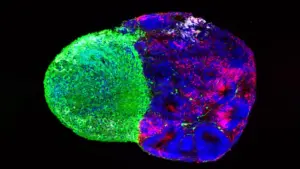
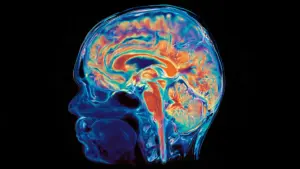
The observations pointed toward a specific population of brain cells known as somatostatin neurons. These cells are situated in the central amygdala, a region of the brain that acts as a command center for processing fear, stress, and emotional memory. The study found that when the mice were under the influence of cannabinoids and exposed to the predator scent, these somatostatin neurons became hyperactive.
The Mechanism of Disinhibition
Further investigation into the brain tissue revealed a precise mechanism for this increased activity. Under normal circumstances, the brain utilizes a natural "brake" system to regulate the activity of these neurons. The researchers discovered that cannabinoids effectively weaken this brake, allowing the somatostatin neurons to fire more rapidly and aggressively than they would in a standard state.
Dr. Patel explained the synergistic nature of this reaction: "Higher doses of cannabinoids and environmental stress worked together to synergistically release the ‘brake’ on the central amygdala, which in turn drove excessive anxiety."
To confirm that these neurons were indeed the primary drivers of the anxious response, the researchers employed genetic silencing techniques. By artificially inhibiting the activity of the somatostatin neurons, they were able to observe a change in the mice’s behavior. Even when the mice were under the influence of the cannabinoid, those with the silenced neurons were significantly less likely to avoid the predator odor, suggesting that the heightened fear response had been effectively mitigated.
This finding is crucial because it provides a biological explanation for the unpredictable nature of cannabis-induced anxiety. "The results of this study could explain why a good trip can turn bad pretty quickly if people consume too much cannabis or the situation they are in turns stressful or scary," Dr. Patel noted.
Why Cannabis and Anxiety Matter
The timing of this research coincides with a significant shift in the landscape of cannabis consumption in the United States. As access to cannabis has expanded and usage rates have steadily climbed, clinical settings have reported a corresponding rise in emergency department visits related to adverse reactions to the drug. These incidents often involve acute anxiety, panic attacks, or extreme psychological distress.
Beyond the immediate, short-term effects of consumption, there is also a growing body of evidence linking chronic cannabis use to long-term risks regarding anxiety and mood disorders. With these conditions on the rise globally, identifying the biological roots of such reactions is a matter of public health concern.
The implications of the study, however, extend well beyond the context of cannabis use. Because the central amygdala is a universal hub for fear and anxiety, the identification of the somatostatin neuron pathway offers a potential new target for broader psychiatric research. Dr. Patel emphasized the potential for therapeutic applications, suggesting that the team’s findings could pave the way for novel treatments.
"Suppressing the activity of somatostatin neurons in the central amygdala could represent a final pathway for reducing anxiety symptoms, not just in the context of cannabis side effects," he explained. By targeting these specific cells, future therapies might be able to help individuals manage intense anxiety that arises from various triggers, not just those related to external substances.
Understanding the fundamental circuitry of fear is a foundational step in psychiatry. By mapping how external substances like cannabinoids interact with the brain’s internal regulatory systems, researchers are moving closer to creating more effective, targeted interventions for anxiety. "Understanding how cannabis affects brain function to generate its psychoactive effects could ultimately reveal new ways to counteract negative consequences should they arise in some people," Dr. Patel said.
The study, titled "Cannabinoid Modulation of Central Amygdala Population Dynamics During Threat Investigation," represents a collaborative effort by researchers at Northwestern. The team included co-authors Farhana Yasmin, Saptarnab Naskar, Danyal Zaidi, Isaac Kandil, Michelle Kwon, and Dr. Luis Rosas-Vidal.
The research was supported by the National Institutes of Health, through grants MH100785 and K08 MH126166, as well as the Brain & Behavior Research Foundation’s Young Investigator Awards. As scientists continue to unravel the complexities of the human brain, this research serves as a vital reminder of how sensitive our internal systems are to both chemical and environmental influences, and how even small groups of neurons can hold the key to regulating the human emotional experience. By isolating these pathways, the team at Northwestern has provided a new lens through which to view both the risks of substance use and the biological nature of anxiety itself.