






Most primates possess brains that are marvels of biological engineering, characterized by large volumes and intricate patterns of folds and grooves—a hallmark of evolutionary complexity. However, the common marmoset (Callithrix jacchus), a small South American monkey, presents a striking evolutionary exception. Its brain is remarkably smooth, lacking the extensive folding found in its larger-brained primate relatives. This anatomical curiosity has long puzzled biologists, but new research from the German Primate Center (DPZ), the Leibniz Institute for Primate Research in Göttingen, has finally shed light on the cellular mechanisms that dictate this difference.
By employing cutting-edge "brain organoids"—miniature, three-dimensional models of brain tissue—researchers have identified specific cellular processes that act as a developmental "brake," limiting neuron production and preventing the brain from folding. These findings, recently published in the journal Science Advances, offer a rare glimpse into the fundamental mechanics of primate brain evolution and hold significant promise for understanding human neurodevelopmental disorders.
The Evolutionary Puzzle of Brain Folding
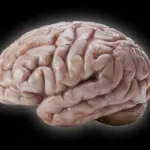
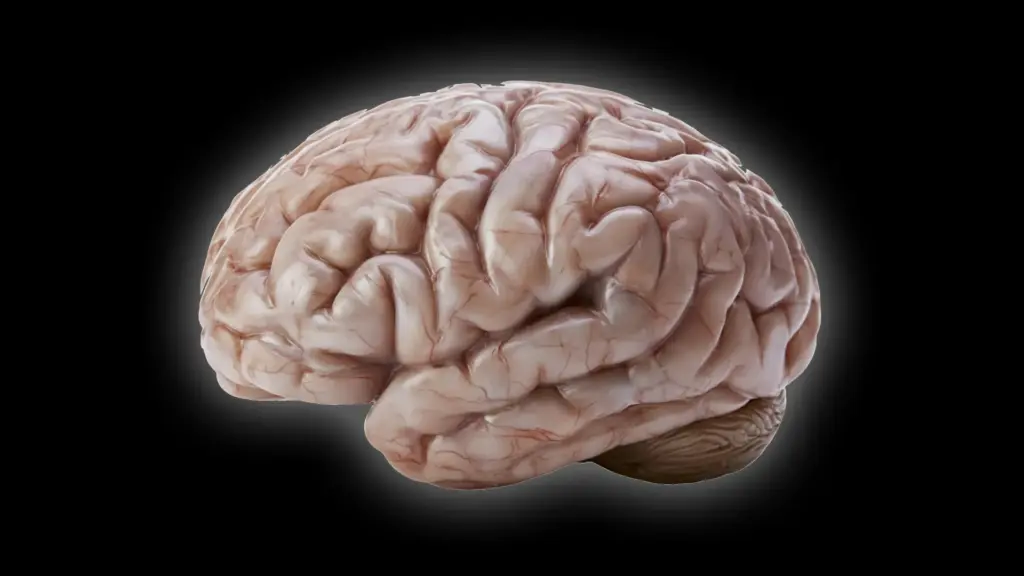
The architecture of the primate brain is more than just a matter of aesthetics. In species like humans, the cerebral cortex—the outer layer responsible for high-level cognition—is highly folded, resembling the crinkled surface of a walnut. This folding, known as gyrification, is a vital evolutionary strategy. By increasing the surface area of the cortex within the confined space of the skull, the brain gains the capacity to house billions of additional neurons. These neurons form the dense, interconnected networks that support everything from complex sensory processing to advanced reasoning and language.

While it is generally understood that the common ancestor of modern primates likely possessed a moderately sized, partially folded brain, the evolutionary trajectory of today’s species has diverged wildly. Some primates, like the common marmoset, have retained or evolved a relatively smooth, or lissencephalic, brain structure. As these monkeys become increasingly essential in biomedical research, understanding the developmental blueprint of their brains has become a priority for neuroscientists.
Lidiia Tynianskaia, a PhD student in the Junior Research Group Brain Development and Evolution at the DPZ and a co-first author of the study, explains that the divergence is not apparent in the earliest stages of gestation. "We wanted to understand which changes at the cellular level cause the marmoset brain to grow less and form fewer folds," Tynianskaia notes. "At the beginning of development, the common marmoset brain exhibits the typical structure and composition of a large, folded primate brain. As development progresses, processes must therefore occur that effectively slow down the production of nerve cells."
Uncovering the Cellular Mechanics of Growth
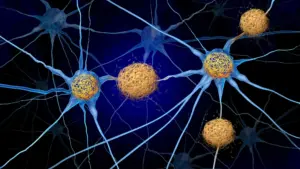
To solve this riddle, the research team focused their attention on neural progenitor cells. These are the "factory" cells of the developing brain; they are responsible for proliferating and eventually differentiating into the neurons that make up the mature cortex. The total output of these cells—the number of neurons generated during the critical window of development—is a primary determinant of whether a brain will remain smooth or undergo the process of folding.
The team compared brain organoids derived from human stem cells with those derived from common marmoset cells. This comparative approach allowed them to observe the development of these neural progenitor cells in a controlled, replicable environment. Their findings revealed that the marmoset’s smooth cerebral cortex is not the result of a singular, catastrophic developmental failure, but rather the cumulative effect of several subtle, interconnected adjustments in cell behavior.
"Our investigations have shown that certain progenitor cells in the common marmoset divide significantly more slowly than in humans," explains César Mateo Bastidas Betancourt, also a PhD student in the Junior Research Group and a co-first author of the study. Beyond the pace of division, the researchers observed structural disparities. "Other progenitor cells have a simpler structure than their human counterparts, with fewer processes, and are therefore less proliferative," Bastidas Betancourt adds. "Both of these factors ultimately result in fewer nerve cells, which contributes to a smaller size and less folding of the cerebral cortex in marmosets."
Furthermore, the team identified critical differences in the timing—or the temporal window—during which these progenitor cells remain active. Marmosets experience a significantly shorter period of rapid cell multiplication compared to humans. When the machinery that builds the brain stops working earlier, the total pool of neurons is necessarily smaller, leaving the cortex without the requisite volume to push against the cranium and induce folding.
Leveraging Miniature Brain Models
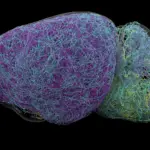
The use of organoids was pivotal to the study’s success. These miniature brain structures, which grow from stem cells to mimic the early development of human and non-human primate brains, allow scientists to conduct experiments that would be logistically or ethically impossible in live animal models. Because they can be grown in large numbers, organoids enable the kind of robust statistical analysis required to pinpoint developmental milestones.
Michael Heide, head of the Junior Research Group Brain Development and Evolution, emphasizes the hybrid nature of their methodology. "The study combines the advantages of in vivo and in vitro methods," Heide states. "Organoids are well-suited for obtaining statistically robust results because such sample sizes are not feasible in primates. We subsequently repeated some key experiments in fetal brain tissue to confirm the results from the organoids."
A major challenge in organoid research is ensuring that the models accurately reflect the temporal pacing of a living brain. To ensure their data was reliable, the team established a critical correlation between the organoids and actual marmoset biology. They determined that a marmoset brain organoid cultured for 50 days mirrors the developmental stage of a natural marmoset brain at 90 days. This calibration was essential, as it allowed the researchers to anchor their cellular observations to real-world developmental timelines, ensuring that their findings were not merely artifacts of the laboratory environment but accurate representations of how these monkeys grow in nature.
Implications for Human Health and Evolution
This research provides a clearer window into the diversity of primate evolution. It demonstrates that the vast differences in brain morphology between species—from the smooth brain of the marmoset to the heavily folded human brain—are governed by nuanced adjustments in cellular kinetics. By tuning the speed of cell division, the complexity of cell structure, and the duration of growth phases, evolution can radically alter the landscape of the brain without requiring a fundamental redesign of the basic cellular machinery.
Beyond its evolutionary implications, this study holds significant promise for medical science. Many neurodevelopmental disorders in humans are linked to the disruption of these exact processes—the proliferation of progenitor cells and the precise timing of neuronal differentiation. When these mechanisms go awry, they can lead to conditions ranging from microcephaly, where the brain fails to grow to a normal size, to severe cortical malformations.
By establishing a baseline for how these processes are regulated in a healthy primate brain, researchers can now more effectively investigate what happens when these developmental signals are interrupted. As the scientific community continues to grapple with the complexities of the human brain, these miniature models from the German Primate Center offer an invaluable roadmap. They show that while the marmoset may lack the folds of a human brain, it possesses the essential cellular secrets needed to better understand the fragility and the brilliance of our own neurodevelopmental journey.