








Eating peanuts every day may offer surprising and significant benefits for the aging brain, according to new research emerging from the Maastricht University Medical Center in the Netherlands. Scientists have discovered that the regular consumption of unsalted, skin-roasted peanuts can improve how specific regions of the brain respond to insulin in older adults. These findings, which highlight a potential dietary strategy for supporting cognitive longevity, were recently published in the peer-reviewed journal Food & Function by researchers from the Institute of Nutrition and Translational Research in Metabolism (NUTRIM).
While insulin is most commonly recognized for its role in regulating blood sugar levels throughout the body, its influence extends deep into the central nervous system. In the brain, insulin is essential for the growth, survival, and effective communication of nerve cells. It acts as a facilitator for memory processes and various other cognitive functions. Furthermore, researchers believe that maintaining healthy insulin signaling may serve as a protective barrier against the neurodegenerative processes often associated with Alzheimer’s disease and other forms of age-related cognitive decline.
The study, which tracked 31 healthy adults between the ages of 60 and 75, utilized a rigorous randomized, controlled crossover trial to isolate the effects of the nut consumption. During the intervention phase, participants were instructed to consume 60 grams—approximately two servings—of unsalted, skin-roasted peanuts daily for 16 weeks. The crossover design allowed researchers to observe the same individuals both during the period when they were consuming peanuts and during the control period when they abstained entirely, providing a robust comparison of the dietary intervention’s effects.
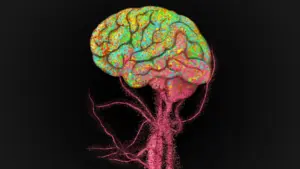
Upon concluding the 16-week period, the research team observed a measurable improvement in insulin responsiveness within a specific cluster of brain regions located in the right hemisphere. These regions included the lingual gyrus, the hippocampus, the parahippocampal gyrus, and the posterior cingulate gyrus. Each of these areas is heavily involved in memory processing and consolidation, making the improvement in their insulin sensitivity a noteworthy development for brain health research.
Dr. Peter Joris, the study’s senior author and an associate professor in the Department of Nutrition and Movement Sciences at NUTRIM, emphasizes the importance of these findings in the context of human aging. "The hormone insulin plays an important role in the brain, where it supports memory and other cognitive processes," Dr. Joris explains. "As people age, the brain may become less responsive to insulin, which has been linked to age-related cognitive decline. Our study found that daily peanut consumption beneficially affected insulin responsiveness in memory-related brain regions in older adults. These findings suggest that enhanced regional brain insulin responsiveness may contribute to the cognitive benefits of unsalted, skin-roasted peanut intake."
This research builds upon a foundation laid by earlier investigations led by Dr. Joris, the results of which were published in the journal Clinical Nutrition earlier in 2025. In that previous study, researchers found that a 16-week regimen of daily peanut consumption increased overall cerebral blood flow (CBF) by 3.6% and resulted in a 5.8% improvement in verbal memory performance. Cerebral blood flow is a critical metric in neurology, representing the volume of blood circulating through the brain to deliver the oxygen and nutrients required for cellular health. As a key indicator of vascular health within the brain, increased blood flow is generally associated with better cognitive function and a reduced risk of vascular-related decline.
The Maastricht team employed sophisticated imaging and assessment techniques to achieve these results. One of the distinguishing features of the NUTRIM research was its combination of a long-term, carefully controlled dietary intervention with advanced neuroimaging. To quantify changes in brain function, the researchers used arterial spin labeling magnetic resonance imaging (ASL-MRI), a non-invasive technique that allows for the precise measurement of blood flow across various brain regions.
To specifically test insulin responsiveness, the researchers tracked how regional cerebral blood flow shifted after insulin was administered intranasally. By measuring these changes, the team could determine how effectively the brain was utilizing insulin to support metabolic activity in those specific memory-associated areas. Additionally, the team utilized abdominal MRI scans to track changes in intrahepatic lipid (IHL) content—the accumulation of fat in the liver—and relied on the Cambridge Neuropsychological Test Automated Battery (CANTAB) to assess cognitive performance through a standardized series of computerized tasks.
The researchers hypothesize that the brain-boosting effects of peanuts are likely the result of a synergistic interaction between multiple nutrients rather than the action of any single component. Peanuts are nutrient-dense, providing a complex profile of unsaturated fats, dietary fiber, vitamins, and minerals. Furthermore, they contain a variety of bioactive phytochemicals that may work in concert to support neurological health.
"Multiple nutrients present in peanuts, including unsaturated fats, dietary fiber, vitamins and minerals, and bioactive phytochemicals, could potentially contribute to the observed brain benefits," Dr. Joris noted. He specifically highlighted L-arginine, an amino acid for which peanuts are an excellent source. L-arginine serves as a primary precursor for the production of nitric oxide (NO) in the body. Nitric oxide is a signaling molecule known to play a role in vascular health and has been reported in various studies to facilitate learning and memory performance by helping to regulate blood vessel dilation.
To ensure the integrity of the study, the researchers took significant care in how the dietary intervention was managed. Participants were supplied with premeasured packets of skin-roasted peanuts to guarantee consistency in dosage. While they were asked to incorporate the 60 grams into their daily routine—either in the morning or the afternoon—the flexibility of when and how they consumed the peanuts, whether at once or spread across meals, was left to the individual to ensure the study remained reflective of real-world dietary habits. By switching participants between the peanut-inclusive diet and a peanut-free diet in a crossover format, the researchers were able to account for individual variability, further strengthening the reliability of their findings.
The project was led by principal investigator Associate Professor Dr. Peter J. Joris and carried out by Ph.D. candidate Lucia Kerkhof, both of the Department of Nutrition and Movement Sciences at Maastricht University Medical Center. Financial support for the research was provided by The Peanut Institute Foundation. According to the research team, the foundation did not participate in the design of the study, the conduct of the trials, the analysis or interpretation of the data, or the final preparation of the manuscript, ensuring that the study remained independent and objective.
As the global population ages, the search for non-pharmacological interventions to maintain cognitive health has become increasingly urgent. While further research will be necessary to fully understand the long-term implications of these findings and the specific biological pathways involved, the evidence provided by the Maastricht team offers a compelling case for the role of simple, accessible dietary choices in supporting the aging brain. By demonstrating that a consistent, daily habit of consuming unsalted, skin-roasted peanuts can positively influence insulin sensitivity and blood flow in key memory-processing regions, this study adds an important piece to the puzzle of how nutrition may help preserve cognitive function in the later stages of life.