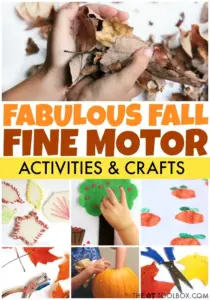








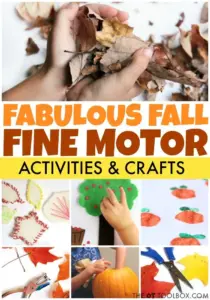

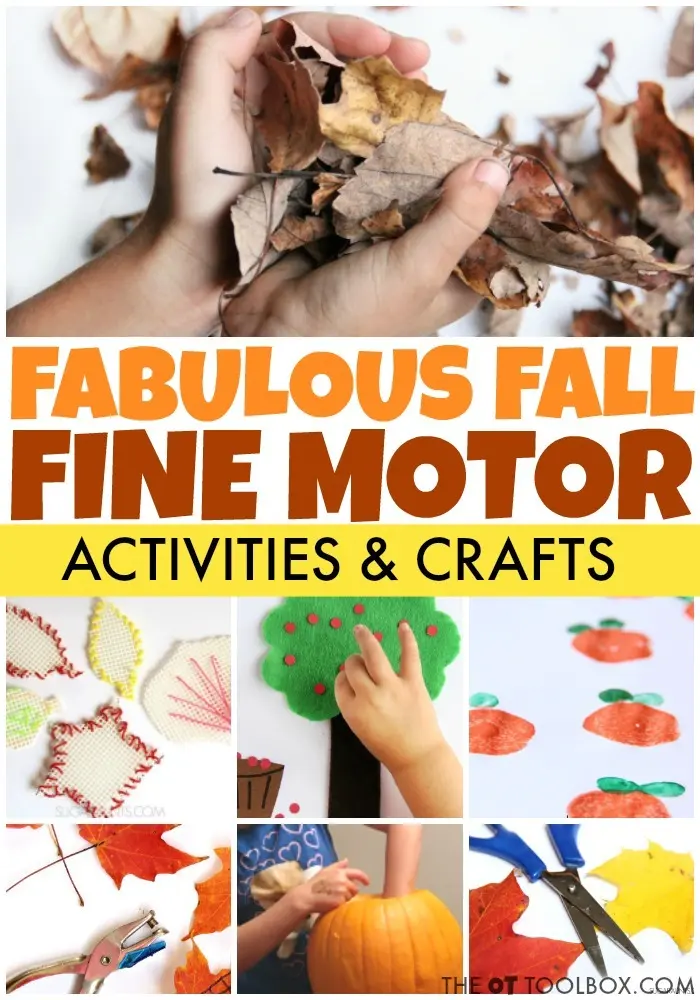
As the autumn season brings changing foliage and cooler weather into the air, pediatric occupational therapists and educators are increasingly turning to seasonal materials to support childhood development. A newly detailed clinical framework highlights how classic fall themes—ranging from apples and leaves to pumpkins, acorns, and farm harvests—can be deliberately integrated into therapeutic interventions to target essential fine motor skills in children.
Rather than selecting seasonal activities purely for recreational engagement, developmental specialists emphasize that everyday autumn items can be structured to address specific functional deficits. These include hand strength, finger dexterity, scissor proficiency, visual-motor integration, and handwriting mechanics. Many seasonal tasks naturally overlap across multiple developmental domains, allowing clinicians and educators to adapt exercises to meet the diverse needs of toddlers, preschoolers, and early elementary students.
To support families and therapists navigating the season, developmental resource platforms have compiled extensive toolkits featuring sensory booklets and printable materials. These resources aim to encourage both fine and gross motor movements through playful, hands-on seasonal experiences.
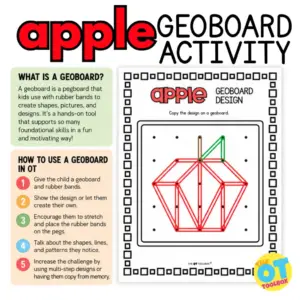
Building hand strength is a foundational element of pediatric occupational therapy, directly impacting a child’s ability to manipulate objects, manage clothing fasteners, and maintain an efficient pencil grasp. Clinicians frequently utilize apple-themed geoboards, where children stretch rubber bands across pegs to recreate specific patterns. This action provides targeted resistance to the fingers and hands while demanding precision and controlled release, simultaneously supporting bilateral coordination and visual-motor planning. Therapists can easily modify the challenge by adjusting the thickness of the resistance bands or simplifying visual patterns for younger participants.
Play dough remains a staple in therapeutic settings year-round, offering tactile sensory input alongside proprioceptive feedback. During the autumn months, therapists incorporate seasonal elements—such as mini leaves, acrylic pumpkins, or colored beads—into the dough to encourage purposeful movement. Rolling, squeezing, pinching, and pressing provide varied resistance that strengthens the intrinsic muscles of the hand without feeling like structured work. Furthermore, specialized hole-punch activities, such as operating a handheld punch around the perimeter of printed apple shapes, require sustained hand force paired with visual-motor coordination.
Manual dexterity—the ability to use the fingers efficiently for small, precise movements—often presents challenges for developing children. Fall-themed manipulatives, including craft pom-poms, seeds, mini erasers, paper clips, and small natural objects, provide effective mediums for refining these abilities.
For instance, fall tree geoboard printables require children to use their fingertips to grasp, stretch, reposition, and release rubber bands with control, discouraging the use of the entire hand. Similarly, paper-clip counting activities require children to attach precise numbers of clips to laminated cards, fostering fingertip precision, bilateral coordination, and basic numerical concepts. Using tongs or tweezers to transfer fall-colored pom-poms into ice cube trays or muffin tins further isolates dexterity skills, with the difficulty easily adjusted by altering the size of the tools or objects.
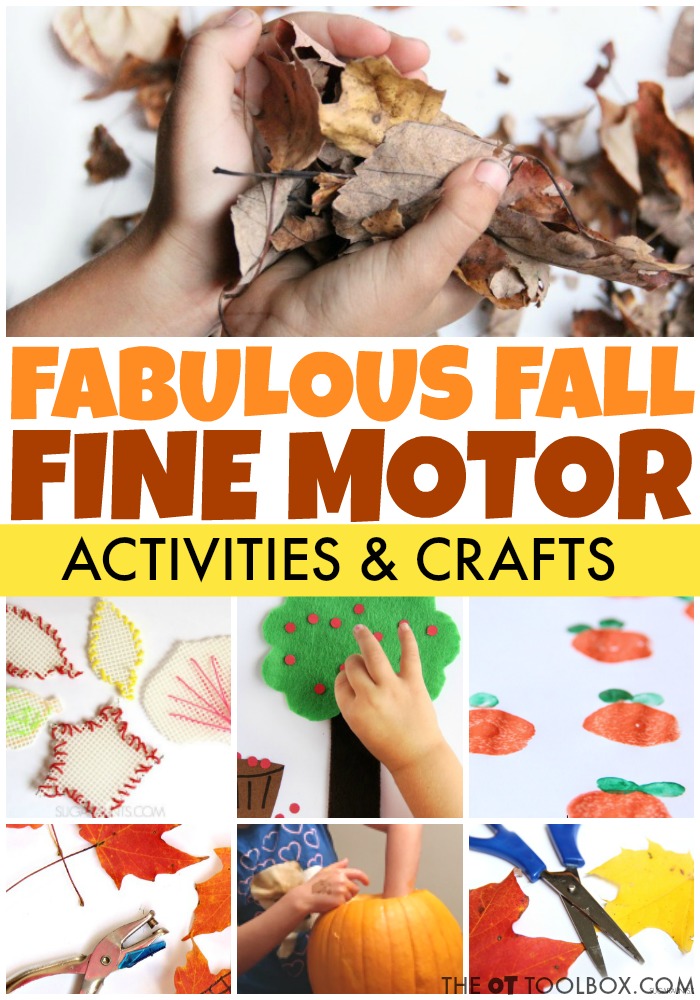
Scissor skills represent another critical area of fine motor development that benefits from seasonal integration. Apple-cutting practice pages and leaf-snipping exercises require the dominant and non-dominant hands to work in tandem. While one hand opens and closes the scissors, the stabilizing hand must rotate and position the paper. Occupational therapists often observe these tasks to assess bilateral coordination and line awareness. For children living in regions with seasonal foliage, cutting real leaves into small pieces provides a tactile and auditory sensory experience, while paper alternatives serve the same developmental purpose in areas without changing leaves. More complex multi-step tasks, such as farm-themed cut-and-paste crafts, introduce executive functioning demands, requiring children to cut, visually orient, sequence, and assemble parts according to specific directions.
Visual-motor integration is frequently intertwined with fine motor tasks. Children may possess adequate hand strength and dexterity yet struggle when required to copy designs, follow lines, locate visual targets, or coordinate visual input with hand movements. Fall-themed directed drawing pages address these challenges by encouraging children to reproduce spatial relationships when sketching acorns, leaves, and pumpkins. Pattern block designs and seek-and-find I Spy activities further enhance visual scanning, figure-ground perception, and sustained visual attention, particularly when paired with a fine motor response such as circling items or attaching clothespins to targeted images.
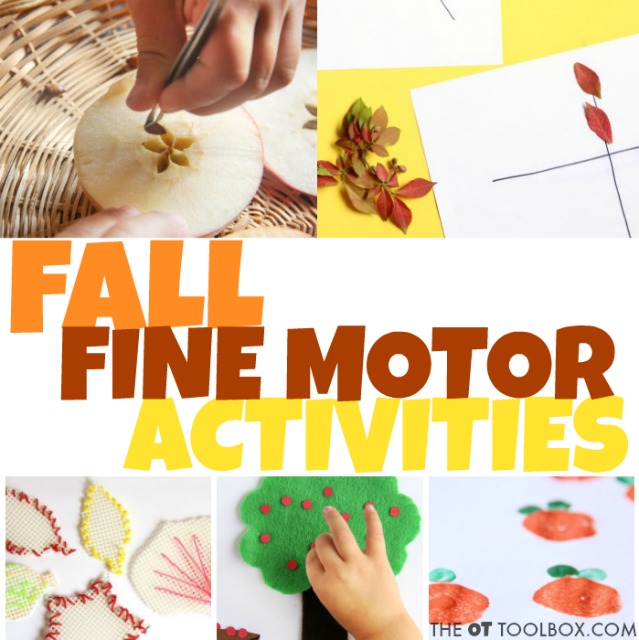
Handwriting interventions also find a natural home in autumn programming. Rather than practicing isolated letter formations, therapists utilize themed writing prompts to engage students in meaningful writing tasks. By tailoring prompts to individual developmental stages—ranging from writing a single word for emerging writers to drafting full paragraphs for older students—clinicians can address line awareness, spacing, letter size, and endurance across an entire therapy caseload.
For educators and parents seeking immediate, no-prep interventions, everyday natural and household items offer expansive opportunities. Fallen leaves can be torn, crumpled, punched, cut, sorted, or strung; acorns can be counted and transferred using tongs; and bread ties can be manipulated to strengthen small hand muscles. Furthermore, sensory-rich activities such as crunching autumn leaves support auditory processing, while dyeing pumpkin seeds with liquid watercolors provides foundational work for pincer grasps, sorting, and in-hand manipulation.
Ultimately, these autumn-themed strategies bridge the gap between seasonal play and clinical intervention, equipping children with the functional motor skills necessary for academic and daily living tasks throughout the school year and beyond.