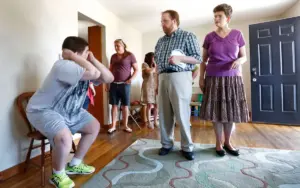









DALLAS — Megan Howard’s son is the type of student who spends his free time immersed in the complexities of trigonometry. To his teachers, he might appear to be a high-achieving student with a bright academic future. Yet, despite his intellectual prowess, he found himself paralyzed by the prospect of walking through his middle school doors. Each morning followed a painful, repetitive script: he would get dressed, approach the school entrance, and then find himself unable to step out of the car. The disconnect between his cognitive capabilities and his daily emotional experience became too much to ignore. Eventually, Howard made the difficult decision to withdraw him from the public school system, searching for an environment that could finally see the whole child.
Her son, who is on the autism spectrum and has ADHD, never struggled with the academic rigors of homework. Instead, he struggled with the fundamental human need for belonging. In a school of 1,000 students, Howard said, her son’s primary deficit wasn’t a lack of intelligence, but a lack of connection; he simply needed one friend to anchor him.
Her children belong to a demographic often referred to by educators and psychologists as "twice-exceptional" (2e) learners. These are students who possess the paradoxical combination of high intellectual giftedness alongside learning differences such as dyslexia, ADHD, or autism. Across the United States, an estimated 360,000 students fall into this category. For their parents, the journey through the education system is often a frustrating, lonely search for a classroom that can simultaneously nurture a child’s advanced intellect and support their complex socioemotional needs.
This is the void that the Sage School of Dallas aims to fill. As one of the few private institutions in the country specifically dedicated to this population, the school was founded on the principle that these students should not have to choose between academic rigor and specialized emotional support.
"Either you can find a place that has rigorous academics, or you can find a therapy school that is really focused on social-emotional learning," Howard explained. "There was never a place that did both."
An Unexpected Combination within One Person
The understanding of special education in the United States has undergone a significant evolution over the past several decades. As research into neurodiversity has deepened, the number of students qualifying for specialized services has risen sharply. However, this progress has brought a difficult question to the forefront of educational policy: Are our schools truly equipped to handle the nuanced needs of twice-exceptional learners?
Jessica Rall, a founder of the Sage School, notes that for years, parents of 2e children have had to compromise. "Until Sage was around, there wasn’t a school that met all of their needs. So you were always trying to make it work," she said. "These students and families need a place where they don’t just have to make it work."
The term "twice-exceptional" has gained significant traction as more clinical research emerged on this group. According to the National Association for Gifted Children, approximately 6% of all students receiving special education services are also classified as academically gifted.
Dr. Jacob Michaelson, a professor of psychiatry and neuroscience at the University of Iowa, describes the condition as a unique phenomenon. "There is kind of this unexpected combination within one person of extreme ability in one aspect and extreme disability in another," Michaelson said.
This paradox often leaves 2e students flying under the radar. Because their high intellect can mask their underlying learning differences, their struggles are rarely reflected in standardized test scores. Consequently, overworked educators in traditional settings may fail to identify the need for intervention, assuming the student is doing fine because they are achieving high marks.
"You get the impression: ‘Oh my gosh, this person is really smart,’" Michaelson noted. "But that masks the fact that they do have other deficits that are not as apparent."
For parents like Howard, the dilemma is often binary: should the child be placed in a high-pressure gifted and talented program, or should they be placed in a special education environment where they might be intellectually bored? Howard knew her oldest son would thrive in the intense math curriculum offered at the School for the Talented and Gifted, a competitive magnet school within the Dallas Independent School District. Yet, she feared that the high-stakes environment would lead to social isolation. Her younger son, who lives with selective mutism—an anxiety disorder that prevents speech in certain social settings—required an environment with smaller, more intimate group interactions. For Howard, the goal of schooling was never about the curriculum; it was about fostering a social environment where her sons could survive and thrive.
A Private School Steps In
Kristen Dauphinais, who helped launch the Sage School, understands these parental anxieties firsthand as the mother of a twice-exceptional learner. "We always joke that these kids just have to cook a little differently," Dauphinais said. "We’re the oven. We built an oven to cook these kids a little differently."
Inside the school, the approach is intentionally unconventional. On a typical October morning, two high school students were seen huddled over a table cluttered with calculators, worksheets, and drafting tools. As part of a physics project, they were constructing a projectile launcher. The moment of truth came when they inspected their machine, loaded it, and fired. The projectile soared across the room, landing just shy of their mathematical predictions—a result that sparked both excitement and an opportunity for further inquiry.
Mandi Skerbetz, the head of school, describes the curriculum as "inquiry-based," allowing students to dive as deeply as they wish into topics that capture their interest. The school day is rounded out with extracurricular clubs ranging from chess to Pokémon and Dungeons & Dragons, which serve as structured environments for socialization.
Crucially, socioemotional learning is not an afterthought; it is baked into the curriculum. Students are taught specific communication strategies and participate in role-playing exercises to navigate tricky social dynamics. One student recently demonstrated the efficacy of these lessons by reciting the "THINK" acronym—a guide for social interaction—reminding himself to ask if his words are true, helpful, inspiring, necessary, and kind before speaking.
Since opening its doors last year with only four students, the Sage School has grown to serve 11 students, with a staff of four full-time teachers and one part-time educator. The accredited school, operating out of a church in Far North Dallas, serves students from fifth through 12th grade. Admission is competitive, requiring cognitive assessments, academic records, and family interviews, and comes with a tuition of $35,000 per year.
How Do Other Schools Serve Twice-Exceptional Students?
The founders of the Sage School did not act in isolation. They spent significant time consulting with established institutions across the country, most notably Bridges Academy in Southern California, which serves as a primary "aspirational peer."
Founded in 1994 with just three students in a living room, Bridges Academy has expanded into a comprehensive institution with a sprawling campus, an online school, and a dedicated research center. Mark Long, the head of school at Bridges, has seen the conversation around "neurodiversity" and "twice-exceptionality" expand rapidly in recent years. "There’s an understanding around what it is," Long said. "There might not be an understanding of what to do with it, but there’s an awareness."
Bridges Academy utilizes a flexible, college-preparatory curriculum that allows students to demonstrate mastery in ways that suit their unique strengths—for instance, replacing a standard 2,000-word essay with a film project or an oral presentation. The school also reserves daily blocks for social skill development, focusing on teamwork and public speaking.
While the cost of such private specialized education is high—tuition at Bridges Academy can exceed $61,000 for in-person attendance—Long emphasizes that the model of support should not be reserved only for those who can pay. The academy provides consulting services to other districts across the country, as public school systems increasingly grapple with how to accommodate 2e students.
Public districts have already begun making inroads. Montgomery County Public Schools in Maryland is frequently cited for its comprehensive approach, which includes the use of specialized, self-contained classrooms for 2e learners. In Texas, the landscape is shifting as well. Twice-exceptional students are eligible to participate in gifted programs while simultaneously receiving the legal protections and accommodations outlined in an Individualized Education Program (IEP). Furthermore, some North Texas districts, such as Carrollton-Farmers Branch ISD and Arlington ISD, have implemented universal screening processes. By testing every student rather than relying on teacher referrals, these districts can better identify gifted students who might otherwise be overlooked due to their learning challenges.
"These kids are clever. They’re game-changers," Long said. "We have a moral obligation to make sure that every child across the United States and beyond reaches their potential."
For Megan Howard, the search for the "dream school" was a long and exhausting process that involved homeschooling, public school, and private college preparatory attempts. When she discovered the Sage School, she was initially hesitant about the idea of enrolling her children in such a young, unproven institution, and the high tuition presented a significant financial hurdle. Yet, after consulting with financial planners and observing the environment firsthand, she decided the trade-offs were worth it.
Today, when she watches her oldest son engage with advanced calculus, she knows he is finally being challenged. When she sees him making friends and navigating his social world with newfound confidence, she feels a profound sense of relief. And when she witnesses him advocating for his own needs, she feels a deep sense of pride. For parents of twice-exceptional children, these milestones are the ultimate validation that their efforts to find a school that truly understands their children were not in vain. Howard hopes for a future where that level of support is not a luxury, but an accessible standard. "I wish," she said, "every student could go to a Sage who needs it."