







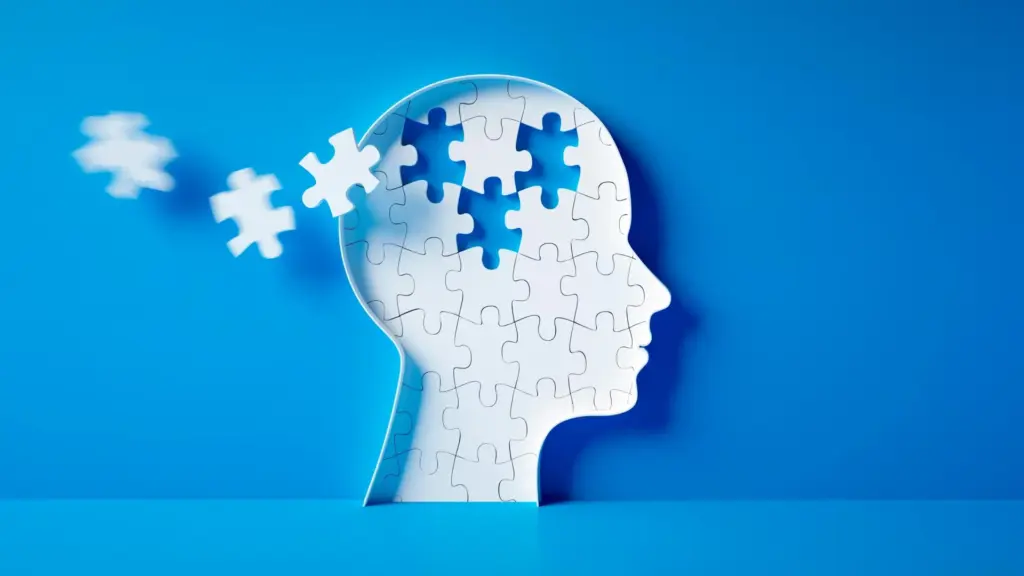
For generations, the conventional narrative surrounding human aging has been one of inevitable erosion. As the calendar pages turn, society has been conditioned to expect a steady, inexorable decline in memory, mental sharpness, and overall cognitive agility. We often measure the health of an aging mind by its ability to perform tasks that characterize youth—rapid information processing, the recall of minute details, and the acquisition of new, raw data. However, a groundbreaking new hypothesis proposed by researchers at the University of Arizona suggests that this focus on "decline" may be fundamentally misguided, ignoring the brain’s sophisticated evolution into a different, yet equally vital, stage of life.
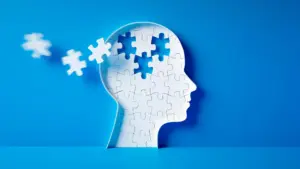
In a study published in Perspectives on Psychological Science, researchers argue that the changes we observe in the aging brain should not be viewed as simple deterioration. Instead, they represent a purposeful biological adaptation. Drawing on advancements in molecular biology and cutting-edge brain imaging, the researchers have formulated the "adaptive aging hypothesis," a framework that suggests the aging brain is not losing its capacity, but rather shifting its priorities to maximize the utility of a lifetime of accumulated wisdom.
The Biological Pivot: From Memory to Meaning
To understand this transition, one must look at the structural shift in how the brain handles information. Human cognition relies on a delicate interplay between two primary regions: the hippocampus and the frontal cortex. The hippocampus acts as the brain’s high-fidelity recording studio, tasked with preserving the precise details of events—the "who, what, when, and where." The frontal cortex, conversely, serves as the analytical engine, responsible for synthesizing these experiences, identifying patterns, and extracting the "gist" or central meaning of life’s lessons.
According to the researchers, the balance between these two regions is not static; it is a dynamic scale that tips as we age. In our youth, the hippocampus is highly active, reflecting a biological necessity to absorb the world in granular detail, creating an foundational archive of knowledge. However, as individuals enter their later decades, the brain begins to downregulate hippocampal activity, shifting the workload toward the frontal cortex.
This is not a failure of the system, but a strategic reallocation of resources. As Fabian-José Fernandez, a coauthor of the study and an associate professor of cognition and neural systems at the University of Arizona, explains, viewing normative aging solely through the lens of decline is a fundamental misinterpretation. "If we look at normative aging as a story of just decline, we are really missing the boat," Fernandez notes. "The older brain is optimized for different things than the younger brain, predominantly the sharing of stored expertise and social relationships."
Evolutionary Drivers and the Preservation of Wisdom
The consistency of this cognitive shift across human populations and even various animal models suggests that this is an evolutionary trait rather than a byproduct of cellular decay. From an evolutionary standpoint, the survival of a species depends not just on the acquisition of new information, but on the successful transmission of survival knowledge to subsequent generations.
When an individual is young, the brain’s priority is to act as a sponge, building an exhaustive library of experiences to understand the fundamental laws of their environment. By later adulthood, that library is already well-stocked. At this stage, the energy-intensive process of recording every new, individual detail becomes less valuable than the ability to connect new information to existing, deep-seated conceptual frameworks.
"Evolution may be saying that if you make it long enough, there’s a need to transmit this information, so we put into motion biological changes that enforce and protect your semantic and autobiographical memories," Fernandez suggests. By prioritizing the "gist" over the "nitty-gritty," the aging brain effectively safeguards the most important lessons—the wisdom, the social nuances, and the judgment—that allow older adults to serve as mentors, storytellers, and cultural anchors. This evolutionary pressure ensures that the knowledge gained over decades is not just held, but refined and passed on.
Disentangling Healthy Aging from Alzheimer’s
One of the most critical implications of the adaptive aging hypothesis is its potential to refine how the medical community distinguishes between healthy cognitive aging and neurodegenerative conditions like Alzheimer’s disease. For years, there was a prevailing, albeit flawed, tendency to view Alzheimer’s as merely an accelerated or "intense" version of normal aging.
Fernandez is adamant that this perspective is scientifically incorrect. "When I was in grad school, people thought about Alzheimer’s as a more intense version of cognitive aging, but that is just not the case," he says. "They are completely different."
The distinction lies in the brain’s circuitry. In a healthy 70-year-old, the reduction of hippocampal activity is a controlled, developmental transition. In contrast, Alzheimer’s disease is characterized by pathological interference—the accumulation of proteins like amyloid and tau that disrupt normal brain networks. In many cases of Alzheimer’s, the hippocampus does not follow the natural path of deemphasis; it becomes hyperactive and dysfunctional. This erratic activity prevents the brain from effectively utilizing its existing knowledge base and disrupts the very circuits required to access one’s own autobiographical history. By clarifying that healthy aging is a coherent developmental stage rather than a "slow-motion" disease, researchers may be better equipped to identify and treat the true pathologies of neurodegeneration.
Rethinking the Value of the Aging Mind
The adaptive aging hypothesis challenges society to reconsider its metrics for "successful" aging. In our current culture, we often evaluate cognitive health based on a younger person’s yardstick—how quickly someone can recall a name or how accurately they can memorize a list of random words. The researchers argue that by insisting older adults function exactly as they did in their thirties, we may be working against the natural, evolved priorities of the aging brain.
If the brain is biologically designed to move away from being "hippocampal-centric" by the sixth or seventh decade, then forcing that focus may be counterproductive. Instead, the authors suggest that society should foster environments that play to the unique strengths of the older mind. This involves creating more meaningful intergenerational opportunities—mentorship programs, community storytelling initiatives, and social roles that require the application of wisdom rather than the recall of raw data.
The untapped potential of older adults remains one of our most overlooked resources. Because we have stigmatized the natural cognitive shift toward abstraction and meaning-making, we have failed to create structures that allow this "stored expertise" to flow back into the younger generations.
"People see older individuals and look at them as not being on par with younger individuals across a lot of metrics," Fernandez observes. "The way I look at it is that you’ve got someone with a brain that has been active for several decades and has seen a lot. There is tremendous value there, and we don’t do a good job of unlocking it."
Ultimately, the adaptive aging hypothesis offers a more optimistic and nuanced view of the human lifespan. It suggests that the aging process is not a linear march toward oblivion, but a transition into a different mode of operation. While we may lose the ability to recall the precise, fleeting details of a Tuesday afternoon from forty years ago, we gain the capacity to hold the complex, overarching narratives that define our lives and the world around us. By recognizing these hidden strengths, we can move toward a culture that honors the evolution of the mind, ensuring that the wisdom of our elders remains an active and essential component of our collective future.