







In a landmark achievement for global public health, the World Health Organization (WHO) has officially certified Timor-Leste as malaria-free. This milestone represents a transformative journey for the young nation, which, shortly after gaining its independence in 2002, identified the mosquito-borne disease as a critical threat to its population and launched a concerted, nationwide effort to eradicate it. The certification marks the culmination of decades of strategic planning, political commitment, and the tireless dedication of local health workers who turned the tide against a disease that once claimed countless lives across the island.
The announcement places Timor-Leste among an elite group of nations that have successfully eliminated malaria. According to the WHO, a total of 47 countries and one territory have now achieved this status. Within the WHO South-East Asia region, Timor-Leste becomes the third country to reach this goal, following in the footsteps of the Maldives, which was certified in 2015, and Sri Lanka, which achieved the same distinction in 2016.
“WHO congratulates the people and government of Timor-Leste on this significant milestone,” said Dr. Tedros Adhanom Ghebreyesus, WHO Director-General. “Timor-Leste’s success proves that malaria can be stopped in its tracks when strong political will, smart interventions, sustained domestic and external investment, and dedicated health workers unite.”

For a country to receive official WHO certification of malaria elimination, it must prove beyond a reasonable doubt that the chain of indigenous transmission has been interrupted nationwide for at least three consecutive years. By reaching this benchmark, Timor-Leste has demonstrated a level of health infrastructure and surveillance capability that is truly remarkable for a nation of its age and resources.
Reflecting on the emotional and physical toll the disease once took on the country, Dr. Élia António de Araújo dos Reis Amaral, the Minister of Health of Timor-Leste, noted the gravity of the victory. “We did it. Malaria has been one of our most relentless enemies—silent, persistent, and deadly. We lost too many lives to a disease that should be preventable. But our health workers never gave up, our communities held strong, and our partners, like WHO, walked beside us,” she said. “From 223,000 cases to zero—this elimination honors every life lost and every life now saved. We must safeguard this victory with continued vigilance and community action to prevent malaria’s re-entry.”
A Rapid Shift from High Burden to Malaria-Free
The trajectory of Timor-Leste’s fight against malaria is a study in rapid, effective public health transformation. Following independence in 2002, the nation faced an overwhelming health burden. By 2006, the country recorded more than 223,000 clinically diagnosed cases of malaria. The sheer scale of the epidemic necessitated an urgent and organized response, leading the Ministry of Health to establish the National Malaria Programme in 2003.
This programme served as the command center for the nation’s malaria response, tasked with planning, implementing, and monitoring interventions across the country. Despite beginning with only two full-time officers, the initiative was bolstered by strong technical leadership and a rigorous focus on managerial capacity. This early foundation allowed the government to act decisively when new tools became available. Within just a few years, the country integrated rapid diagnostic tests and artemisinin-based combination therapies into its National Malaria Treatment Guidelines. Simultaneously, it launched a massive, nationwide distribution of long-lasting insecticide-treated nets to protect the most vulnerable populations in high-risk areas.
The momentum gathered in the early 2000s accelerated in 2009, when the government received critical support from the Global Fund to Fight AIDS, Tuberculosis and Malaria. This influx of resources allowed Timor-Leste to scale up its vector control efforts significantly. The distribution of insecticide-treated nets became more systematic, and indoor residual spraying was implemented in affected communities. Furthermore, the country expanded its diagnostic capabilities, bringing microscopy and rapid diagnostic tests directly to the point of care in local health posts, ensuring that patients could receive accurate testing and treatment without having to travel long distances to major hospitals.
Building a Resilient Health Infrastructure
The success of Timor-Leste’s malaria campaign is inseparable from the broader development of its national health system. Recognizing that clinical interventions alone could not suffice in a nation with challenging terrain and limited resources, the government invested in a three-tier health system designed to provide equitable access. This system encompasses national hospitals, reference hospitals, community health centers, and localized health posts. The stated goal was to ensure that the vast majority of citizens could access essential health services within an hour’s walk of their homes.
This access was further democratized by the government’s commitment to free universal health care, which removed financial barriers that might otherwise prevent families from seeking treatment for fevers or other symptoms of malaria. In remote or rural areas, the government supplemented this infrastructure with monthly mobile clinics and dedicated community outreach programs, ensuring that even the most isolated populations were reached by health workers.
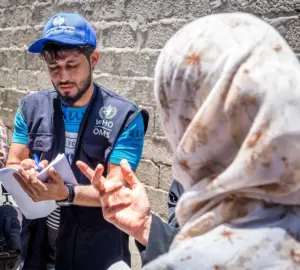
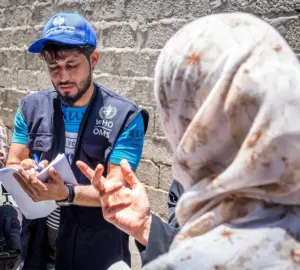
The success of this strategy highlights the vital importance of country-led leadership and multi-sectoral collaboration. The Ministry of Health, in partnership with the WHO, international donors, non-governmental organizations, and local community leaders, created a unified front against the disease. Central to this success is a real-time, integrated, case-based surveillance system that allows for rapid data collection, immediate investigation of new cases, and a swift public health response. Trained health workers, stationed even at the nation’s borders, ensure that the country remains vigilant against the potential re-introduction of the parasite, keeping a close watch on travelers and mobile populations.
Dr. Arvind Mathur, the WHO Representative to Timor-Leste, underscored the personal and collective effort required for this achievement. “Timor-Leste’s malaria-free certification is a defining national triumph—driven by bold leadership, the tireless efforts of health workers, and the resolve of its people,” he said. “As a young nation, Timor-Leste stayed focused—testing, treating, and investigating swiftly. Ending transmission and maintaining zero deaths takes more than science; it takes grit. This victory protects generations, present and future, and shows what a determined country can achieve.”
The official certification of Timor-Leste serves as a powerful reminder of the impact that targeted, sustained, and well-resourced public health policies can have. By moving from over 223,000 cases in 2006 to zero indigenous cases from 2021 onwards, the country has not only improved the quality of life for its citizens but has also provided a replicable model for other nations striving to eliminate infectious diseases.
Moving forward, the focus for the government of Timor-Leste shifts toward maintenance. As Dr. Amaral noted, the victory must be safeguarded with continued vigilance. The surveillance systems, the network of dedicated health workers, and the community engagement strategies that brought about this success remain in place to ensure that the progress made is never reversed. The achievement stands as a testament to the resilience of a nation that, through unity and commitment, has successfully conquered one of its most persistent and deadly adversaries.
For the international community, the certification process remains a rigorous standard. The final decision to grant the malaria-free status was made by the WHO Director-General, following a detailed recommendation from the Technical Advisory Group on Malaria Elimination and Certification, which reviewed the evidence of the country’s malaria-free status. With this certification, Timor-Leste has set a high bar for health security in the region, proving that even the most challenging public health crises can be overcome with perseverance and a strategic, evidence-based approach.