








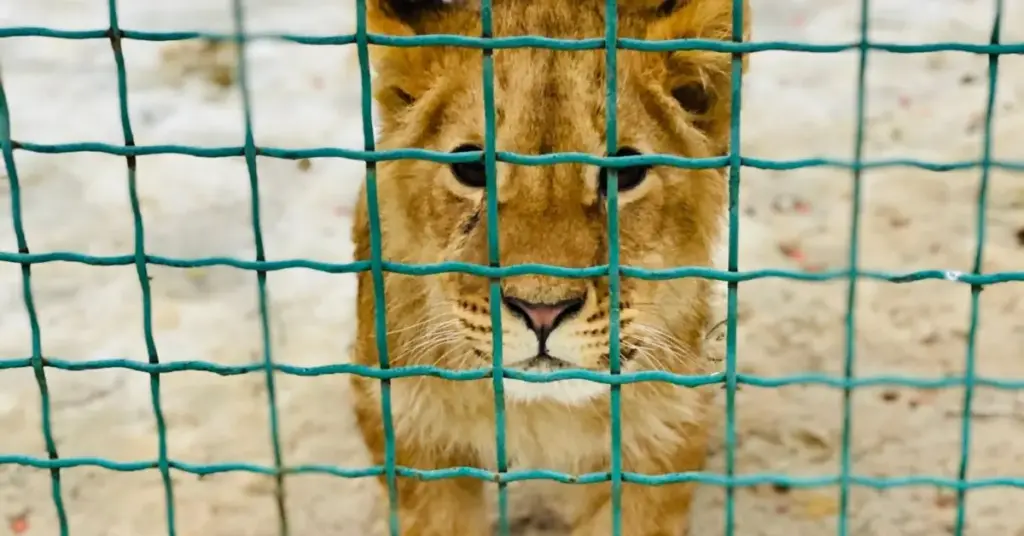
It is widely understood that the lives of large captive animals in the United States are frequently compromised, shaped by confinement, exploitation, and neglect. Thanks in large part to the reach of mass media and streaming culture, millions of people around the globe are now intimately familiar with the horrific conditions endured by captive big cats. These animals have historically been kept in substandard roadside zoos, traveling circuses, private backyards, suburban homes, and on television and movie sets. The sordid, real-life dramas surrounding figures featured in the cultural phenomenon Tiger King—including Joe Exotic, Tim Stark, and Jeff Lowe—ultimately captured the public imagination and culminated in legal reckonings that put these notorious exploiters out of business.
Yet, despite the public outcry and media attention, piecing together the complex, sprawling puzzle of how America’s captive big cat crisis came to be remains a daunting task. Enter award-winning author and journalist Carol Bradley. In her long-awaited and highly acclaimed new book, aptly titled Striped Reckoning: Tiger Kings and the Battle to Rescue America’s Captive Big Cats, Bradley brilliantly synthesizes the main threads of this troubling narrative into an understandable, coherent whole. Whether readers identify as dedicated animal advocates or approach the subject from a more neutral perspective, the sheer determination of those who fought to free these majestic animals is undeniably moving. Regardless of one’s initial stance on animal ethics, Bradley’s meticulously researched book serves as an eye-opening deep dive into a dark and largely hidden underworld.
Why Carol Bradley Wrote ‘Striped Reckoning’
The genesis of Bradley’s latest literary project stretches back several years, taking root at a professional gathering far removed from the glitz of Hollywood. The idea for the book first came to Bradley while she was attending the Performing Animal Welfare Society’s (PAWS) International Captive Wildlife Conference. While at the conference, she watched a distressing video of a tiny tiger cub being forced to swim in a concrete pool at a roadside zoo located in Florida.

The cub, named Ariel, suffered from an undiagnosed neurological condition that left her barely able to keep her head above the water. Bradley returned home deeply haunted by the unsettling image of the sweet little cub struggling in vain against the water. At the time, however, she was uncertain whether the reading public would be drawn to a book focused exclusively on captive big cats in the United States. Furthermore, she was already deeply immersed in writing another book, prompting her to temporarily set the idea aside.
The turning point arrived two years later, when news broke that a zookeeper in Oklahoma had been sentenced to federal prison. The conviction stemmed not only from shooting and killing a handful of tigers in his care, but more critically, from an attempted murder-for-hire plot targeting his primary nemesis: a sanctuary owner in Florida who had been working tirelessly to drive his abusive operation out of business. Suddenly, Bradley had a compelling narrative hook for a book. She immediately began diving headfirst into the complex history of captive big cats in the United States.
Just two months into her deep-dive research, Netflix released the explosive documentary series Tiger King: Murder, Mayhem and Madness. Overnight, the Oklahoma zookeeper, Joe Exotic, became a household name across the globe. Yet, despite the massive cultural footprint of the documentary, a vast portion of the broader story concerning the systemic mistreatment and exploitation of captive big cats in the U.S. remained largely untold. That untold history is precisely what Bradley set out to document.
The evocative title of the book carries a dual meaning, referring directly to a dramatic reversal of fortunes. The tigers that were once abused and exploited by Exotic and two other prominent figures dubbed "Tiger Kings" are now living vastly improved lives in accredited sanctuaries. Conversely, two of those self-proclaimed kings are completely out of business, while Exotic finds himself permanently behind bars—confined, as Bradley notes, in a cage of his own making.
The tiger featured prominently on the book’s cover, Luna, was one of the unfortunate cubs forced to participate in the swimming spectacles at the Florida roadside zoo that originally inspired Bradley’s journey. Fortunately, Luna was eventually rescued, allowing her to spend her final years living in relative peace and safety at the Turpentine Creek Wildlife Refuge in Arkansas. Tragically, Luna passed away just a few weeks before the official publication of the book.
A Career Shaped by Animal Advocacy
Bradley’s investigative focus on animal welfare is deeply rooted in her professional background as a career journalist and author. Her awakening to the harsh realities of animal mistreatment occurred 23 years ago while she was working as a newspaper reporter. At the time, she covered an egregious and heartbreaking puppy mill bust involving a couple attempting to cross the border into Montana from Canada. The suspects were hauling a staggering 180 malnourished, shivering collies, stacked three deep in the back of a commercial tractor-trailer.
That single, harrowing case proved to be a life-changing turning point for Bradley. Following a prestigious fellowship at Harvard University, where she dedicated her studies to the intricacies of animal law, Bradley shifted her journalistic focus toward documenting and exposing instances of animal mistreatment throughout the United States. Striped Reckoning proudly stands as her fourth published book, continuing her lifelong commitment to shedding light on society’s most vulnerable creatures.
Reaching a Broad Audience
When asked about her target audience for the new book, Bradley emphasizes that the history of tigers and other exotic big cats in America has long operated as an open secret. It is a reality that inevitably shocks readers who have never given serious thought to the origins or living conditions of the animals they once viewed behind chain-link fences at roadside zoos or performing tricks in movies and circuses.
Bradley hopes that the book will naturally appeal to a significant portion of the estimated 64 million households that tuned in to watch Netflix’s Tiger King, while also resonating deeply with animal lovers, conservationists, and nonfiction readers everywhere. By bridging the gap between popular culture fascination and hard-hitting investigative journalism, she aims to deepen public understanding of an ongoing animal welfare crisis.
Exposing Institutional Failures and Inadequate Laws
Throughout her distinguished career, Bradley has taken on a wide array of systemic animal welfare issues. She has written searing exposés on puppy mills, the grueling lives of elephants forced to travel with circuses, and the dark, dangerous days of early Hollywood filmmaking, when horses were routinely and deliberately tripped with hidden wires to simulate battlefield casualties in cinematic combat scenes. Now, with the release of Striped Reckoning, she turns her critical eye toward the exotic animal trade.
A central message of the book is that the federal and state laws governing animal care and possession in the United States remain woefully inadequate. Bradley argues that it is entirely unnatural to expect a massive, highly intelligent creature like an elephant or a tiger to live out its life confined to the cramped back of a semi-trailer, being continuously hauled across the country to perform in the center ring of a circus. Similarly, warehousing big cats in small metal cages and forcing them through endless cycles of captive breeding, denying them any semblance of a natural existence, represents a profound institutional failure.
While Bradley acknowledges some positive legislative progress—such as federal restrictions that effectively ban breeders from offering cub-petting experiences, thereby removing the primary financial incentive for over-breeding—she stresses that the United States still lags significantly behind many other industrialized nations when it comes to comprehensive animal welfare protections.
Focusing on the Domestic Crisis
While a vast body of literature exists detailing the ongoing struggles of big cats to survive in their native habitats across the globe, Striped Reckoning deliberately narrows its focus to the tigers, lions, and other exotic felines residing right here within the United States.
Bradley points out that the vast majority of human encounters with exotic big cats in America have historically occurred because the animals were being held in captivity for human entertainment or commercial profit. The wretched conditions these animals were forced to endure, paired with the extraordinary, high-stakes efforts undertaken by dedicated sanctuary operators and activists to save them, form a vital narrative that deserves to be fully understood by the public.
Fostering Respect, Compassion, and Dignity
As readers turn the final pages of Striped Reckoning, Bradley remains genuinely hopeful that increased public awareness will translate into lasting cultural and political change. She hopes the book will reach individuals who have never truly paused to consider what the daily reality is like for a big cat forced to perform alongside humans—the physical toll of declawing, defanging, and the harsh physical conditioning endured to ensure compliance on stage, paired with the psychological misery of never experiencing the freedom to roam in nature.
Ultimately, Bradley seeks to elevate public consciousness not only regarding the horrors of captivity, but also toward the vital work being performed by accredited animal sanctuaries across the country. These havens step in to rescue abused animals, treat their lingering medical and psychological issues, and provide them with a dignified, peaceful existence for the remainder of their lives.