






Why do some new skills seem to click almost instantly, becoming second nature after only a few attempts, while others remain frustratingly out of reach despite hours of repetitive practice? For years, educators and neuroscientists alike have attributed these discrepancies primarily to individual talent, the intensity of focus, or the sheer volume of effort invested in the learning process. However, emerging research suggests that the secret to mastering new tasks may lie in something far more fundamental: whether the brain is in the precise biological state required to solidify practice into lasting, structural change.
A groundbreaking study conducted by researchers at Tohoku University has unveiled a critical, previously overlooked role for the body-to-brain communication loop in the formation of permanent memories. Their findings, published on August 25, 2026, in the journal iScience, suggest that the vagus nerve—the body’s primary information superhighway—serves as a vital gatekeeper for learning. By stimulating this nerve shortly after a training session, scientists were able to significantly strengthen motor learning in mice, effectively opening a “hidden window” of opportunity for the brain to encode new skills more durably.
The Vagus Nerve and the Architecture of Learning
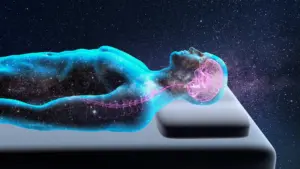
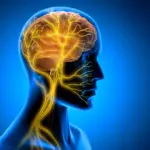
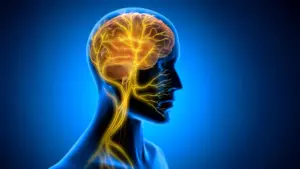
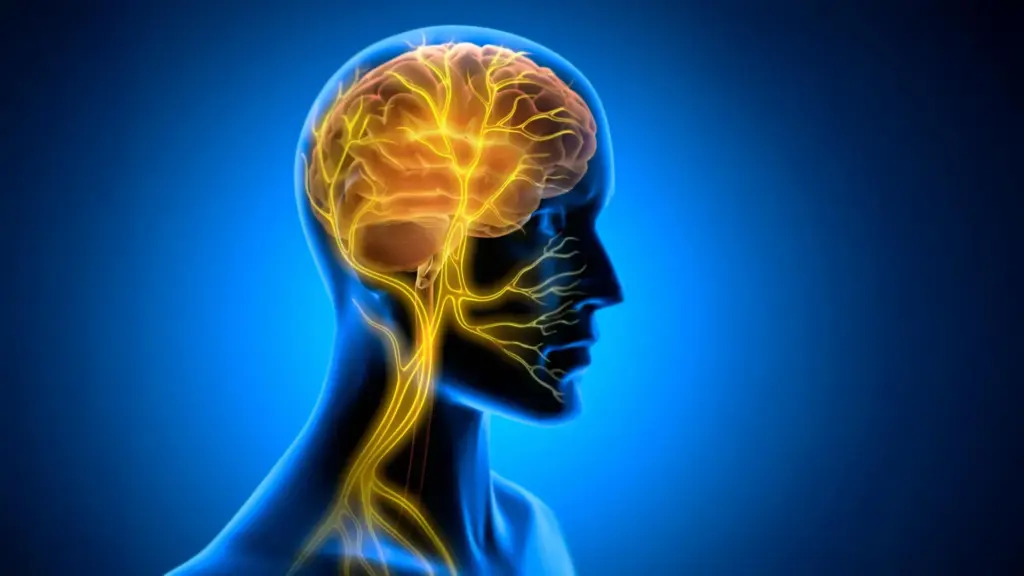
To understand the significance of this discovery, one must first appreciate the complex bidirectional relationship between the brain and the body. Learning is not a process that occurs in isolation within the cranium; rather, it is a whole-body event. The vagus nerve acts as a major communication pathway, carrying a constant stream of sensory data from internal organs to the brain while simultaneously transmitting regulatory instructions from the brain back to those organs.
Because the vagus nerve is so deeply integrated into the nervous system, clinicians have long used vagus nerve stimulation (VNS) as a therapeutic tool. VNS is currently an FDA-approved clinical treatment for several neurological and psychiatric disorders, typically functioning by modulating neurotransmitter activity. However, the team at Tohoku University suspected that there was more to this pathway than just chemical signaling. They hypothesized that VNS might trigger a physical, rhythmic change in the brain’s vascular environment—a mechanical shift that creates a more hospitable terrain for the consolidation of new information.
To put this theory to the test, the researchers developed a specialized, miniaturized cuff electrode, which they surgically attached to the left cervical vagus nerve in a group of mice. With the technology in place, the team set out to observe how VNS would influence a specific type of motor task known as horizontal optokinetic response (HOKR) learning.
HOKR is a cerebellum-dependent eye movement task that requires the subject to improve its ability to track moving visual stripes. This movement is remarkably similar to the automatic, reflexive adjustments a human makes while standing on a stationary platform and watching a train pass by; the brain must learn to calibrate the eyes to follow the visual stimuli accurately. By using this task, the researchers could precisely track the rate and success of motor acquisition in the mice.
The Critical Timing of Consolidation
One of the most revealing aspects of the Tohoku University study was the precise timing of the intervention. Rather than applying VNS while the mice were actively engaged in the HOKR training, the researchers delivered the stimulation only after the training sessions had concluded.
The results were striking. The VNS provided no immediate, short-term performance boost during the training itself; the mice did not appear to learn faster or perform better while the stimulation was occurring. However, the benefits became abundantly clear in the days that followed. Mice that had received post-training VNS demonstrated significantly stronger long-term learning outcomes compared to the control group.
This delay in benefit provides a crucial insight into the nature of memory: it suggests that VNS does not necessarily aid in the acquisition of the skill, but rather enhances the consolidation process—the stage where the brain transitions short-term practice into long-term, durable memory.
"The key point is that VNS was delivered only after training," explains Professor Ko Matsui of Tohoku University. "Our findings suggest that VNS may open a hidden window of opportunity for enhanced learning by making the brain environment more receptive to long-lasting change." By manipulating the timing of the stimulation, the researchers effectively targeted the brain’s "offline" period, when it is naturally busy pruning, strengthening, and stabilizing neural connections.
Rhythmic Vascular Shifts as a Catalyst
Once the behavioral benefits were confirmed, the team turned their attention to the internal mechanics of the brain to identify exactly what was happening beneath the surface. Using a sophisticated imaging technique known as fiber photometry, the researchers monitored blood volume activity in the cerebellar flocculus, the specific region of the cerebellum responsible for coordinating the eye movements required in the HOKR task.
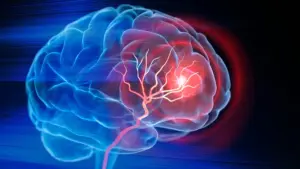
The data revealed a two-phase vascular response triggered by the VNS. Initially, local blood volume within the cerebellar flocculus decreased, followed by a delayed rise. When the researchers repeated the stimulation, they observed that it created a distinct, rhythmic oscillation in blood volume throughout the region.
Crucially, these vascular rhythms were found to be directly correlated with the mice’s learning success. The individuals that exhibited larger, more pronounced blood volume oscillations during the post-training period consistently showed superior learning outcomes by the fifth day of the experiment. This discovery suggests that the brain’s vascular environment—its pulse, flow, and metabolic state—acts as a fundamental support structure for plasticity. By inducing these rhythmic movements, the researchers were essentially "tuning" the brain to be more receptive to the physical changes required for long-term memory.
"Our brains may be more strongly influenced by the body than we imagine," says lead author Junyu Chen. "By tuning the brain’s metabolic environment, including rhythmic vascular movements, we may eventually unlock capacities that would otherwise remain latent." This perspective challenges the traditional, brain-centric view of learning, suggesting that the body is not merely a vessel for the brain but an active participant in the physiological construction of intellect and skill.
Future Implications for the Brain-Body Connection
The implications of this research are vast, particularly for fields related to rehabilitation, education, and cognitive enhancement. If VNS can indeed "unlock" dormant learning capacity by modulating vascular rhythms, it could eventually lead to new strategies for helping individuals recover from motor impairments, such as those caused by strokes or traumatic brain injuries.
However, the team at Tohoku University emphasizes that this is only the beginning. Future research is expected to focus on refining these stimulation protocols to determine the most effective frequencies and durations. Furthermore, the researchers aim to map out more precisely how the two-way communication between the brain and body supports neural plasticity, the brain’s ability to reorganize itself by forming new neural connections throughout life.
By examining this bidirectional pathway in greater detail, scientists hope to move closer to a comprehensive understanding of what makes learning "stick." As the boundaries between physiology and cognition continue to blur, the work of Professor Matsui, Junyu Chen, and their colleagues serves as a reminder that the key to mastering the complex world around us may involve looking inward at the rhythmic, biological signals that our bodies are sending to our brains every moment of the day. As this field of study matures, the goal remains clear: to decode the hidden mechanisms of the human mind and, in doing so, discover new ways to facilitate the lifelong process of learning.