








Researchers at Northwestern University have identified a specific population of neurons that appear to drive the anxiety often associated with the use of cannabinoid drugs, particularly when those substances are consumed in stressful environments. The study, published on October 2 in the journal Nature Communications, offers a biological explanation for why cannabis consumption can, for some individuals, transition from a relaxing experience into one characterized by heightened fear and paranoia.
Cannabinoids, a broad class of chemical compounds that includes THC—the primary psychoactive component of cannabis—have long been known for their complex and sometimes contradictory effects on human mood. While some users report feelings of euphoria or relaxation, others experience acute anxiety or panic, particularly when faced with external stressors. Until now, the specific neurobiological mechanisms behind these adverse reactions have remained largely elusive.
Tracking the Brain During a Threat
To investigate the intricate relationship between cannabinoids and the brain’s fear-processing circuitry, a team led by researchers at Northwestern University Feinberg School of Medicine conducted a series of controlled experiments using mice. The study sought to replicate the conditions under which a human might experience a "bad trip"—the convergence of substance use and an environmental threat.

In the study, researchers exposed mice to the scent of fox urine, a biological trigger that naturally induces fear and defensive behaviors in rodents. Before encountering the predator odor, the subjects were administered either a placebo or a synthetic cannabinoid. The results were stark: the mice that had been given the cannabinoid exhibited significantly higher levels of anxiety. These subjects froze more frequently and spent far less time exploring the area containing the predator scent compared to the control group.
To understand what was happening at the cellular level during these moments of distress, the research team employed advanced monitoring techniques. By implanting a miniature, high-resolution microscope directly into the brains of the mice, the scientists were able to observe neural activity in real-time as the animals navigated the threatening environment.
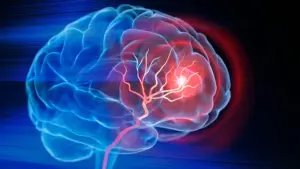
The researchers traced these behavioral changes to a small, concentrated population of brain cells known as somatostatin neurons. These neurons are located within the central amygdala, a region of the brain famously referred to as the "fear center." The central amygdala is responsible for processing emotional responses, particularly those related to fear, stress, and threat detection.
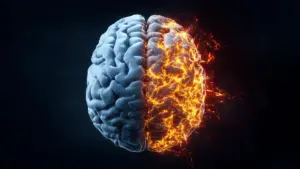
By studying brain tissue samples, the investigators discovered that the cannabinoid drugs effectively disrupted the brain’s internal communication. Specifically, the drugs appeared to weaken a natural regulatory mechanism—a sort of biological "brake"—that typically prevents somatostatin neurons from becoming overactive. When this inhibitory control was lifted, the somatostatin neurons became hyper-responsive.
"Higher doses of cannabinoids and environmental stress worked together to synergistically release the ‘brake’ on the central amygdala, which in turn drove excessive anxiety," explained Dr. Sachin Patel, the study’s senior author and chair of psychiatry and behavioral sciences at Northwestern University Feinberg School of Medicine.
To confirm the role of these specific cells in generating anxiety, the team took the experimental step of genetically silencing the somatostatin neurons. When these neurons were inhibited, the mice that had received the cannabinoid drug no longer exhibited the same heightened fear response. They became significantly less likely to avoid the predator odor, effectively normalizing their behavior to match that of the control group. This finding provided strong evidence that the activity of these specific neurons is a necessary component in the production of the anxious state observed under the influence of cannabinoids.
The Broader Implications for Mental Health
The findings of this study arrive at a time when the use of cannabis is increasing across the United States. As legal access to cannabis expands, so too has the frequency of emergency department visits linked to the drug’s adverse effects. Clinicians and public health officials have expressed growing concern regarding the unpredictable nature of these reactions, and the new research from Northwestern provides a potential physiological basis for these clinical observations.
Dr. Patel noted that the study helps clarify the unpredictable nature of the drug’s impact on human psychology. "The results of this study could explain why a good trip can turn bad pretty quickly if people consume too much cannabis or the situation they are in turns stressful or scary," he said.
Beyond the specific context of cannabis-related side effects, the researchers believe their findings may have broader implications for the field of psychiatry. Because the central amygdala is a hub for fear and stress processing, identifying the specific role of somatostatin neurons could provide a new target for treating anxiety disorders in a general sense, regardless of the cause.
"Suppressing the activity of somatostatin neurons in the central amygdala could represent a final pathway for reducing anxiety symptoms, not just in the context of cannabis side effects," Dr. Patel explained. As the global prevalence of anxiety and mood disorders continues to climb, the discovery of a distinct neural population that functions as a "gas pedal" for anxiety offers a promising avenue for future pharmaceutical or therapeutic interventions.
"Understanding how cannabis affects brain function to generate its psychoactive effects could ultimately reveal new ways to counteract negative consequences should they arise in some people," he added. By mapping the circuit-level changes that occur during a state of chemically induced anxiety, researchers are moving closer to a more granular understanding of how external substances interact with the internal architecture of the human mind.
The study, titled "Cannabinoid Modulation of Central Amygdala Population Dynamics During Threat Investigation," was a collaborative effort involving researchers Farhana Yasmin, Saptarnab Naskar, Danyal Zaidi, Isaac Kandil, Michelle Kwon, and Dr. Luis Rosas-Vidal. The project was supported by the National Institutes of Health, specifically through grants MH100785 and K08 MH126166, as well as the Brain & Behavior Research Foundation’s Young Investigator Awards.
As the scientific community continues to explore the complex relationship between cannabinoids and the brain, the identification of the somatostatin neuron pathway stands as a significant milestone. It bridges the gap between behavioral observations—why people feel anxious after cannabis use—and the precise molecular and cellular events that make those feelings a reality. For future patients suffering from debilitating anxiety, the insights gleaned from these mouse models may eventually translate into more effective, targeted treatments designed to quiet the brain’s overactive fear response.