










As the long, unstructured days of summer replace the predictable routines of the school year, parents, educators, and therapy providers frequently find themselves searching for effective ways to help children manage their sensory processing needs. To address this seasonal challenge, pediatric occupational therapy resources like The OT Toolbox have rolled out updated summer sensory guides and activity frameworks designed to help children stay regulated, focused, and active during the vacation months.
The transition from a structured school environment to a relaxed summer schedule often brings unique hurdles. Without the natural movement opportunities built into a typical school day, children may increasingly turn to screens, tablets, and video games. Pediatric occupational therapists emphasize that incorporating therapeutic and developmental activities into everyday experiences—ranging from a trip to the local playground to a day at the beach—can provide the vital sensory-rich input children need to regulate their nervous systems.
Understanding Summer Sensory Systems and Daily Needs
Experts stress that parents do not need expensive specialized equipment to support sensory development at home. Everyday household items and simple movement-based strategies can effectively meet a child’s sensory processing requirements. By pairing daily routines with easy physical activities, families can provide essential proprioceptive and vestibular input that encourages active play.
For educators and therapy providers running summer school classrooms or specialized camps, maintaining a "just right" level of alertness is critical. When children are appropriately regulated, they can better handle transitions, focus on tasks, and engage meaningfully with their peers. To make these strategies accessible, therapists have long relied on practical list-based handouts that act as a customized menu of occupational therapy tasks tailored to an individual child’s needs.
Proprioceptive and Vestibular Activities for Warm Weather
Proprioception, or the body’s awareness of its position in space, plays a fundamental role in coordination, motor planning, body awareness, and self-regulation. During the summer months, incorporating heavy work activities helps organize the nervous system, supporting emotional regulation and attention span. Simple tasks such as carrying buckets, digging in the sand, pushing wagons, climbing playground equipment, or assisting with light yard work deliver the necessary muscle and joint input.
Similarly, the vestibular system—which governs balance, head position, and movement—benefits immensely from outdoor summer play. Traditional playground activities, swinging, spinning, rolling down grassy hills, navigating obstacle courses, and swimming all supply valuable vestibular input. Replacing hours of sedentary screen time with these movement experiences helps support postural control, visual attention, and overall neurological regulation.
Tactile, Oral Motor, and Nature-Based Exploration
Summer naturally offers countless opportunities for tactile exploration through sand, water, grass, mud, and finger painting. The tactile system helps children interpret touch information, which is foundational for fine motor development and emotional regulation. Engaging in hands-on activities like managing a mud kitchen, digging in a sandbox, or washing outdoor toys strengthens finger dexterity and builds confidence with new sensory experiences.
Concurrently, oral motor development can be supported through seasonal foods and outdoor games. Activities such as drinking smoothies through thick straws, blowing bubbles, chewing crunchy fruits and vegetables, enjoying frozen treats, or using whistles and pinwheels strengthen the oral muscles involved in speech, breathing, and feeding. Furthermore, oral motor input often delivers a calming effect that easily integrates into a daily summer routine.
Nature exploration further enhances this developmental framework. Collecting outdoor items like leaves, rocks, sticks, and flowers allows children to engage in creative projects such as nature collages, leaf rubbings, and rock balancing, combining tactile input with imaginative play.
Structuring the Day with Sensory Circuits
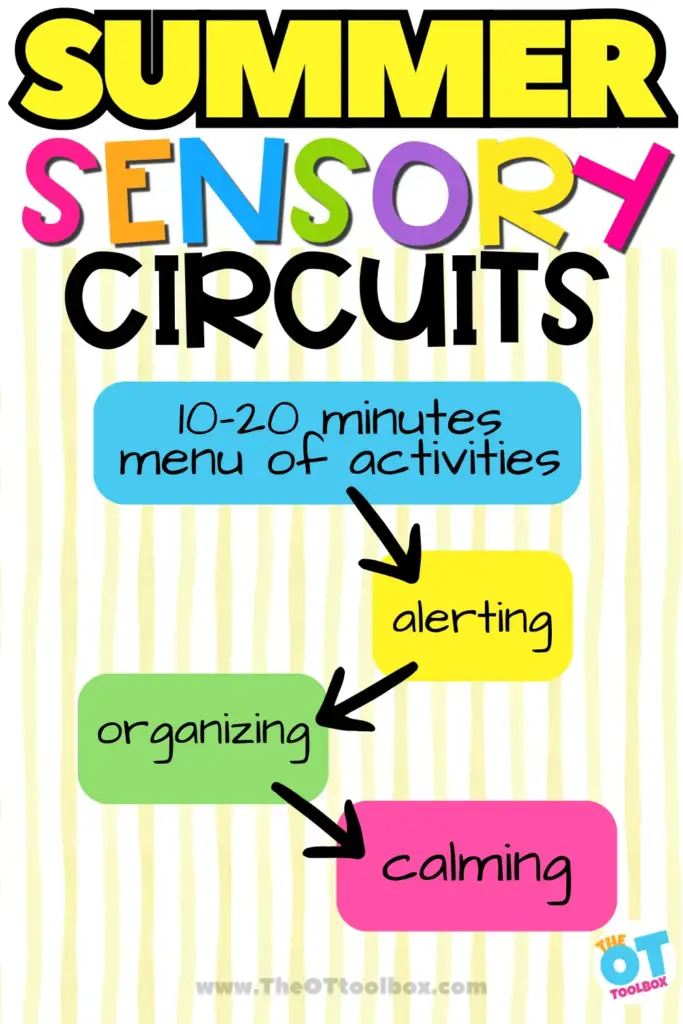
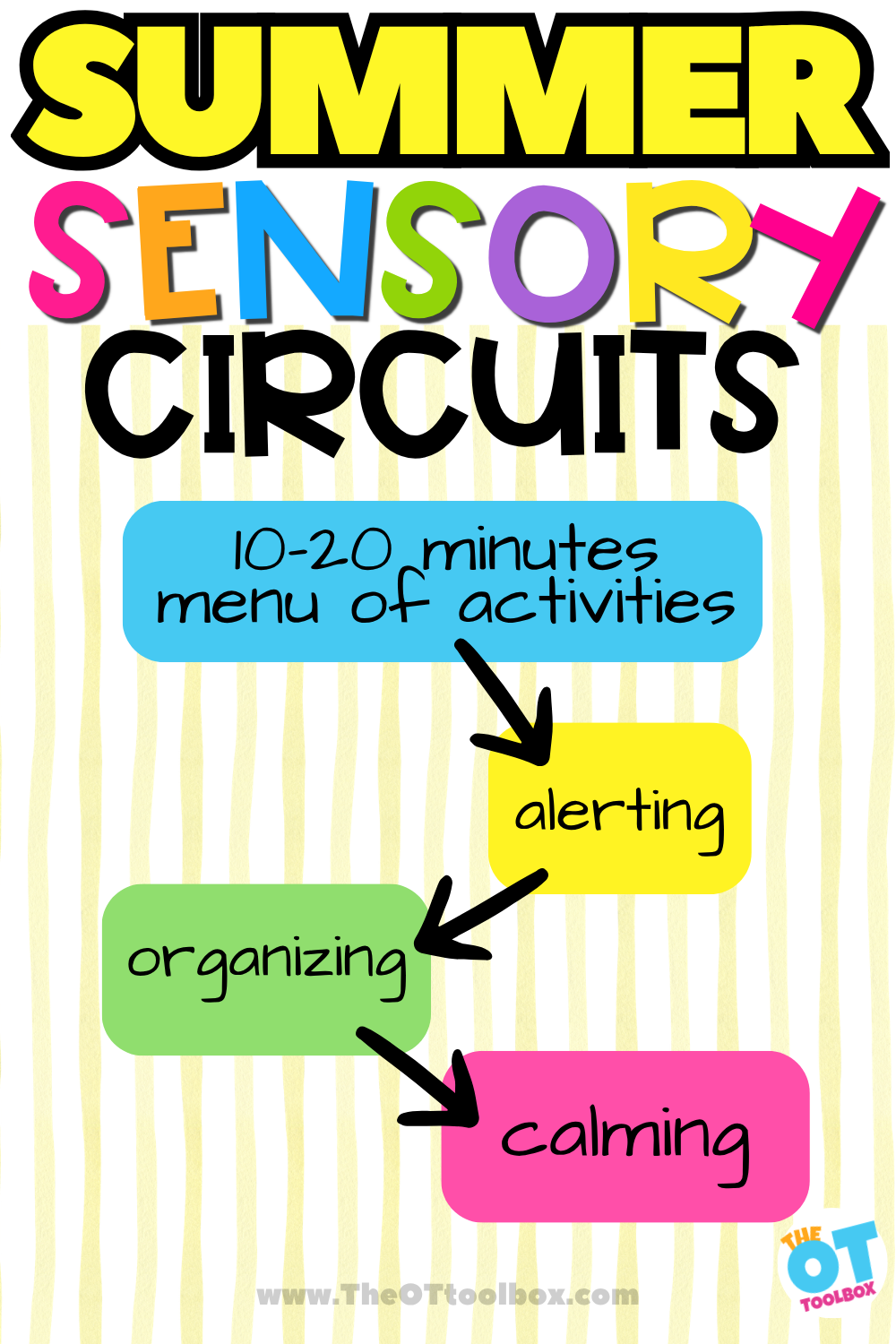
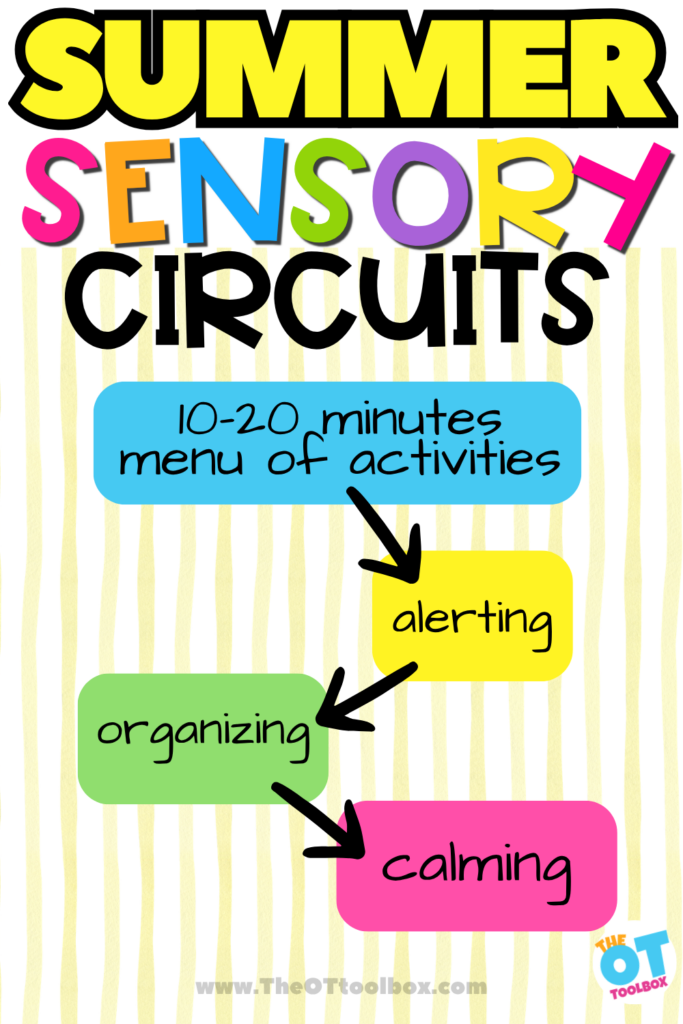
For families and classrooms seeking more predictable routines, structured sensory circuits offer a streamlined alternative to traditional sensory diets. Rather than weaving sensory strategies continuously throughout the day, a sensory circuit groups specific physical activities into a continuous 10-to-20-minute block.
By following a specific neurological progression, these circuits help guide a child’s nervous system step-by-step. The routine typically begins with alerting activities—such as controlled movement or light jumping—to wake up the brain and body. This is followed by organizing activities that require balance, timing, and motor planning to build focus. Finally, the circuit concludes with calming deep-pressure and resistance activities, leaving the child centered and regulated.
This structured menu approach provides a repeatable, bite-sized format that busy parents and educators can easily implement first thing in the morning, right after lunch, or whenever a schedule disruption calls for a calming reset.

Expanding Support Through Professional Bundles and Guides
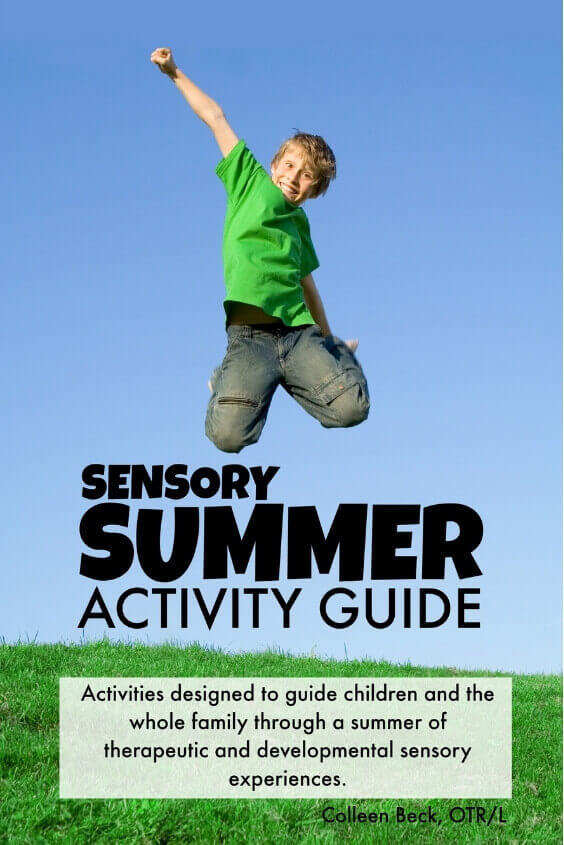
To assist professionals and parents navigating these seasonal transitions, comprehensive packages like the Summer Occupational Therapy Activities Packet and the broader Summer OT Bundle have been made available. Curated by experienced occupational therapists like Colleen Beck, who has practiced in school-based, outpatient, and early intervention settings since 2000, these resources provide ready-to-go materials covering handwriting, visual motor skills, fine motor coordination, and self-regulation.
By leveraging these free and low-cost tools, home programs, summer camps, and therapy sessions can maintain a steady focus on developmental growth, ensuring that children remain engaged, regulated, and ready to learn throughout the summer season.