









In a significant stride toward understanding and treating neurodevelopmental conditions, researchers have identified a potential therapeutic pathway for autism spectrum disorder (ASD) by focusing on a specific brain receptor. A study led by Director Eunjoon Kim of the Institute for Basic Science (IBS) Center for Synaptic Brain Dysfunctions has unveiled that modulating a specific glycine transporter, known as Slc6a20a/SLC6A20, can effectively restore critical signaling functions within the brain. This discovery offers a promising, more targeted approach to addressing the underlying neurobiology of autism and related conditions.
A More Targeted Way to Restore Brain Signaling
The core of the research involves the NMDA receptor (NMDAR), a protein complex that acts as a vital bridge for communication between brain cells. These receptors are essential for the foundational processes of cognition, including learning, memory formation, and the fluid exchange of information across neural circuits. For decades, the medical and scientific communities have understood that diminished NMDAR activity is intrinsically linked to a spectrum of psychiatric and neurological challenges. Beyond ASD, these include schizophrenia, various forms of intellectual disability, and the rare but serious condition known as NMDAR encephalitis.
Despite the clear link between NMDAR dysfunction and these disorders, efforts to develop effective treatments have historically faced significant hurdles. Clinical trials aimed at boosting NMDAR activity have frequently yielded inconsistent results, leaving researchers to search for more precise interventions. The challenge lies in the receptor’s activation process: an NMDA receptor requires the presence of both glutamate and glycine to function at full capacity. Previous attempts to enhance this process focused on blocking GlyT1, another glycine transporter. While the logic behind this strategy was sound, the execution proved problematic. GlyT1 is expressed throughout the brain, including within the brainstem, a region responsible for involuntary but essential life functions such as breathing and motor control. Consequently, early therapeutic efforts were often hampered by a narrow window of efficacy and the emergence of unwanted side effects, limiting their clinical utility.

Director Kim and his team pivoted to a different target: Slc6a20a. Unlike the more ubiquitous GlyT1, Slc6a20a shows a highly restricted distribution, primarily localized within brain regions deeply involved in higher-order cognition, such as the cortex and the hippocampus. By focusing on this transporter, researchers believe they have found a way to "fine-tune" NMDAR activity in the exact areas where it is most needed, while sparing the vital brainstem functions that rendered previous pharmacological approaches too risky.
Treatment Improves Brain Function and Behavior
To test the viability of targeting Slc6a20a, the research team employed antisense oligonucleotides (ASOs)—a type of genetic medicine that can effectively "silence" or reduce the expression of specific genes. In this case, the ASOs were designed to lower the activity of the Slc6a20a transporter. The experimental models were mice carrying mutations in the SHANK2 and SHANK3 genes. These specific genes are among the most significant risk factors for autism and are also central to the study of Phelan-McDermid syndrome, a rare genetic condition that often presents with developmental delays and communication challenges.
The results of the intervention were striking. Treatment with the Slc6a20a-targeting ASO successfully restored NMDAR activity across several autism-related mouse models. Beyond the cellular improvements, the researchers observed meaningful behavioral changes. The mice exhibited a marked reduction in repetitive behaviors and a significant improvement in social interaction and communication skills—the core diagnostic markers of ASD.
Perhaps most encouraging for potential clinical translation is the fact that these improvements were observed in adult mice. In the context of neurodevelopmental research, the "critical period"—the developmental window where the brain is most plastic—is often viewed as the primary opportunity for intervention. Finding that NMDAR function could be improved even after these primary developmental stages had passed suggests that the adult brain may retain a level of malleability that can be leveraged for therapeutic benefit.
To understand the mechanism behind this success, the team performed large-scale phospho-proteomic analyses. They discovered that the treatment did not simply force a massive shift in the total quantity of proteins. Instead, it corrected the "phosphorylation patterns"—the molecular "switches" that govern how proteins interact and function. By correcting these patterns in proteins that regulate synaptic signaling, the treatment restored the brain’s ability to communicate efficiently without requiring a total overhaul of its protein architecture.
Similar Results in Human Brain Organoids
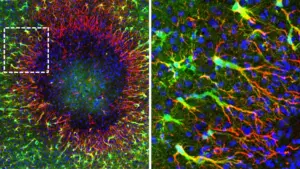
Recognizing the need to bridge the gap between rodent models and human physiology, the researchers extended their study to human cortical organoids. These "mini-brains" were grown from human cells and modified using CRISPR gene-editing technology to carry the same SHANK2 or SHANK3 mutations found in their mouse models.
The human organoids mirrored the findings in the mice, demonstrating a clear reduction in NMDAR activity. When the researchers applied an ASO specifically designed to target the human version of the SLC6A20 gene, they observed a restoration of NMDAR function that brought the signaling levels close to the healthy baseline.
"Unlike gene re-expression strategies, SLC6A20 inhibition works by modulating endogenous signaling pathways and may offer a more practical therapeutic route," Director Kim noted. The ability to reproduce these findings in both mice and human cortical organoids provides a robust validation of the strategy. It suggests that targeting this specific transporter is not merely a quirk of mouse biology but a fundamental mechanism that could be harnessed as a therapeutic strategy for human neurodevelopmental disorders characterized by NMDAR hypofunction.
Effects Lasted for at Least Eight Weeks
The practical longevity of the treatment is another critical factor for clinical consideration. The study reported that a single administration of the ASO remained effective for at least eight weeks. During this sustained period, the researchers observed no detectable adverse effects in the treated mice, bolstering the argument that this approach is both stable and safe.
While the study was centered on the specific architecture of autism spectrum disorder, the implications are broad. Because reduced NMDAR activity is a common thread in several other psychiatric conditions, including schizophrenia and specific forms of intellectual disability, the identification of SLC6A20 as a viable target offers a new foundation for research. By moving away from broad-spectrum modulation and toward precise, region-specific regulation of brain signaling, the IBS team has provided a new direction for the field.
The research establishes SLC6A20 as a high-potential target for further drug development. As scientists continue to explore the complexities of the human brain, findings like these serve as a reminder that even the most deeply rooted developmental challenges may eventually be addressed through a better understanding of the intricate, molecular communication networks that define human cognition and behavior. The team’s work represents a pivotal step toward the development of therapies that are not only more effective but also significantly more precise in how they interact with the human brain.