






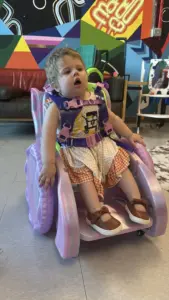



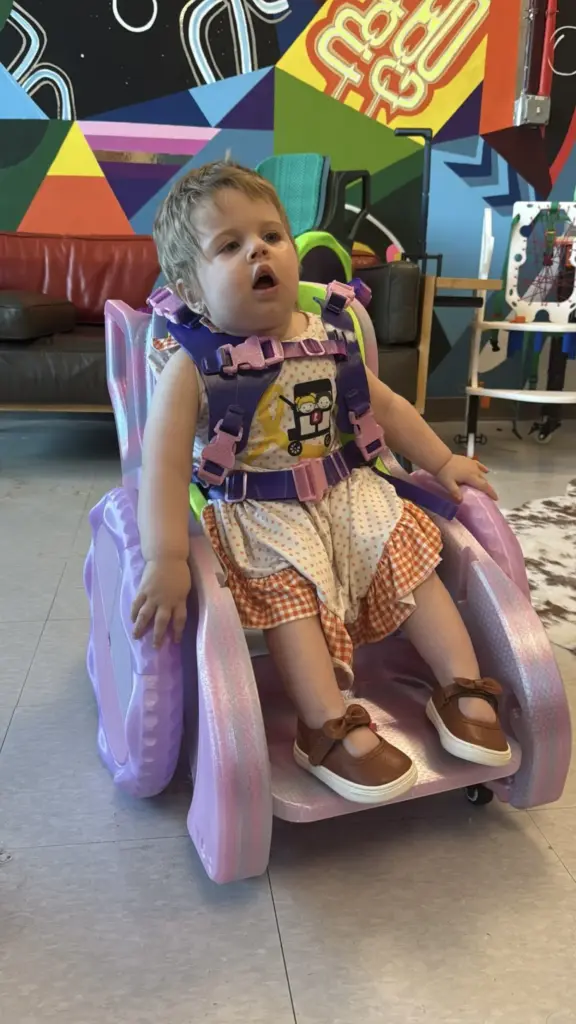
At the Monroe Carell Jr. Children’s Hospital in Nashville, the newest and perhaps most revolutionary piece of mobility equipment is a custom-built, 3D-printed wheelchair. Crafted layer by layer by a hospital gaming and technology specialist, the device represents an unexpected breakthrough born from a professional who initially set out to design toys and entertainment rather than medical hardware.
That unique origin story highlights a much broader, quiet shift taking place across contemporary pediatric care. Hospitals, specialized schools, and individual families are increasingly taking matters into their own hands, beginning to manufacture the assistive technology that traditional medical supply chains have historically struggled to deliver affordably, quickly, or with a design tailored specifically for an actual child rather than a generic patient.
What is Happening at Monroe Carell Jr. Children’s Hospital
The story centers on Graden Knapp, whose day job involves making extended hospital stays more bearable for pediatric patients through the use of interactive toys, video games, and other therapeutic entertainment tools. While working on the hospital floor, however, Knapp identified a much more fundamental gap in patient care: the facility simply did not have an adequate supply of wheelchairs suited to the specific physical and psychological needs of its youngest patients.
Determined to find a solution, Knapp taught himself a completely new skill set. According to local reporting from WTVF and NewsChannel 5, Knapp discovered open-source design files provided by "Made Good," widely recognized as MakeGood, a New Orleans-based disability design nonprofit. Over the course of two to three months, he painstakingly printed the individual components and assembled what has become the hospital’s first nearly complete 3D-printed wheelchair.
The strategy for the device goes far beyond parking it in a hospital storage closet for occasional use. Knapp’s primary intent is for patients to take the wheelchair home with them following their discharge, effectively transforming a standard piece of institutional medical equipment into a personalized asset that a child can keep, customize, and physically grow into over time.
While it remains a relatively small and grassroots initiative at present, the project points directly toward the future of pediatric assistive technology. It showcases a model where vital equipment can be produced on-site, tailored to the exact specifications of an individual child, and built around the core philosophy that mobility devices can be both fully functional and genuinely exciting for a kid to use.
The Likely Design Behind the Wheelchair: MakeGood’s Open-Source Framework
While local reports did not explicitly name the specific model constructed by Knapp, the design closely mirrors the flagship mobility framework offered by MakeGood. As far as public reporting indicates, the organization’s primary fully 3D-printable wheelchair design is the Toddler Mobility Trainer. The project matches the public descriptions of a printed children’s mobility device sourced from a network of collaborative disability design engineers.
The Toddler Mobility Trainer is an open-source, fully 3D-printable mobility device engineered for children roughly between the ages of one and eight years old. Developed by MakeGood in close collaboration with the industrial design firm LINK PBC and the international nonprofit TOM Global, the project was formally announced to the public to expand access to early childhood mobility equipment.
Nearly every component of the chair—including the structural frame, wheels, tires, seating surface, and securement straps—can be printed on standard consumer-grade 3D printing machines, with the digital blueprints specifically optimized for popular desktop printers like the Bambu Lab A1. The individual pieces are engineered to snap together neatly without requiring complex tools, screws, or chemical adhesives, utilizing a clever jigsaw-style assembly method. If a specific part experiences wear or breaks, caregivers can simply reprint that exact component rather than discarding or replacing the entire chassis.
MakeGood released the Toddler Mobility Trainer as a free, open-source design hosted on digital platforms like MakerWorld, intentionally empowering anyone with a basic 3D printer and raw filament—whether a parent, a school librarian, or a hospital technologist like Knapp—to fabricate a device independently at home or in a classroom setting. Since its founding, the organization has distributed thousands of free assistive devices globally.

The Real Story: Cost and Economic Disruption
This intersection of technology and accessibility is where the initiative moves past a feel-good local news segment and becomes a profound economic and social development story.
A traditional pediatric wheelchair in the United States typically carries a commercial price tag ranging from $1,200 to $5,000. Furthermore, specialized custom or powered pediatric mobility models can easily exceed $12,000 once specialized seating systems, proprietary materials, and electronic controls are factored into the final bill, according to market pricing breakdowns from medical equipment providers. That substantial financial burden is compounded by the reality that young children rapidly outgrow their mobility devices every couple of years, exponentially multiplying the lifetime cost of care, often while families face insurance denials or only partial coverage claims.
By contrast, organizations like MakeGood report that a complete Toddler Mobility Trainer can be produced for approximately $150 in raw material costs. Technical breakdowns itemize this figure to roughly eight to ten spools of sturdy PETG filament, two to three spools of flexible TPU for tires and padding, and a minimal amount of standard hardware like a handful of bolts, nuts, washers, and small casters. While specific cost figures can vary depending on individual builds, Knapp’s own estimates noted that his hospital-printed chair was roughly ten times cheaper than a conventional commercial alternative.
The dramatic reduction in expense is driven primarily by the complete elimination of traditional manufacturing, distribution, and retail markups that burden conventional durable medical equipment. Traditional wheelchairs require high upfront tooling costs for mass production, factory assembly, global shipping, retail warehousing, and profit margins at every step of the supply chain. In contrast, an open-source 3D-printed model exists entirely as a digital file, shifting the manufacturing center directly to a printer sitting in a hospital office, a community school library, or a family’s spare room.
Replicability and Global Health Implications
The convergence of low one-time equipment costs, inexpensive consumable printing materials, open-source designs, and minimal required specialized expertise creates a paradigm entirely distinct from previous iterations of do-it-yourself medical equipment. It represents a model that is inherently replicable across diverse environments where a printer and an internet connection are available.
While the Nashville project highlights an innovative approach within a single well-resourced American hospital, the underlying technology holds profound implications for low- and middle-income countries, where access to essential mobility devices remains severely restricted compared to wealthy nations.
Data from international health organizations underscores a massive global disparity. Comprehensive reports from the World Health Organization and UNICEF indicate that more than 2.5 billion people worldwide require at least one assistive product, yet nearly one billion individuals are systematically denied access. Studies focusing on resource-limited settings reveal that access to necessary mobility equipment can drop as low as three percent, while wealthy nations see access rates approaching ninety percent. Global estimates place the total number of people requiring a wheelchair at tens of millions, with the vast majority living in developing regions where traditional commercial supply chains are weakest and import costs are prohibitive.
Open-source, low-cost 3D printing directly addresses these structural barriers by decentralizing production entirely. Instead of relying on costly international shipping networks and complex import tariffs, local communities, regional clinics, and grassroots organizations can manufacture, repair, and modify mobility devices on-demand using locally sourced materials.
Looking Forward in Pediatric Care
For medical institutions, educational facilities, and disability-focused nonprofits, the growing viability of on-demand assistive technology presents a compelling case for institutional adoption. It offers a tangible method to bypass supply chain bottlenecks, drastically lower the financial barriers associated with pediatric care, and provide custom-fitted equipment while children are actively developing.
While ongoing research continues into optimizing long-term device durability, weight capacity, and formal clinical validation for widespread insurance reimbursement, the immediate utility is already clear. For the specific use case demonstrated at Monroe Carell—delivering a functional, highly customized mobility device to a young child quickly and affordably—the technology is operational today. The broader question facing hospitals, schools, and global health advocates is not whether on-demand manufacturing works, but rather how rapidly institutions will embrace it to expand care.