




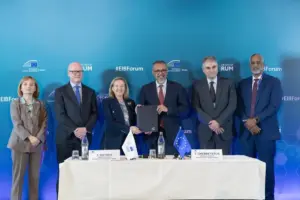



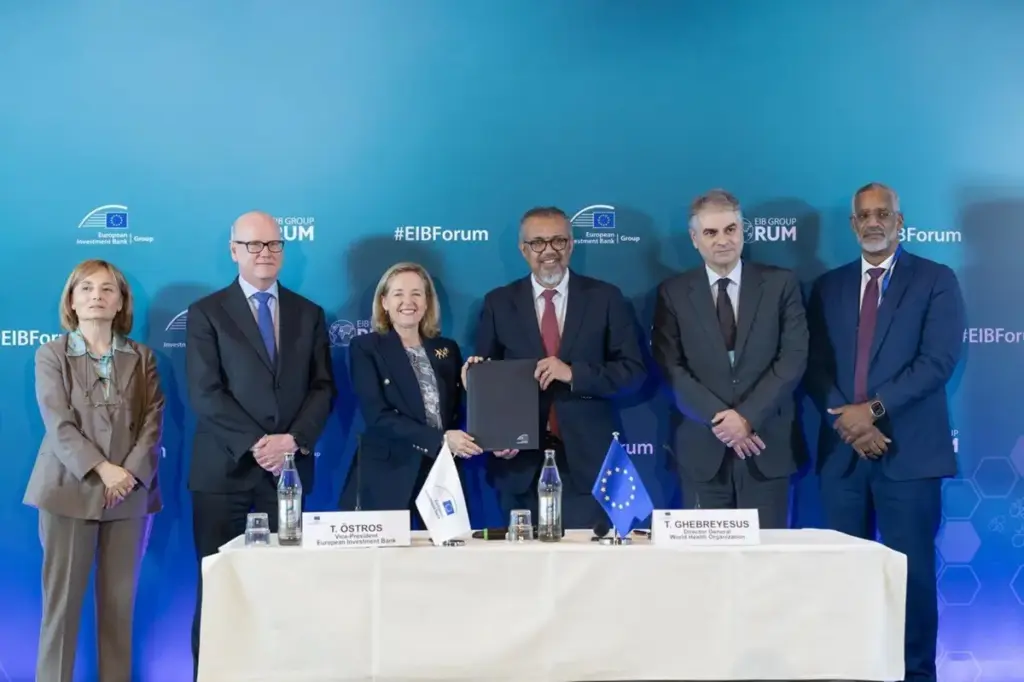
In a significant move to fortify the resilience of Lebanon’s fragile healthcare system, the World Health Organization (WHO) and the European Investment Bank (EIB Global) have officially entered into a strategic partnership aimed at long-term medical stability. On 6 March 2025, during the prestigious EIB Group Forum held in Luxembourg, WHO Director-General Dr. Tedros Adhanom Ghebreyesus and EIB Vice-President Thomas Östros signed a landmark agreement, unlocking a €10 million grant dedicated to public health initiatives across the Lebanese Republic.
This collaboration marks a pivotal moment for a nation that has spent recent years grappling with the compounding pressures of economic volatility, regional instability, and a strained public health sector. By bridging the gap between international financial support and technical medical expertise, the initiative seeks to address both the immediate humanitarian needs of the population and the long-term structural requirements of the country’s health infrastructure.
The core of the initiative focuses on two primary pillars: the restoration of critical laboratory diagnostics and the stabilization of the supply chain for essential medicines. Both the WHO and EIB Global have identified these areas as the most vital components for maintaining public health in a nation where medical access has become increasingly precarious for the average citizen.
Rebuilding Diagnostic Foundations: The Central Public Health Laboratory
Among the most ambitious aspects of this €10 million investment is the commitment to re-establish Lebanon’s Central Public Health Laboratory. For any modern healthcare system, a central laboratory serves as the backbone of disease surveillance, outbreak response, and clinical diagnostic accuracy. The facility is the cornerstone of public health, allowing for the rapid detection of pathogens, the monitoring of communicable diseases, and the verification of pharmaceutical quality.
The degradation of such infrastructure—often a side effect of prolonged economic crisis and a lack of sustained maintenance—leaves a country vulnerable to health emergencies. By prioritizing the refurbishment and technical upgrade of the Central Public Health Laboratory, the WHO and EIB Global are essentially restoring the country’s "early warning system." This facility will provide the essential diagnostic data required to guide national health policies, ensuring that decisions made by the Ministry of Public Health are grounded in accurate, real-time epidemiological evidence.
The re-establishment of the lab is expected to serve as a hub for quality assurance, which is particularly important in an era where the regulation of the medical supply chain has faced significant challenges. With a functional, state-of-the-art laboratory, Lebanon will be better positioned to conduct the rigorous testing necessary to protect its citizens from foodborne illnesses, infectious disease outbreaks, and other public health threats that require centralized laboratory intervention.
Addressing the Crisis of Chronic Disease Management
Beyond the structural restoration of the laboratory, the partnership addresses the human toll of Lebanon’s health crisis. The initiative has explicitly earmarked resources to support over 50,000 individuals suffering from chronic, non-communicable diseases. In the current economic climate, the rising cost of medicine and the scarcity of specialized care have made life-saving treatments for conditions such as diabetes, cardiovascular disease, and cancer difficult to obtain for a large segment of the population.
Chronic diseases require consistent, long-term therapeutic regimens. When the supply of insulin, blood pressure medication, or oncology treatments is interrupted, the health of these patients can deteriorate rapidly, leading to emergency hospitalizations that further strain an already overwhelmed medical system. By facilitating the provision of these essential medications, the WHO-EIB Global initiative provides a critical safety net.
This component of the program is not merely about the procurement of drugs; it represents a broader effort to ensure that the healthcare system can maintain a steady pipeline of supplies. The logistical coordination required to manage this distribution across the country will be supported by the WHO’s extensive field experience, ensuring that resources reach those in the most vulnerable communities who have historically faced the greatest barriers to access.
A Strategic Alliance for Regional Stability
The presence of both Dr. Tedros Adhanom Ghebreyesus and Thomas Östros at the EIB Group Forum highlights the high-level commitment of both organizations to the stability of the Middle East region. The EIB, acting through its EIB Global division, has increasingly focused on the intersection of economic development and social infrastructure. In this context, the grant is viewed not just as a humanitarian donation, but as a strategic investment in the long-term viability of Lebanon’s human capital.
For the World Health Organization, this partnership serves as a model for how international development banks and global health agencies can harmonize their efforts to maximize impact. By leveraging the EIB’s financial mechanisms alongside the WHO’s normative guidance and operational presence on the ground, the initiative avoids the common pitfalls of fragmented aid delivery.
The agreement also acknowledges the reality that health is fundamentally linked to economic recovery. A population that cannot access essential medicine for chronic conditions is a population that cannot participate fully in the labor market or contribute to national development. By stabilizing the health sector, the project aims to create a ripple effect that eases the burden on families and households, allowing them to redirect limited financial resources toward other essential needs.
Navigating the Road Ahead
As the project moves from the signing table in Luxembourg to the implementation phase in Lebanon, the coordination between the WHO and local health authorities will be paramount. The challenges of implementing such a wide-reaching program in a complex operating environment are significant, ranging from supply chain logistics to the need for continuous oversight and transparency. However, the structured approach outlined by the two organizations suggests a clear focus on accountability and measurable health outcomes.
The success of the initiative will be measured not only by the renovation of physical structures but by the steady, uninterrupted delivery of care to the 50,000 patients identified for support. For these individuals, the agreement represents a tangible improvement in their daily lives—a promise that their health needs will be met and that the essential medications upon which they rely will be available.
The partnership between EIB Global and the WHO remains a testament to the importance of international cooperation in addressing domestic health crises. As the world continues to face challenges that transcend borders, the ability to mobilize resources for the most vulnerable remains a hallmark of global solidarity. Through this €10 million grant, the partners have taken a concrete step toward ensuring that Lebanon’s public health system can weather the current storm and emerge more resilient, better equipped to serve its citizens in the years to come.
As the program begins to roll out, both the EIB and the WHO are expected to maintain close communication with stakeholders, ensuring that the project remains aligned with the evolving needs of the Lebanese people. With the Central Public Health Laboratory set to return to full functionality and the supply of essential chronic disease medications stabilized, the initiative provides a much-needed foundation for future progress in the national health sector. The efforts in Luxembourg mark the beginning of a sustained commitment to health equity in Lebanon, emphasizing that when global institutions align their goals, they can provide the necessary support to keep essential public services operational during times of profound national challenge.