









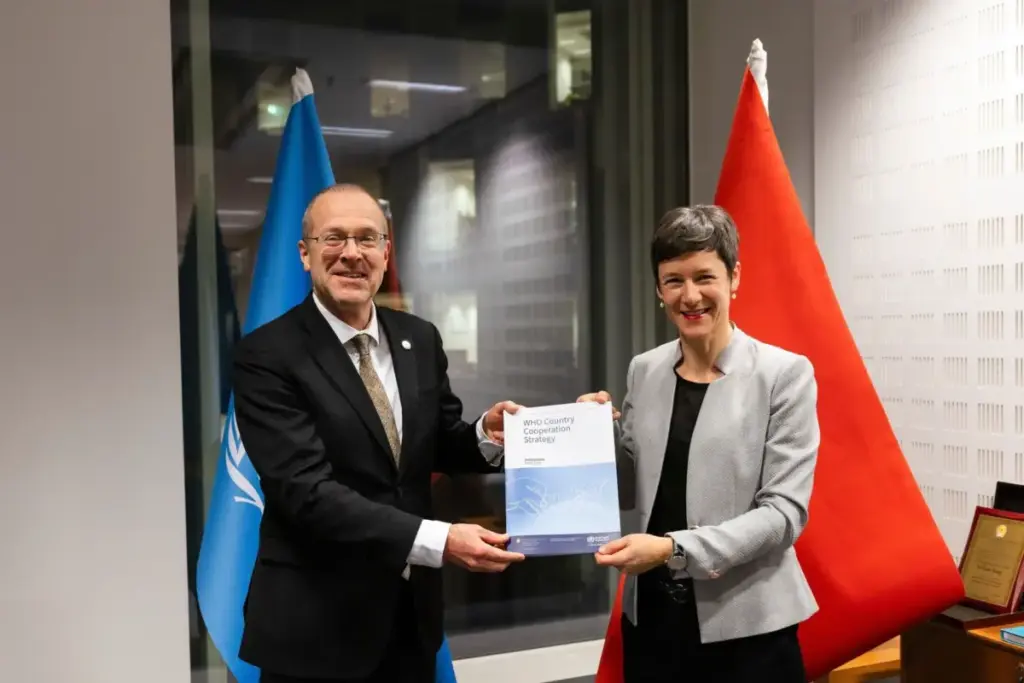
The World Health Organization (WHO) and the Swiss Confederation have officially reaffirmed their commitment to global and regional health security by announcing the renewal of their formal cooperation strategy for the 2024–2028 period. This significant milestone, finalized on March 4, 2025, at the WHO Regional Office for Europe in Copenhagen, Denmark, marks a continuation of a pioneering relationship that has set a high standard for how international health organizations interact with high-income nations.
The agreement serves as a roadmap for the next four years, outlining the priorities, shared values, and operational objectives that will define the collaboration between the two entities. By renewing this strategy, both parties aim to leverage Switzerland’s unique position as a global hub for health diplomacy and the WHO’s technical expertise to address the evolving complexities of the modern public health landscape.
A Legacy of Pioneering Collaboration
The partnership between the WHO and Switzerland is rooted in a history of innovation and mutual trust. In 2013, Switzerland made headlines in the international health community by becoming the first high-income country within the WHO European Region to implement a structured country cooperation strategy. At the time, such frameworks were traditionally reserved for countries requiring significant development support or infrastructure assistance. Switzerland’s decision to adopt this model signaled a fundamental shift: the recognition that even highly developed, resource-rich nations benefit from a structured, strategic alignment with global health mandates.

This 2013 initiative proved to be a resounding success, creating a blueprint for how technical cooperation, policy alignment, and shared research goals could be integrated into a single, cohesive strategy. Over the subsequent decade, this relationship deepened, evolving from simple consultative roles to a multifaceted partnership that encompasses everything from pandemic preparedness and health system resilience to the complex governance of international health regulations.
By 2022, recognizing that the world had changed drastically in the wake of the COVID-19 pandemic and amidst new geopolitical challenges, representatives from the WHO and the Swiss government initiated discussions to update the framework. The goal was not merely to extend the previous agreement but to modernize it, ensuring that the objectives for the 2024–2028 period reflect the current realities of global health, including the increased need for digital health integration, sustainable financing, and climate-resilient healthcare systems.
The Formalization of the 2024–2028 Strategy
The official signing ceremony in Copenhagen brought together key figures who have been instrumental in bridging the gap between national health interests and international health goals. Among the attendees were Dr. Henri P. Kluge, WHO Regional Director for Europe, and Barbara Schedler, Ambassador for Global Health at the Swiss Federal Office of Public Health.
The document signed on March 4, 2025, titled the "WHO–Switzerland Country Cooperation Strategy 2024–2028," serves as more than just a diplomatic formality; it acts as a functional directive for both organizations. The strategy focuses on ensuring that Switzerland’s health sector remains aligned with the WHO’s European Programme of Work, particularly in the areas of achieving universal health coverage, protecting against health emergencies, and promoting healthier populations through improved lifestyle and environmental health policies.
For the WHO, having a formalized strategy with a host nation like Switzerland is vital. Switzerland is home to the WHO’s headquarters in Geneva and serves as a central nexus for global health policy and diplomacy. This unique geographical and political proximity allows for a level of day-to-day engagement that is rarely possible with other member states. The new strategy seeks to capitalize on this proximity by streamlining communication channels and fostering a more agile response to health crises.
Strategic Priorities and Shared Objectives
The core of the 2024–2028 strategy centers on several key pillars that are designed to enhance both national and international health outcomes. First, the partnership emphasizes the importance of data-driven decision-making. In an era where information is abundant but often fragmented, the collaboration focuses on strengthening health information systems to ensure that policy decisions are backed by robust evidence.

Second, the strategy prioritizes the strengthening of health systems. Even in a country with a world-class healthcare infrastructure like Switzerland, the pressures of an aging population, rising chronic disease rates, and the need for technological integration present significant challenges. The partnership provides a platform for Switzerland to share its innovations with the broader European region, while also adopting best practices identified by the WHO across other member states.
Third, the agreement highlights the importance of global health security. The recent history of the COVID-19 pandemic underscored the vulnerabilities inherent in global supply chains and diagnostic capacities. The renewal of this strategy directly supports ongoing initiatives such as the WHO-Switzerland partnership for the global BioHub system. The BioHub, which facilitates the rapid, secure sharing of pathogens and clinical samples, is a critical component of the global effort to detect, monitor, and respond to emerging infectious diseases. Switzerland’s commitment to hosting and supporting this system is a testament to the tangible nature of the cooperation between the two entities.
The Human Element of Health Diplomacy
The meeting between Ambassador Schedler and Dr. Kluge was characterized by a spirit of constructive dialogue and shared responsibility. Beyond the technical objectives, the ceremony highlighted the human element of health diplomacy. The success of such a high-level strategy relies heavily on the individuals tasked with navigating the often-complex bureaucratic and political environments of international health.
Dr. Kluge has frequently emphasized that the WHO’s strength lies in its ability to bring nations together to solve problems that no single country can tackle alone. By maintaining a formalized, high-level cooperation strategy with Switzerland, the WHO ensures that its host nation remains a committed, active, and integrated partner in the collective effort to improve health outcomes across the continent and the globe.
For Switzerland, the strategy provides a framework to amplify its voice in global health forums. As a neutral nation with a long tradition of humanitarian engagement, Switzerland’s participation in the WHO’s strategic frameworks allows it to exert a positive influence on international health governance. It ensures that the perspectives of a high-income, democratic nation are integrated into the WHO’s broader mission of "Health for All."
Looking Toward the Future
As the 2024–2028 strategy moves into its implementation phase, both the WHO and the Swiss Federal Office of Public Health have committed to periodic reviews to ensure that the partnership remains dynamic and responsive to unforeseen events. The landscape of public health is subject to rapid change—driven by technological advancements, climate change, and evolving social demographics—and a static strategy would quickly become obsolete.
The renewed commitment is a clear signal that both parties intend to remain at the forefront of global health leadership. For the WHO, the stability provided by this long-term agreement with Switzerland is an invaluable asset, providing a consistent foundation upon which to build broader regional and global health initiatives. For Switzerland, the strategy reinforces its role as a key contributor to the global health architecture and a vital partner in the quest to secure a safer, healthier future for all.
Those interested in the granular details of the operational objectives, the specific targets for health system improvement, or the historical context of this cooperation can find comprehensive documentation on the official WHO/Europe website. The published strategy serves as a public record of the shared goals and the methodologies that will guide this partnership through the remainder of the decade.
As the international community continues to grapple with the multifaceted challenges of the 21st century, the partnership between the WHO and Switzerland stands as an example of what can be achieved through sustained, transparent, and strategic cooperation. By formalizing their alliance for the next four years, they have not only secured their own collaborative future but have also reinforced the importance of international solidarity in the face of the global health threats of tomorrow.