




Underneath the surface of internalized ableism, a profound truth often remains obscured by modern societal expectations: no one truly wants to be seen and heard by the masses. Instead, human beings naturally prefer to be understood and loved deeply by a few, and everyone shares an innate desire to love, care for, and help one another. This relational capacity is what defines us as sacred human animals. Continuous, open-ended dialogues about our commitments to one another are what make life sacred, allowing humans to create meaning both for and with each other. Through this ongoing process, life is experienced not as a transactional race, but as a continuous journey of becoming.
Following recent discussions surrounding the inability of many autistic individuals to think in terms of social hierarchies—and their corresponding capacity to think and live relationally—a timely submission arrived in the AutCollab inbox ahead of the upcoming NeurodiVerse Days of Intersectional Solidarity. The submission, provided by a neurodivergent community founder who is also a therapist and an indigenous person, raised a critical question: How can we effectively promote mutual aid within our communities when many members carry significant interpersonal trauma and deep-seated difficulties with trust?
The social challenges highlighted in this inquiry have been foreseen by thinkers like Guy Debord and George Orwell, whose critiques of systemic control and alienation have transformed from theoretical warnings into a disturbing reality. This is acutely felt by cultural minorities and intersectionally marginalized populations. Early cultural indoctrination into the belief system of homo economicus attempts to systematically transform living humans into soulless, transactional units of production. For autistic people in particular—and arguably for humanity as a whole—the stronger our innate ability to relate genuinely to other humans and non-human living beings, the less capable we become of participating in hollow, transactional busyness. Beneath the layers of internalized ableism imposed by modern industrial society, a fundamental reality remains accessible to all sober humans: we seek deep, local understanding rather than broad, superficial visibility.
Commitments Make Us Uniquely Human
There is a healthy, viable path forward, one that becomes accessible through mutual trust, shared values, and a conscious shift toward shared beliefs that represent sacred commitments at a human scale. These sacred commitments, forged between specific individuals or within small human-scale groups, can be expressed either verbally or in writing. Crucially, they scale only as far as the limited number of meaningful relationships an individual can genuinely maintain. As circumstances change, these commitments can be jointly updated to reflect evolving needs or constraints within the wider ecology in which we are embedded. For those who identify as autistic, a significant portion of their held beliefs naturally falls into this category, particularly agreements made with family members, friends, and trusted colleagues.
In stark contrast, the massive trust deficits engineered by the ideology of homo economicus—the implications of which are illuminated by combining the insights of Debord and Orwell—rely on cultural beliefs absorbed subconsciously from a hyper-competitive social environment. These are beliefs whose origins are often untraceable. For individuals who do not identify as autistic, a larger proportion of their day-to-day beliefs may unfortunately stem from this conditioned background noise rather than intentional, relational grounding. Meanwhile, unilateral commitments made with oneself act as a deeply personal spiritual commitment to life and to Gaia.
Breaking these personal and relational commitments leaves humans physically, mentally, and spiritually depleted. Human beings evolved as cultural organisms through this exact fabric of mutual reliability. Furthermore, bilateral commitments offered by one party serve as sacred invitations to another, honoring the sanctity of all relationships with living beings. Both parties can extend these invitations, bringing them together when necessary through deliberative dialogue rooted in love, mutual respect, and shared understanding, ultimately crystallizing into a spiritual commitment to one another.

Unlike the standardized, industrial factory model of society, there are no simplistic, one-size-fits-all commitments in a healthy human ecosystem. Every commitment is uniquely tailored to a specific relationship—whether with oneself and, by extension, with the living Earth, or with other living beings. By openly sharing the commitments we make with ourselves and those within our immediate ecology of care, we cultivate the capacity to better understand, trust, and rely on one another. Naturally, achieving this is easier said than done when the dominant cultural backdrop remains steeped in hyper-individualism and systemic mutual distrust.
Deliberative Dialogue and Lived Culture
Continuous, open dialogues about commitments form a vibrant part of lived Māori culture, serving as a living blueprint for how communities can honor life and the natural world. This practice is the essence of what makes life sacred, demonstrating how humans generate meaning with and for each other as a continuous process of becoming.
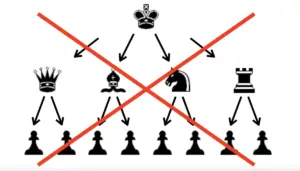
Explicit social agreements that stretch far beyond a human scale carry severe structural limitations. This intrinsic flaw is precisely why indigenous peoples, such as the Māori, continuously engage in robust traditions of collective action and community-led dialogue. In hierarchically structured societies, overarching agreements—such as laws imposed by distant regional or national authorities—are applied broadly to massive populations. By necessity, these laws are developed with minimal input from the individuals directly affected by them. Consequently, such top-down arrangements invariably inflict untold harm, much of which remains entirely invisible to the authorities sitting at the top of the hierarchy. Humans did not evolve to survive, let alone thrive, within hierarchically structured, super-human-scale societies. Pretending that humanity can maintain such artificial structures without generating widespread suffering is a manifestation of dangerous anthropocentric hubris.
Trauma is frequently propagated across generations, making it imperative to find systemic ways to break the cycle without harming the most sensitive members of society. Often, it is these sensitive individuals who possess the unique capacity to nurture ecologies of care that operate completely independently of power dynamics and manipulation. The destructive nature of coercive power has been recognized by community advocates from a very young age. Coercive power sits at the root of systemic harm, and those who wield it on a regular basis are actively contributing to the degradation of the planet. There is infinite, timeless wisdom embedded in the social norms that actively resist the emergence of social power gradients. When civilizations systematically erase those protective norms, unimaginable human and ecological suffering inevitably unfolds.
Autistic people frequently make sacred commitments to themselves early in life as a mechanism to minimize cognitive dissonance. Yet, when attempting to extend these sacred commitments to others in the wider world, they often discover that not everyone honors their word. Many individuals appear to navigate life entirely devoid of genuinely sacred commitments or firm convictions. In today’s socially hyper-competitive environment, practical experience with de-powered, egalitarian deliberative dialogue remains scarce, leaving many people to experience modern life as empty and meaningless. The prevailing cultural religion of homo economicus systematically produces lost souls who search endlessly for purpose without the foundational relationships required to discover it.
Co-Creating Ecologies of Care
Sacred commitments rooted in deep mutual trust and shared values remain the foundational bedrock of all healthy, sustainable cultures. De-powered dialogue designed to deepen shared understanding acts as the primary tool for maintaining and evolving these commitments over time. This ongoing exchange deepens love, compassion, and mutual trust in a virtuous cycle capable of weathering even the most difficult circumstances—a truth long understood by indigenous cultures worldwide.

This relational wisdom is also what Māori culture continues to offer a fractured world during a time of widespread ecological and social crisis, which humanity has collectively inflicted upon Gaia through institutionalized ignorance and hubris. Intersectional solidarity spanning indigenous rights movements, the neurodiversity movement, and the disability rights movement forms the core of healing from the cultural sickness that has fueled the modern metacrisis.
This approach is far from mere theory; it aligns directly with the lived experiences found within depowered, egalitarian worker cooperatives. In these spaces, de-powered dialogue, omnidirectional learning, and consensus-based decision-making shape daily operations. For many, experiencing these environments serves as a vital first step toward healing in a world otherwise dominated by the ideology of homo economicus. Hunter-gatherer societies similarly rely on deliberative dialogue and consensus-based decision-making, demonstrating the enduring art of living at a human scale as interdependent cultural organisms.
Engaging in de-powered deliberative dialogues within safe, intentionally co-created environments allows individuals to truly understand one another’s minds. Through these exchanges, participants share not just what they think, but how they think and what they fundamentally believe in, whether through spoken conversation or written reflection. The essential element is the shared commitment to continuous dialogue and the willingness to expose one’s inner world to others. Naturally, this level of vulnerability stands in stark opposition to the transactional demands of homo economicus, yet it is precisely what human nervous systems evolved to experience. It comes as little surprise that many autistic individuals find themselves operating at or beyond their emotional limits in a society that rejects these natural relational needs.
Furthermore, as modern life forces people to spend increasingly vast amounts of time isolated behind digital interfaces, the fundamental human capacity to extend deep trust has become an endangered gift. Human nervous systems are deeply interconnected; we are embodied spirits existing within a web of relations where everything is linked. Digital interfaces inherently limit our full humanity, functioning as non-living, anthropocentric machines that distance us from physical and emotional presence. Deep down, human beings know and feel in their hearts that we evolved to be fully present with one another. Co-creating resilient ecologies of care is sacred work, and it is a journey that can only be accomplished together.