







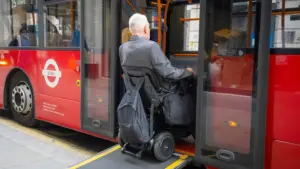

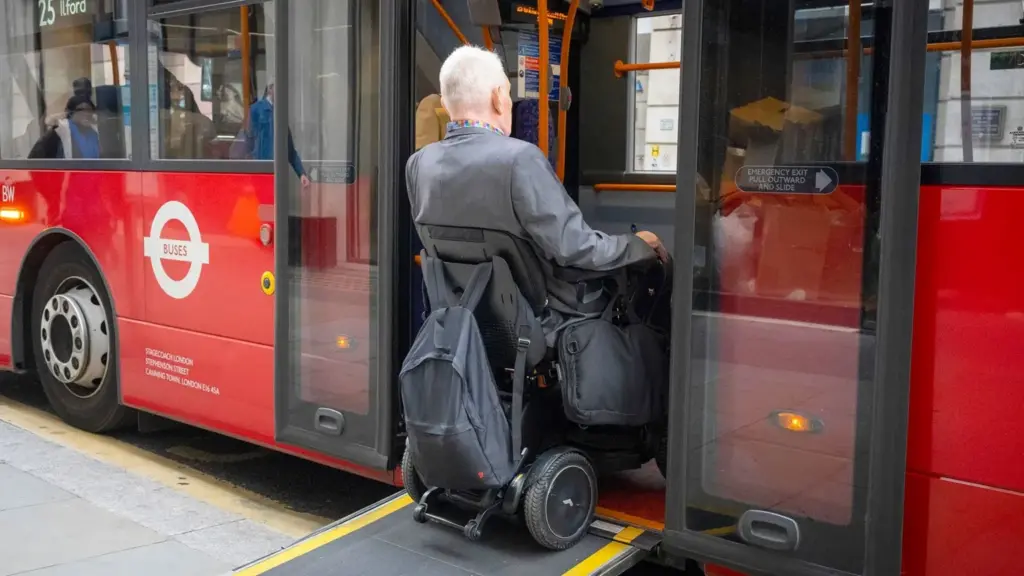
LONDON — Starting April 1, disabled people across England will be able to travel by bus for free at any time of day, marking a major transformation in public transit access that officials say will dismantle long-standing barriers to employment and social life.
Under the previous framework, free concessionary bus passes were strictly restricted to off-peak hours on weekdays—specifically limited to the window between 09:30 and 23:00. This limitation created severe practical obstacles for pass holders attempting to commute to standard morning jobs, arrive early for educational opportunities, or attend late-night events and shifts. By removing these time limits entirely, the policy change will benefit an estimated one million people nationwide, converting local bus networks from restricted transit options into true full-time lifelines for disabled citizens.
The historic policy follows a successful trial period in Greater Manchester’s integrated “Bee Network” and responds directly to years of persistent campaigning by prominent disability rights organizations, including Scope and Transport for All. Advocates have widely celebrated the move, praising it for tackling an uneven system that often penalized citizens depending on where they lived.

However, while disability advocates have welcomed the nationwide reform, they emphasize that this represents only the first phase of a broader modernization effort. Organizations continue to point out that eligibility requirements across various local regions still require substantial standardization to ensure equitable access for everyone, regardless of geographic boundaries.
To secure the long-term viability of the program, the £60 million scheme is being jointly financed through the Department for Transport and the Department for Work and Pensions. Government officials have framed the comprehensive reform as a vital workforce and cost-of-living initiative. This latest measure aligns with existing transit interventions, such as the nationwide £2 single-fare cap, and successfully brings England into alignment with similar 24/7 concessionary transit programs that have operated successfully in Scotland and Wales for years.
Global Takeaways: How Other Countries Can Make Accessible Commuting Possible
Making daily commuting accessible and affordable for disabled citizens requires a sophisticated combination of thoughtful policy design, robust digital systems, and targeted public investment. The UK’s latest initiative highlights how modern transportation networks can adapt to meet the fundamental needs of all passengers.
Why Was the UK Able to Do It?
The successful implementation of this nationwide policy stems from a combination of sustained political pressure, collaborative policy design, and targeted financial commitments from central government departments. By pooling resources through the Department for Transport and the Department for Work and Pensions, the government demonstrated that national infrastructure investments can be structured to support both economic participation and social equity. The prior testing of the concept within Greater Manchester’s Bee Network provided critical operational data, proving that removing time restrictions was both logistically feasible and economically sustainable before rolling it out on a national scale.
Does It Depend on Existing Infrastructure?
Yes, heavily. Free transit passes only work if the public transport network is physically and technologically accessible. A free ticket holds little value if a passenger cannot physically board a vehicle, navigate a station, or rely on real-time arrival information.
The success of expanded concessionary travel relies entirely on foundational infrastructure. This includes low-floor buses equipped with functioning ramps, audio-visual announcement systems for passengers with sensory impairments, and well-maintained transit stops. Furthermore, technological integration—such as standardized smartcard systems and real-time accessibility updates—plays a crucial role in ensuring that disabled commuters can plan their journeys with confidence and independence. Without these foundational physical and digital elements, extended travel hours cannot achieve their intended impact.
What Is Needed to Make Commuting Affordable for People with Disabilities?
Achieving true affordability and accessibility in public transportation demands a holistic approach that goes beyond simply waiving fares. Policymakers must address multiple facets of the transit ecosystem simultaneously to create an environment where disabled individuals can travel freely and reliably.
First and foremost, financial concessions must be paired with structural funding to ensure that local transit authorities can absorb increased passenger volumes without compromising service quality. If expanded access leads to overcrowding or reduced route reliability, the overall benefit to the community is diminished.
Second, national policy standards must be established to eliminate regional discrepancies. When transit rules, pass validity, and eligibility criteria vary wildly from one municipality to the next, it creates an unpredictable environment that disproportionately disadvantages vulnerable populations. Standardizing these rules ensures that a pass holder enjoys the same rights and access whether they are traveling in a major metropolitan center or a rural county.
Finally, ongoing collaboration between transit operators, government agencies, and disability advocacy groups is essential. Continuous feedback loops allow authorities to identify bottlenecks, address emerging accessibility challenges, and refine policies to meet the evolving needs of the workforce. By combining financial support, infrastructure modernization, and standardized regulations, transport systems can evolve into truly inclusive networks that support equitable mobility for every citizen.