








The role of an occupational therapist (OT) within a multidisciplinary healthcare team is often misunderstood, even by other medical professionals. While doctors, nurses, and surgeons focus on the physiological management of disease and the stabilization of life-critical functions, the OT’s mandate is arguably more personal: they are tasked with restoring the patient’s ability to interact with their environment and reclaim their daily lives. Despite the profound impact this work has on patient outcomes, the profession has historically struggled to articulate its specific value proposition to the broader healthcare community.
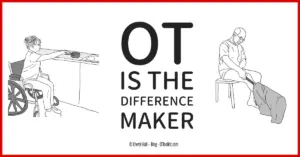
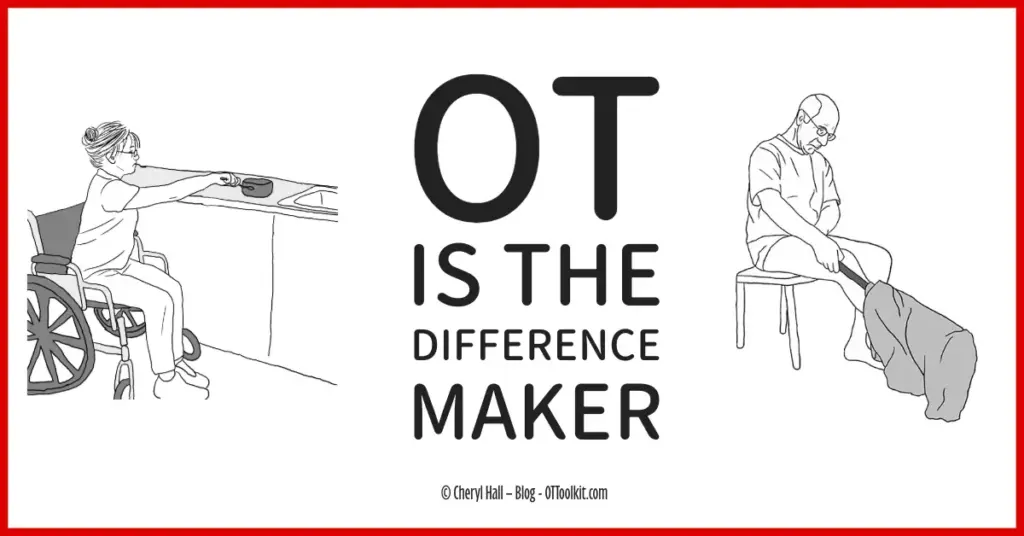
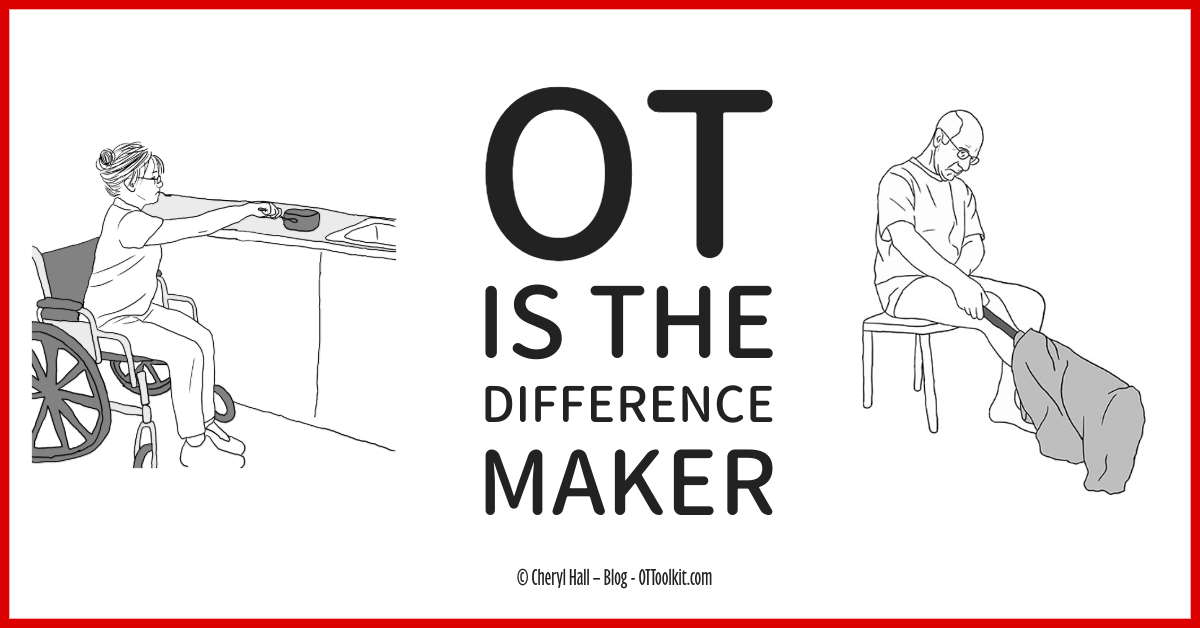
As healthcare systems become increasingly specialized and fragmented, the need for practitioners who bridge the gap between clinical stabilization and functional independence has never been higher. When we talk about health care teams, we are often talking about high-stakes, high-pressure environments where the primary focus is survival. However, the true "difference makers" are often the professionals who look beyond the diagnosis to address the human experience of illness. By reframing the identity of occupational therapy not just as a support service, but as the primary "difference maker" on the clinical team, we can better illustrate how OTs meet patients exactly where they are in their journey, providing concrete improvements to their quality of life that no other specialist is positioned to address.
To understand the unique value of occupational therapy, one must look past the textbook definitions and into the granular, often intimate moments where an OT’s intervention shifts the trajectory of a patient’s emotional and physical recovery. These are not merely clinical tasks; they are acts of human restoration.
Finding Light in the Darkest Moments: The Story of Paul
The power of occupational therapy is perhaps most evident when dealing with the psychological weight of terminal illness. Consider the case of "Paul," a ten-year-old boy suffering from terminal cancer. Paul was confined to a wheelchair, and the overwhelming burden of his prognosis had caused him to withdraw from his family and his surroundings. Day after day, clinical interventions—no matter how well-intentioned—seemed to fail, with each therapy session ending with the child retreating further into the silence of his illness.
In this scenario, a traditional medical approach might focus on pain management or physical mobility, but the OT’s role allowed for a different kind of intervention: the restoration of play. One afternoon, the therapist arrived with a simple grabber tool. While Paul’s mother was in the kitchen, the therapist handed the tool to the boy and whispered a suggestion: "Hide it under the table." When the mother returned and began searching for her missing dish towel, the boy’s demeanor shifted entirely. As she opened drawers and scanned the room, Paul erupted into laughter, waving the towel in the air.
This was not a clinical goal in the traditional sense, but it was a transformative moment of human connection. The grabber became a bridge, allowing Paul to tease his siblings and parents, injecting a sense of normalcy, mischief, and joy into his final two weeks of life. His parents later reached out to express their gratitude, noting that the therapist had provided something no medication could: the chance for their son to be a child again before he passed. This interaction highlights that for an OT, "function" is not just about muscle movement; it is about reclaiming the roles and relationships that define a person’s existence.
Dignity in the Smallest Tasks: The Case of "Jack"
In the complex environment of post-surgical recovery, patients often face the dual burden of physical trauma and the loss of personal dignity. "Jack," a patient suffering from severe and uncontrolled diabetes, underwent a surgery that resulted in the amputation of several fingers, leaving him with only his thumbs and half of his dominant index finger. In the sterile, busy environment of a hospital, the focus is naturally on wound healing and infection control. However, for the patient, the loss of function extends to the most mundane, private activities of daily living.
Jack had been working with his occupational therapist to adapt his daily routine, but he remained hesitant to discuss a specific, deeply personal struggle. It was only after building a foundation of trust that he felt comfortable enough to confide in his therapist: the surgery had left him unable to perform a basic, private task—specifically, picking his nose. While this might seem trivial to a medical team focused on systemic health, to Jack, it was a profound loss of autonomy and a source of significant embarrassment.
The OT did not dismiss the concern. Instead, the therapist assessed the sensation, skin integrity, and circulation of the remaining finger and consulted with the nursing and medical staff to ensure any intervention would be safe. The therapist then engineered a custom device using Velcro and splinting material. This simple, targeted innovation restored Jack’s ability to manage a private, personal habit, effectively returning a measure of normalcy to his life. This is the essence of occupational therapy: the ability to listen for the "hidden" needs that, if left unaddressed, erode a patient’s self-esteem and sense of self.
Breaking the Cycle of Confinement: "Dorothy"
Sometimes, the barriers to a patient’s independence are not physiological, but environmental. "Dorothy," a 75-year-old woman with severe rheumatoid arthritis, was living in a state of self-imposed isolation. When her therapist arrived for an evaluation, Dorothy didn’t answer the door; she simply called out that it was unlocked. Upon investigation, the therapist discovered that for ten years, Dorothy had been unable to open her own front door due to its design. She had relied on the kindness of neighbors to open it for her, leaving her essentially trapped in her own home.
A generalist might see a patient with arthritis and focus on range-of-motion exercises, but an OT looks at the interaction between the patient and their physical environment. The therapist identified that the apartment door’s magnetic seal was far too strong for someone with Dorothy’s limited hand strength. By applying masking tape to cover half of the seal, the therapist reduced the friction, allowing Dorothy to open her own door for the first time in a decade. Before departing, the therapist coordinated with the building manager and the local fire station to ensure the modification did not compromise safety standards.
This intervention changed Dorothy’s life overnight. She was no longer a prisoner in her own home, but an individual with the agency to come and go as she pleased. This type of advocacy and environmental modification is a hallmark of the OT profession, yet it is rarely captured in medical charts or team briefings.
The Call for Visibility
These stories illustrate a fundamental truth about occupational therapy: the profession occupies a unique space where clinical expertise meets the realities of daily living. Whether it is facilitating laughter for a child in pain, restoring dignity through custom orthotics, or removing environmental barriers to independence, the OT is frequently the professional who ensures that the patient is not just surviving, but truly living.
The struggle to communicate this value persists because the outcomes of OT are often qualitative and deeply personal, making them harder to quantify than a laboratory result or a surgical success. However, as the healthcare landscape evolves, the importance of these "small" interventions grows. When a healthcare team is reminded of the holistic impact of occupational therapy, they are reminded that the ultimate goal of all medical intervention is to return the patient to their life.
Every practitioner has their own collection of these moments—instances where they were the specific difference maker for a patient. These narratives are not just anecdotes; they are evidence of the vital role occupational therapy plays in the healthcare ecosystem. By sharing these stories, professionals can help their colleagues understand that the value of an OT lies in their ability to see the person behind the patient and to engineer the solutions that restore their humanity. The next time a healthcare team meets, the best way to define the value of the OT is to present these stories of transformation, proving that when it comes to the quality of a patient’s life, the difference is often found in the work of an occupational therapist.