









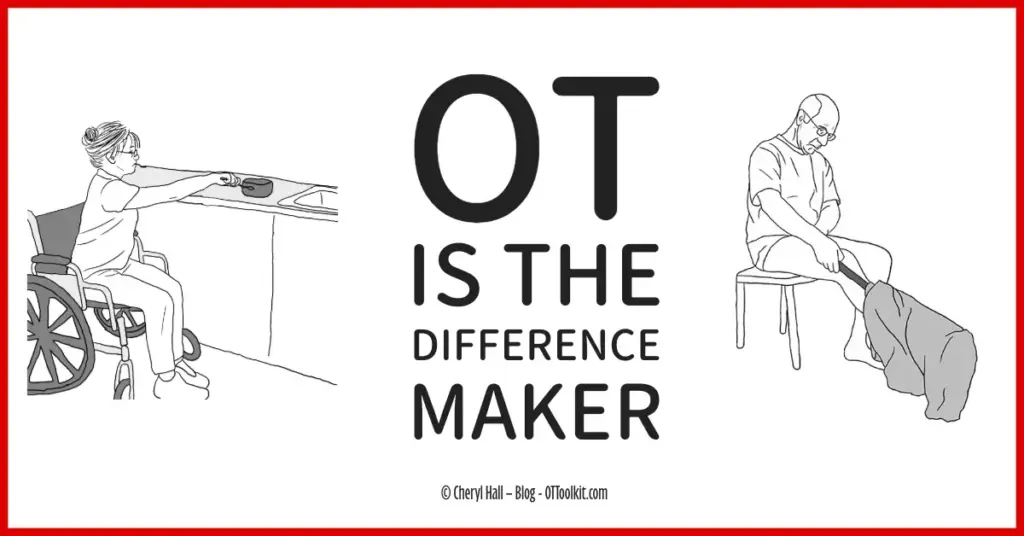
In the complex ecosystem of modern healthcare, interdisciplinary teams are the standard for managing patient outcomes. Yet, within these multidisciplinary frameworks, a persistent challenge remains: defining the distinct, indispensable value of Occupational Therapy (OT). While physical therapists focus on mobility and nursing staff manage clinical stability, the role of the occupational therapist is often misunderstood or relegated to the periphery. However, a deeper examination of the profession reveals that OTs are frequently the "difference makers"—the professionals who look beyond the diagnosis to the human being living within it.
The struggle for the OT profession is not a lack of efficacy, but rather a hurdle in communication. To bridge this gap, practitioners are increasingly urged to frame their contributions not through abstract clinical terminology, but through concrete, life-altering examples. By meeting patients exactly where they are in their unique health journeys, OTs demonstrate that the quality of life is often dictated by the small, functional details that others might overlook. Through the lens of patient experience, it becomes clear that the OT’s unique perspective often addresses needs that would otherwise remain invisible to the rest of the medical team.
One of the most poignant illustrations of this impact involves the intersection of pediatric care, terminal illness, and the psychological necessity of joy. Consider the case of "Paul," a ten-year-old boy grappling with a terminal cancer diagnosis. Confined to a wheelchair and consumed by the heavy, clinical reality of his condition, Paul had become increasingly withdrawn and depressed. Despite the best efforts of his medical team, each therapy session followed a predictable, disheartening arc: the session would begin with clinical goals, but inevitably end under the crushing weight of his illness. The medical interventions were technically sound, but they were failing to reach the boy behind the diagnosis.

The turning point occurred when the attending occupational therapist introduced a simple, utilitarian tool: a grabber. While Paul’s mother was in the kitchen, the therapist handed the device to the boy and whispered a simple, mischievous instruction: "Hide it under the table." When his mother returned, the therapist facilitated a moment of play, prompting the mother to search for her misplaced dish towel while Paul, empowered by his new tool, maneuvered it with glee. When the mother finally realized what was happening, the room was filled with the sound of laughter—a stark, vital contrast to the silence that had previously defined Paul’s days.
This intervention did more than provide physical utility; it restored a sense of agency and childhood play. Paul continued to use the grabber to engage with his siblings and parents until his passing two weeks later. When his parents reached out to the therapist after his death, their gratitude was not focused on clinical benchmarks, but on the profound gift of allowing their son to be a child, rather than just a patient, during his final days. It was a realization that in the landscape of palliative care, the "occupation" of play is as essential as the management of symptoms.
The capacity of occupational therapy to address the intimate, often overlooked aspects of daily life is equally evident in cases involving severe physical trauma. "Jack," a patient suffering from uncontrolled diabetes, faced a devastating loss of function after surgical intervention left him with only his thumbs and half of his dominant index finger. While his medical team focused on the stabilization of his condition, Jack struggled with the loss of basic independence. During a session, he expressed a profound sense of vulnerability regarding his inability to perform even the most private personal tasks.
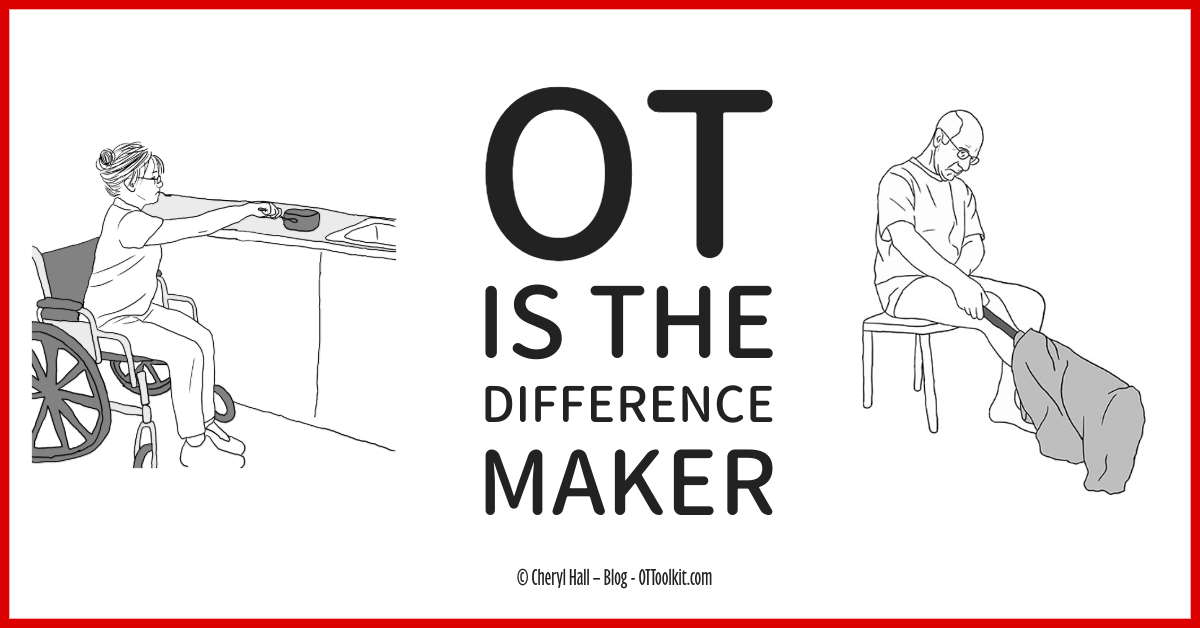
When Jack finally confided that he had lost the ability to perform a specific, personal hygiene task—which he jokingly referred to as his "nose-picking finger"—the OT did not dismiss the concern as trivial. Instead, the therapist recognized this as a vital component of Jack’s personal dignity. After assessing the patient’s sensation, skin integrity, and circulation in his residual finger, the OT collaborated with the nursing and medical staff to ensure clinical safety. The therapist then engineered a custom device using Velcro and specialized splinting material. Through precise adjustments, the device enabled Jack to regain control over this specific task. For Jack, this was not merely a physical adjustment; it was the restoration of personal autonomy and a significant boost to his psychological recovery.
The ability to identify environmental barriers that others perceive as permanent fixtures is another hallmark of the profession. Take the case of "Dorothy," a 75-year-old living with severe rheumatoid arthritis. For ten years, Dorothy had essentially been a prisoner in her own apartment because she could not operate the heavy magnetic seal on her front door. She had developed a workaround that involved leaving the door unlocked and calling out to neighbors for assistance, a practice that compromised her privacy and safety.
When an occupational therapist visited for an evaluation, the issue was identified immediately. Rather than recommending expensive, complex renovations or institutionalization, the therapist utilized a simple, innovative solution: applying masking tape to a portion of the magnetic surface to reduce the seal’s tension. The result was instantaneous. For the first time in a decade, Dorothy could operate her own front door. The therapist ensured that this change did not violate safety protocols by consulting the apartment manager and the local fire department, both of whom confirmed that the door’s integrity remained sufficient for fire protection. This single, minor environmental modification transformed Dorothy’s daily life from one of dependence to one of autonomy.
These experiences—a child finding laughter, a man regaining his dignity, and a woman securing her independence—are the true currency of occupational therapy. While these acts might seem small when viewed in isolation or compared to life-saving surgeries, they are the very things that define a patient’s quality of life. Without the specific, holistic intervention of an OT, these issues would likely have gone unaddressed, buried beneath the clinical focus of the broader medical team.
These stories serve as a powerful reminder of the profession’s core mission. The next time a healthcare team requires a reminder of the value of occupational therapy, practitioners should not hesitate to share these narratives. They are not merely anecdotes; they are evidence of the profound difference that can be made when a professional is trained to look at the whole person and find the intersection between their physical limitations and their potential for a meaningful, independent life. By articulating the value of OT through the lens of these "difference-making" moments, the profession can continue to secure its place as an essential, and irreplaceable, pillar of modern patient-centered care.