






Why do some skills seem to click almost instantly, becoming second nature within a few sessions, while others remain elusive, frustratingly out of reach despite hours of diligent practice? For decades, the conventional wisdom attributed this discrepancy primarily to individual talent, the intensity of focus, or the sheer volume of repetitive effort. However, emerging research suggests that the secret to mastery may lie in a physiological "readiness" of the brain—a specific internal state that dictates whether a training session translates into lasting neurological change or simply fades away.
A groundbreaking study conducted by researchers at Tohoku University has shed new light on this phenomenon, revealing that the brain’s ability to solidify new skills is inextricably linked to the body’s internal signaling systems. By focusing on the vagus nerve—a critical conduit for communication between the viscera and the brain—scientists have demonstrated in mice that post-training stimulation can significantly strengthen long-term motor learning. Published in iScience on August 25, 2026, these findings suggest that the brain does not operate in a vacuum, but rather relies on a sophisticated, two-way dialogue with the body to facilitate the consolidation of new abilities.
The Vagus Nerve as a Learning Conduit
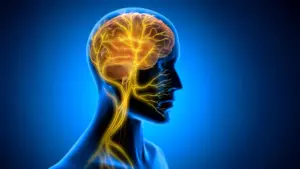
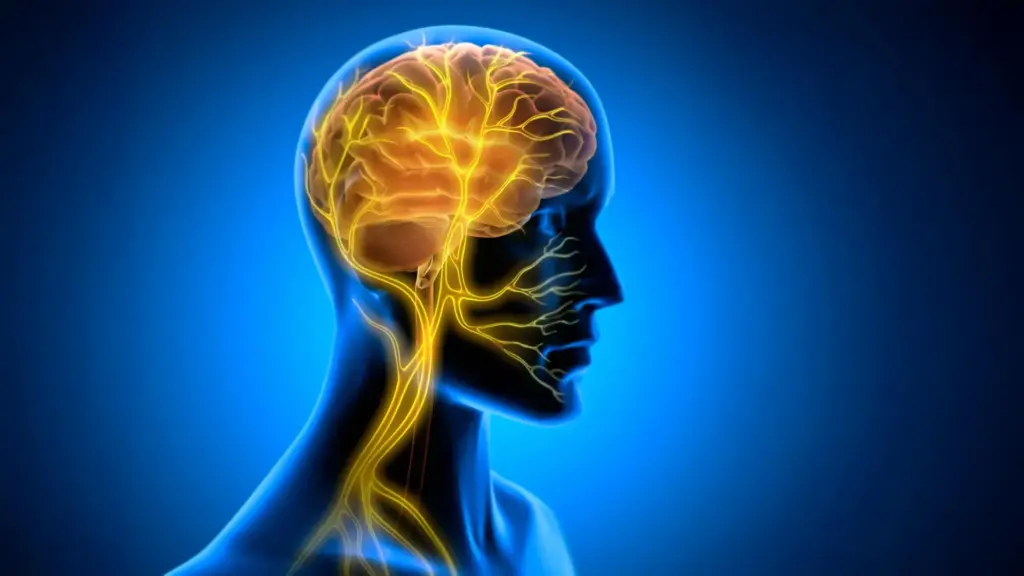
The vagus nerve serves as one of the most vital information highways in the mammalian nervous system. It acts as a bidirectional bridge, carrying a constant stream of sensory data from internal organs—such as the heart, lungs, and digestive tract—up to the brain, while simultaneously delivering regulatory instructions from the brain back to those organs. Because of its extensive reach and influence, the vagus nerve has long been a target for medical intervention. Vagus Nerve Stimulation (VNS) is already an established clinical therapy, approved for the treatment of various neurological and psychiatric disorders, including epilepsy and depression.

Historically, researchers have viewed VNS through the lens of neuromodulation, positing that its therapeutic effects stem from its ability to alter the activity of neurotransmitter systems, such as norepinephrine and acetylcholine, which are essential for mood regulation and cognitive function. However, the team at Tohoku University, specializing in super-network brain physiology, suspected that this was not the whole story. Their research indicates that VNS may trigger a previously overlooked mechanism: rhythmic, physical changes in the blood vessels inside the brain. This vascular response, they propose, creates an environment conducive to the permanent encoding of new information.
To test this hypothesis, the researchers developed a specialized, small-scale cuff electrode. This device was surgically attached to the left cervical vagus nerve in mice, allowing the team to deliver precise electrical stimulation while observing the resulting physiological shifts. The study focused on horizontal optokinetic response (HOKR) learning—a cerebellum-dependent task that requires mice to track moving visual stripes. This specific movement is remarkably similar to the automatic eye tracking humans perform while standing on a station platform and observing a train as it rushes past. By measuring how quickly and accurately the mice learned to track these visual stimuli, the researchers could quantify the impact of VNS on motor skill acquisition.
The Critical Timing of Stimulation
One of the most significant takeaways from the study is the importance of timing. The researchers discovered that applying VNS during the actual practice sessions did not lead to immediate improvements in performance. The mice did not suddenly become better at tracking the stripes while the electricity was flowing. Instead, the real benefits manifested in the hours and days that followed, indicating that the stimulation was not enhancing the performance of the task itself, but rather the brain’s "offline" processing of that experience.
When the mice were tested on subsequent days, those that had received VNS post-training demonstrated significantly stronger, more durable learning compared to their peers. This pattern is consistent with the process of memory consolidation—the biological "saving" of information from a temporary state into a long-term, stable neural architecture.
"The key point is that VNS was delivered only after training," explains Professor Ko Matsui of Tohoku University. "Our findings suggest that VNS may open a hidden window of opportunity for enhanced learning by making the brain environment more receptive to long-lasting change." By intervening after the training session, the researchers were essentially signaling the brain to prioritize the recent practice, effectively widening the window of plasticity during which the brain can rewire itself to accommodate the new skill.
Rhythmic Vascular Dynamics and Brain Plasticity
To uncover the mechanism behind this enhanced learning, the research team employed fiber photometry to monitor blood volume activity near the cerebellar flocculus, a region of the brain specifically involved in HOKR learning. Their observations revealed a two-phase vascular response following a single round of VNS: local blood volume would briefly decrease before experiencing a delayed, sustained increase.
When the researchers applied repeated rounds of VNS, this response transformed into a rhythmic oscillation of blood volume. These oscillations appeared to be directly linked to the success of the learning process. Mice that exhibited larger, more pronounced blood volume oscillations during the post-training period consistently showed superior mastery of the eye-tracking task by the fifth day. This discovery provides a compelling link between the physical environment of the brain’s vascular system and its capacity for long-term plasticity.
The findings suggest that these rhythmic vascular movements may act as a metabolic regulator, potentially flushing out waste products or optimizing the delivery of oxygen and nutrients to neurons that have been recently activated by the learning task. By "tuning" the brain’s metabolic environment, the vagus nerve may be creating a physiological state that is uniquely optimized for the formation of durable neural connections.
"Our brains may be more strongly influenced by the body than we imagine," says lead author Junyu Chen. "By tuning the brain’s metabolic environment, including rhythmic vascular movements, we may eventually unlock capacities that would otherwise remain latent."
Implications for the Future of Learning
The implications of this research extend far beyond the laboratory. If human learning, like that of the mice in the study, can be enhanced by modulating the physiological state of the brain after a period of practice, it could revolutionize approaches to rehabilitation, education, and skill acquisition.
For patients recovering from strokes or brain injuries, where motor learning is often a slow and arduous process, identifying the optimal "window of opportunity" to stimulate the brain could potentially accelerate recovery. Similarly, for individuals attempting to learn complex new skills—from playing a musical instrument to mastering a foreign language—the ability to utilize external stimulation to lock in progress could provide a powerful, non-invasive tool for improvement.
However, the researchers emphasize that this is only the beginning. Future studies will be required to refine these stimulation protocols, moving from the laboratory to more complex models and eventually human subjects. A critical component of this ongoing work will be to determine the precise biological pathways that connect the vagus nerve to these vascular rhythms. Understanding exactly how the body tells the brain that it is time to "save" a new skill will require a more granular look at the neuro-vascular coupling that seems to underpin this process.
By deepening our understanding of this two-way communication highway, scientists are moving closer to a more integrated view of human cognition—one where the body and brain are seen as a single, cohesive system working in tandem to shape our abilities. As the team at Tohoku University continues to map these connections, the goal remains clear: to uncover the hidden physiological mechanisms that allow us to learn, adapt, and ultimately master the world around us. Through the lens of this new research, the path to expertise may not just be about how hard we work, but about how well we understand the biological conditions that allow our hard work to stick.