The Director-General of the World Health Organization (WHO), Dr. Tedros Adhanom Ghebreyesus, has concluded the first day of a pivotal two-day State visit to the Hashemite Kingdom of Jordan. This high-level diplomatic mission underscores the deepening partnership between the WHO and Jordan, focusing on the critical pillars of universal health coverage (UHC), the advancement of mental health services, and the scaling of humanitarian health action within a region facing profound displacement and conflict-related challenges.
A central moment of the visit was the high-level meeting between Dr. Tedros and His Majesty King Abdullah II. This engagement served to highlight Jordan’s regional leadership in positioning health as both a national imperative and a global priority. The discussions between the two leaders covered a broad spectrum of urgent health issues, with a specific focus on the necessity of bolstering national health systems, expanding equitable access to medical care, and maintaining the vital logistical support required for emergency responses.
The conversation between the WHO Director-General and the King carried particular gravity given the current geopolitical landscape. A significant portion of the dialogue was dedicated to the ongoing humanitarian crisis, with emphasis placed on the needs of the Palestinian people and the logistical challenges surrounding the treatment of patients evacuated from Gaza. Furthermore, the leaders addressed the long-term strain on Jordan’s domestic health infrastructure resulting from its role as a host country for millions of refugees from neighboring Syria and the occupied Palestinian territories.

“I wish to express my appreciation to His Majesty King Abdullah II for his commitment to advancing universal health coverage,” Dr. Tedros stated following the meeting. “I also extend my thanks to His Majesty and the people of Jordan for their solidarity and generosity in providing health services to more than three million refugees, primarily from Gaza and Syria, who are living in the country.”
Dr. Tedros specifically lauded the "Medical Corridor" initiative championed by the King, a project that has become a lifeline for ill and injured children from Gaza. This initiative serves as a poignant example of Jordan’s commitment to humanitarian diplomacy, ensuring that patients receive specialized, life-saving care that would otherwise be inaccessible. “Jordan continues to show the world what it truly means to put health and humanity first,” Dr. Tedros added.
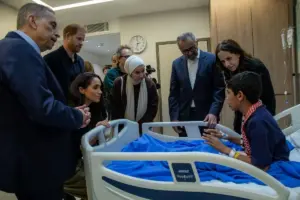
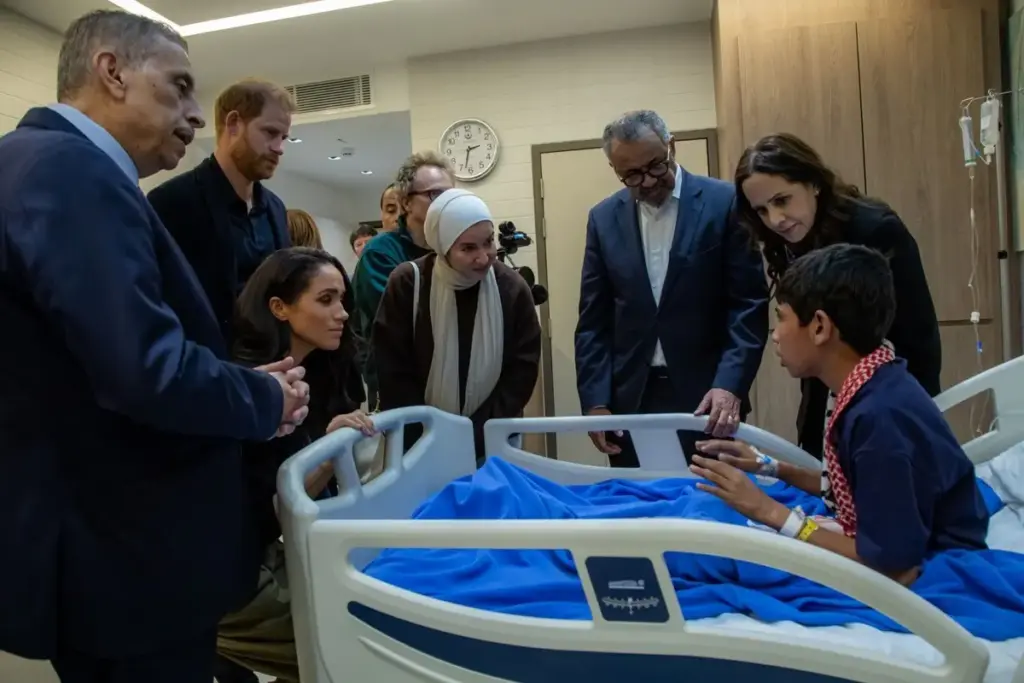
To witness the practical application of these humanitarian efforts, Dr. Tedros visited a WHO-supported hospital currently providing specialized care to children evacuated from the Gaza Strip. The visit was deeply personal, as the Director-General met with young patients, their families, and the frontline health workers tasked with delivering treatment for complex injuries, pediatric cancer, and other life-altering conditions. This visit underscored the indispensability of the medical evacuation corridor through Jordan and served as a reminder that sustained international funding and diplomatic support are required to ensure these children receive the continuous care necessary for their survival and recovery.
The Director-General’s agenda also included a high-level summit with health partners, international donor countries, United Nations agencies, and various philanthropic organizations. The meeting served as a forum to deliberate on the financial priorities required to fortify Jordan’s health systems. A key focus of these deliberations was the integration of mental health services into the primary healthcare framework, as well as the creation of sustainable models for supporting nations that host large, long-term refugee populations. Dr. Tedros expressed his appreciation for the continued commitment of these stakeholders, noting that such investments are essential for regional stability and the broader mission of “Health for All.”
Following the multi-lateral meetings, Dr. Tedros held bilateral discussions with the Minister of Health to discuss the technical aspects of Jordan’s health reform agenda. Jordan has emerged as a global leader in the primary healthcare approach, effectively integrating mental health into routine screenings and treatment plans. This integration is supported by the Director-General’s Special Initiative for Mental Health, which aims to ensure that mental health support is not treated as a luxury, but as a fundamental component of universal health coverage.
Accompanying Dr. Tedros during several of these engagements were the Duke and Duchess of Sussex, Prince Harry and Meghan. Their participation was conducted in their capacities as founders of Archewell Philanthropies and as long-standing advocates for the work of the World Health Organization. The Archewell Foundation has been a consistent supporter of various WHO initiatives, ranging from the equitable distribution of COVID-19 vaccines to the logistics of medical evacuations and the expansion of mental health programming.
Prince Harry, who has long campaigned for the destigmatization of mental health, participated in discussions emphasizing the importance of investing in mental health resources within emergency settings and refugee-hosting communities. His focus remained on the specific needs of men, youth, and children who are often disproportionately affected by the psychological trauma of conflict.
“I want to thank our partners, including Prince Harry, Duke of Sussex, and Meghan, Duchess of Sussex, whose commitment to mental health and humanitarian action has helped bring visibility, resources, and hope to some of the world’s most vulnerable communities,” Dr. Tedros noted during the visit. “Their collaboration is helping to advance WHO’s mission to ensure health for all.”
For his part, Prince Harry highlighted the exemplary role Jordan plays in managing humanitarian crises with compassion and innovation. “It is an honour to join the Director-General of the World Health Organization in Jordan, a country that is leading by example in compassion, resilience and innovation,” the Duke said. “Through our work with Archewell Philanthropies, my wife and I have seen first-hand the impact of WHO’s efforts to support mental health and deliver life-saving care in emergencies. We remain deeply committed to advancing awareness, reducing stigma and expanding access to mental health support for all those affected by conflict and crisis. Mental health is fundamental to recovery, dignity and long-term peace, and we are proud to stand with WHO and partners around the world to make it a global priority.”
As the first day of the visit drew to a close, preparations were finalized for the second day of the mission. Dr. Tedros is scheduled to visit the National Center for Rehabilitation of Addicts, an institution supported by the WHO that provides a holistic approach to recovery, blending medical, psychological, and social services.
The itinerary also includes meetings with influential community leaders and prominent women’s organizations, such as the Jordanian Hashemite Fund for Human Development, to discuss the intersection of community health and development. Furthermore, the Director-General will tour the King Hussein Cancer Center. This visit is expected to highlight the center’s significant technological and medical advances, as well as its growing role as a regional hub for cancer care and collaborative medical research.
The State visit will ultimately conclude with a series of final engagements with humanitarian partners, all aimed at reinforcing Jordan’s critical role as a regional anchor for medical evacuation, emergency health response, and overall health system resilience. By focusing on these areas, the WHO aims to consolidate the gains made in the region and ensure that the partnership between the Kingdom of Jordan and the global health community remains a robust safeguard for those in need of urgent care.