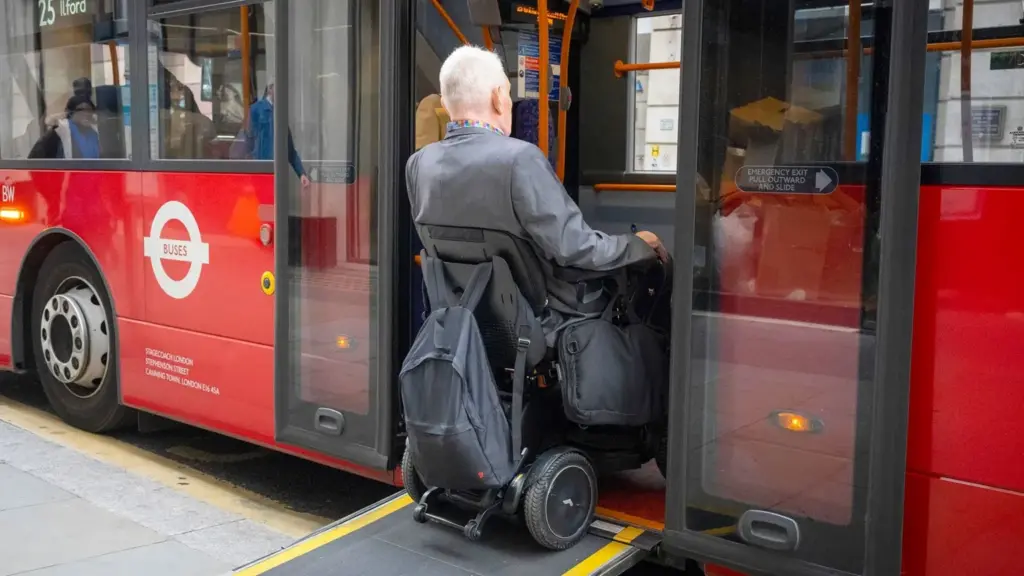
Starting April 1, disabled people across England will be able to travel by bus for free at any time of day, marking a major milestone in public transportation accessibility. Previously, free bus passes were strictly restricted to off-peak hours on weekdays, specifically limited to the window between 09:30 and 23:00. This historical time limitation created significant barriers for pass holders attempting to commute to standard morning jobs, participate in early professional commitments, or attend late-night social and cultural events.
The complete removal of these restrictive time limits will directly benefit an estimated one million people nationwide, effectively transforming the national bus network from a restricted daytime convenience into a true full-time lifeline for disabled citizens seeking independent mobility and participation in daily economic and social life.
The nationwide policy follows a highly successful trial conducted within Greater Manchester’s integrated “Bee Network.” It also represents a direct response to years of dedicated campaigning by leading disability rights organizations, including Scope and Transport for All. Advocates have widely celebrated the policy shift for eliminating what they long criticized as an unfair "postcode lottery," a system where the validity and usefulness of a concessionary bus pass frequently depended on fragmented local council rules rather than a uniform national standard. However, while disability advocacy organizations have praised the government for dismantling peak-hour barriers, they also emphasize that this reform is only a single step forward. They note that eligibility requirements across various regional authorities still require broader standardization to ensure true equity nationwide.
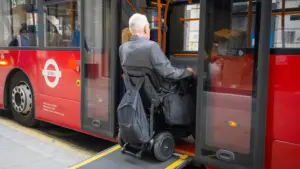
To ensure the program can be implemented and made permanent, the £60 million scheme is being jointly funded through the Department for Transport and the Department for Work and Pensions. Government officials have framed the landmark reform as an essential workforce and cost-of-living initiative. This policy joins existing transit measures designed to ease financial pressures on the public, such as the nationwide £2 single-fare cap, while successfully bringing England into alignment with similar 24/7 concessionary transit programs that have long been operating successfully in Scotland and Wales.
Global Takeaways: How Other Countries Can Make Accessible Commuting Possible
Making daily commuting accessible and affordable for disabled citizens requires a comprehensive combination of thoughtful policy design, advanced digital systems, and targeted public investment. Public transportation networks around the world face persistent hurdles when attempting to integrate marginalized communities into mainstream transit systems, making the English model a point of international interest for urban planners and accessibility advocates alike.
Why Was the UK Able to Do It?
The ability of the United Kingdom to enact this sweeping nationwide reform stems from a combination of centralized funding mechanisms, preexisting legislative frameworks, and sustained political pressure from organized civil society. While local authorities historically maintained considerable autonomy over the administration of concessionary travel schemes, the central government possesses the fiscal capacity to step in when regional variations begin to hinder national equity. By injecting £60 million through joint ministerial departments—specifically the Department for Transport and the Department for Work and Pensions—the central administration bridged the funding gaps that previously prevented local councils from offering round-the-clock free transit. Furthermore, the groundwork laid by regional pilot projects, such as Greater Manchester’s Bee Network, provided empirical evidence that removing time restrictions would not overwhelm transport infrastructure or impose unsustainable financial burdens on operators. This combination of localized trial data, coordinated inter-departmental financing, and relentless advocacy from groups like Scope and Transport for All created a rare political window for structural reform.
Does It Depend on Existing Infrastructure?
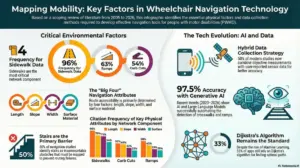
Yes, heavily. Free transit passes only work if the public transport network is physically and technologically accessible to begin with. Financial concessions are rendered largely meaningless if a disabled commuter cannot physically board a vehicle, navigate a transit hub, or obtain real-time information about service disruptions. A successful 24/7 transit program requires continuous investment in physical infrastructure, such as low-floor buses equipped with functioning wheelchair ramps, audible and visual next-stop announcements, and step-free access at major interchange stations. Additionally, technological readiness plays a critical role. Modern ticketing systems, real-time tracking apps, and digital passenger information displays must be fully integrated to support commuters with diverse sensory and physical needs. Without these foundational infrastructural elements in place, expanding free travel hours risks exposing deep disparities in where disabled individuals can actually travel, reinforcing the very geographic inequalities that national policies aim to eradicate.
What Is Needed to Make Commuting Affordable for People with Disabilities?
Achieving genuine affordability and accessibility in public transportation requires a multi-layered approach that extends well beyond the simple elimination of fare box charges. First, structural integration is paramount; concessionary passes must be universally recognized across all modes of public transit—including buses, trains, and light rail—without arbitrary administrative boundaries or regional restrictions. Second, centralized and sustainable public funding models must be established to ensure that local transit operators are adequately compensated for carrying concessionary pass holders, preventing service cuts on less profitable routes that rural or disabled commuters heavily rely upon. Third, eligibility criteria must be streamlined and standardized to eliminate bureaucratic hurdles that often discourage applicants from seeking the support to which they are legally entitled. Finally, ongoing consultation with disability advocacy groups and direct transit users is essential to identify emerging barriers, evaluate the real-world impact of policy changes, and guide future investments in urban and rural mobility networks.