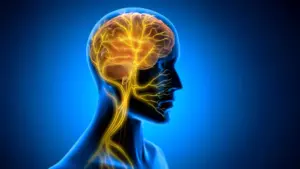






Even when a person is rendered fully unconscious under the heavy influence of general anesthesia, the human brain remains a hive of activity. A groundbreaking study conducted by researchers at Baylor College of Medicine has revealed that even in this suspended state, the brain continues to perform remarkably sophisticated tasks. It does not merely sit dormant; rather, it actively processes complex linguistic structures, recognizes patterns in its environment, and even anticipates the progression of sentences. These findings, recently published in the journal Nature, fundamentally challenge long-held traditional assumptions regarding the relationship between conscious awareness and high-level cognitive function.
Beyond the theoretical implications, the study offers fresh insights into how the human brain organizes memories and language. By uncovering the hidden architecture of the unconscious mind, the researchers believe they have paved the way for potential advancements in neurotechnology—specifically in the development of sophisticated brain-computer interfaces that could help individuals communicate following severe neurological injuries, strokes, or other forms of brain damage.
A Deeper Look into the Unconscious Mind
"Our findings show that the brain is far more active and capable during unconsciousness than previously thought," said Dr. Sameer Sheth, a professor and the Cullen Foundation Endowed Chair of Neurosurgery and a McNair Scholar at Baylor College of Medicine. "Even when patients are fully anesthetized, their brains continue to analyze the world around them."

To investigate the inner workings of the unconscious brain, Dr. Sheth and his colleagues—who operate out of Baylor St. Luke’s Medical Center—conducted a study on patients undergoing elective epilepsy surgery. Because these patients required general anesthesia, the clinical setting provided an ethically sound and unique opportunity to observe the hippocampus, a brain structure tucked deep within the temporal lobe that is critically important for learning, memory consolidation, and the organization of incoming information.
The research team employed cutting-edge technology known as Neuropixels probes. These high-density, silicon-based recording devices allow scientists to monitor the electrical signals of hundreds of individual neurons simultaneously. By placing these tiny probes within the hippocampus, the researchers could capture a granular, high-resolution portrait of how specific neural populations respond to sensory stimuli in the absence of conscious perception. According to the research team, this specific application of Neuropixels technology to the hippocampus in this context represents a novel approach in neuroscientific research, allowing for an unprecedented look at how the brain manages input when the patient is unable to consciously report their experiences.
Neural Plasticity in the Absence of Awareness
The team initiated their investigation with a series of auditory experiments. Patients under anesthesia were played a recurring sequence of standard tones, which were periodically interrupted by a sound that deviated from the established pattern. Despite the clinical depth of their anesthesia, the hippocampal neurons responded with distinct variations to the unexpected sounds.
Perhaps most striking was the observation that the brain cells actually became more adept at distinguishing these unusual tones as the experiment progressed. This phenomenon is a hallmark of neural plasticity—the inherent capacity of the brain to reorganize itself and refine its responses based on experience. The fact that this learning-adjacent process remained functional while the patients were completely unconscious suggests that some of the most fundamental mechanisms of cognition are not tethered strictly to the state of being awake.
Decoding Language and Predictive Coding
Building on the success of the tone experiments, the researchers sought to determine whether this unconscious processing extended to more complex stimuli, such as language. They played short, coherent stories to the anesthetized patients while continuing to record real-time neural activity from the hippocampus.
The data revealed a surprising level of linguistic sophistication. The recorded neural patterns showed that the hippocampus was not just passively registering sound; it was categorizing information. Researchers identified distinct neural signatures corresponding to different linguistic components, including nouns, verbs, and adjectives. This indicated that the brain was interpreting the meaningful features of language rather than simply identifying auditory frequency shifts.
The most intriguing discovery, however, was the brain’s ability to predict upcoming information. The neural data suggested that the hippocampus was actively anticipating the next words in a sentence, effectively "guessing" the progression of the story.
"The brain appears to anticipate what comes next in a story, even without conscious awareness," explained Dr. Sheth, who also serves as the Director of The Gordon and Mary Cain Pediatric Neurology Research Foundation Laboratories at the Duncan Neurological Research Institute at Texas Children’s Hospital.
This process is known as "predictive coding." In standard cognitive neuroscience, the brain is viewed as an active prediction machine that uses past experiences and current patterns to forecast what will happen next. This mechanism allows for fluid social interaction and comprehension. Finding evidence of this in an unconscious state is a significant departure from the scientific consensus. As Dr. Benjamin Hayden, a professor of neurosurgery at Baylor, noted, "This kind of predictive coding is something we associate with being awake and attentive, yet it’s happening here in an unconscious state."
Redefining the Boundaries of Consciousness
The study invites a necessary re-examination of what consciousness actually contributes to the brain’s information-processing architecture. Traditionally, consciousness is synonymous with subjective awareness—the feeling of "being there" to experience, interpret, and reflect upon the world. The findings from Baylor indicate that while consciousness may be required for the subjective experience of reality, it is not a prerequisite for high-level cognitive analysis.
The research does not suggest that the anesthetized patients were "aware" of the stories in the way a person listening to a radio would be. Rather, it demonstrates that the brain possesses the capacity to perform deep linguistic and predictive computation while the person remains fully disconnected from the environment. This distinction may be the key to understanding how consciousness emerges in the first place.
One compelling hypothesis offered by the researchers is that awareness may not rely on the activity of individual brain regions alone, but rather on the complex coordination and cross-regional communication between those areas. In this model, the hippocampus may continue its analytical work in isolation, but the broader "global" communication required for a conscious experience is effectively decoupled by the anesthesia.
Parallels with Artificial Intelligence
The study also draws an unexpected link between biological brain function and the rise of artificial intelligence. Large language models (LLMs), which power modern generative AI, operate on the principle of statistical prediction; they process vast datasets to predict the most likely next word in a sequence.
The discovery that the human hippocampus engages in a similar predictive process—even during unconsciousness—suggests a convergence of sorts between natural and artificial systems. While biological brains and silicon-based models rely on fundamentally different mechanisms, the shared reliance on predictive coding provides a new avenue for scientists to explore the nature of information processing in both domains.
Beyond theoretical curiosity, these findings have tangible applications for the future of medicine. The researchers suggest that if we can decode these predictive signals, we might be able to integrate them into brain-computer interfaces. Such technologies could be life-changing for patients who have lost the ability to speak due to stroke, traumatic brain injury, or degenerative diseases.
"Can we use these signals to deploy and run a speech prosthetic for some of the parts of the brain that are damaged by stroke or injury?" asked Dr. Vigi Katlowitz, the study’s first author and a neurosurgery resident at Baylor. "These are questions that we can now consider in relation to this part of the brain."
Looking Toward Future Research
Despite the significance of the results, the team remains cautious and emphasizes that these findings are just the beginning of a broader inquiry. The study was conducted under a specific type of general anesthesia, and the researchers note that these results cannot yet be generalized to other methods of sedation or different states of altered consciousness.
Furthermore, it remains to be seen whether these sophisticated language-processing and predictive abilities are present during natural sleep or in the case of coma, both of which are neurologically distinct from medically induced unconsciousness. Additionally, the study focused exclusively on the hippocampus. Future research will be required to map how other brain regions interact and whether they exhibit similar autonomous behaviors when the conscious mind is offline.
Even with these caveats, the research serves as a stark reminder that the brain’s "background processes" are far more intricate than previously imagined. The study suggests that even when a person is entirely unresponsive to the outside world, the brain continues its relentless pursuit of structure and pattern. As Dr. Sheth concluded, "This work pushes us to rethink what it means to be conscious. The brain is doing much more behind the scenes than we fully understand."