


In the Western, Educated, Industrialized, Rich, and Democratic world—collectively known as the WEIRD world—humanity lives within what philosopher Guy Debord famously conceptualized as "The Society of the Spectacle." Within this framework, the reality presented through mainstream media and public social media platforms has been meticulously engineered to satisfy the exacting, sterile standards of Homo Economicus. Every person born into a Westernized country, or into nations actively aspiring to WEIRD standards, enters an environment shaped by an internalised ableism embedded deeply within the cultural fabric.
The influence of this paradigm varies inversely with geography and culture; the less WEIRD a country remains, the lower the fidelity of the Spectacle. In these spaces, there lingers vital breathing room for a life lived beyond the artificial confines of the dominant narrative. Observers who have spent their lives navigating the ruins of what can be described as the WEIRDT empire—the Western Educated Industrialized Rich Democratic Theatre—note that perception reigns supreme. Within this vast cultural theatre, substance takes a backseat, leaving little genuine connection to the biophysical and ecological realities of the world outside.
Institutions across the WEIRDT empire stubbornly persist in categorizing and interpreting every facet of human experience through the lens of anthropocentric normality, heavily relying on the predictable hump of the bell curve. Yet, the living planet refuses to conform to these rigid boundaries. The natural world is inherently chaotic, wonderfully diverse, and magnificently complex. For many neurodivergent individuals, this systemic artificiality creates a heightened sensitivity to language, particularly regarding the semantic boundaries established by specific terminology while other crucial terms are systematically avoided.

Mainstream political discourse within WEIRD societies is heavily saturated with the vocabularies of economic growth and perpetual warfare. Under closer examination, growth economics often functions as a polite euphemism masking neocolonialism, systemic violence, and ecological destruction. Historical analysis reveals that barely a century ago, the urgent "need" for continuous economic growth was virtually absent from public discourse. Today, however, the deadliest conflicts manifest as economic wars. Deep social inequalities—such as unequal access to high-quality healthcare and healthy living conditions—drive a steady rise in chronic diseases, multiply the risk of global pandemics, and contribute to the premature deaths of millions.

For those with a low tolerance for cognitive dissonance, such as many autistic individuals, the friction between institutional narratives and lived reality can manifest physically as migraines or other stress-related symptoms. Addressing these contradictions requires collaborative, transdisciplinary spaces where people with diverse expertise can ask clarifying questions, zero in on ambiguities, and build bridges of shared understanding. These intellectual connections are essential for anyone seeking to step outside the WEIRD Spectacle and reconnect with Gaia—the sacred, living world that exists independently of human commerce.
Indoctrination and the Evolution of Belief Systems
By the time subsequent generations were born into the anthropocentric WEIRD Spectacle, neocolonialism had firmly taken root. Reflecting on this upbringing reveals the chilling efficacy of modern indoctrination. Growing up as cultural outsiders immersed in less WEIRD environments within the receding shadows of the British Empire often leaves critical cracks in standard indoctrination, ultimately providing individuals with essential tools for critical thinking.
This dynamic echoes the background of figures like George Orwell, whose early life experiences familiarized him with the mechanisms of imperial control. Recognizing that even mainstream Western scientific worldviews are not entirely immune to ideological bias allows for a more sophisticated understanding of how human belief systems evolve. Across society, various categories of beliefs maintain different levels of internal validity and contextual applicability. When neoliberal economic theories become codified into law, they are rapidly internalized as cultural norms by large segments of the population. Eventually, when the harsh externalities of hyper-competitive, profit-driven behavior strike with full force, Homo Economicus transforms into a devastating self-fulfilling prophecy.
Many individuals spend over a decade navigating the corporate world before finding the internal pressure of maintaining constant cognitive dissonance entirely unsustainable. The corporate Spectacle of social perception management proves particularly hostile to sensitive neurodivergent populations. Indoctrination into cruelty and violence runs deep within these structures. For instance, educational curricula in the late twentieth century frequently taught that animals lacked genuine thoughts or comparable conscious experiences, reducing living creatures to mechanical objects. Experiences like high school biological dissections and animal experiments leave lasting impressions that highlight the normalization of institutionalized disregard for life within WEIRD societies.

Beneath this cultural conditioning, humans retain an innate awareness of their place within Gaia. This deep-seated connection explains why people naturally seek solace in the natural world and why humans are capable of building profound trust with non-human animals, from domesticated pets to wild birds and marine life. While predation exists in nature, animals consume others strictly to cover basic survival needs. Human biology shares these fundamental inhibitions, having evolved to recognize all life and relationships as sacred. Yet, this foundational reality remains conspicuously absent from WEIRD educational systems, as it directly clashes with the neocolonial narrative of relentless technological and economic progress.
The Mechanization of Compliance
From an early age, children within WEIRD cultures are systematically indoctrinated into the ideology of Homo Economicus long before they receive any meaningful education about Gaia or ecological interdependence. This foundational shaping is reinforced through systems of conditional rewards and punishments designed to ensure compliance, effectively teaching children to collaborate merely as a mechanism for outcompeting their peers.
As management expert W. Edwards Deming observed decades ago, systems built entirely around merit pay and annual performance reviews foster a culture of fear. Rather than encouraging genuine teamwork, such structures force individuals to prioritize personal advancement over collective success. True collaboration requires mutual support, shared strengths, and the bridging of individual weaknesses—outcomes that become nearly impossible within high-pressure, competitive merit-rating frameworks.
When individuals are conditioned to view the world through the lens of competition before they learn to listen to their intuition or understand ecological cooperation, they naturally view alternative narratives with deep suspicion. Within the digital commercial ecosystem—where corporate entities control the primary means of communication and universities rely heavily on private funding—the growing body of scientific evidence contradicting Homo Economicus is easily sidelined. Decades of research demonstrating the innate collaborative inclinations of toddlers, alongside anthropological findings highlighting highly egalitarian ancestral societies, are routinely deprioritized by algorithms and institutional gatekeepers.

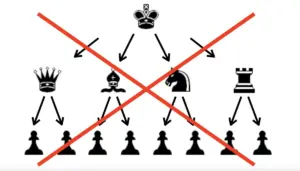
Anthropological evidence indicates that humans lived in egalitarian, human-scale bands for the vast majority of their evolutionary history. These groups maintained dynamic, cooperative relationships across large bioregions, gathering regularly for mutual learning and community formation without hierarchical oversight. These historical models align closely with modern experiments involving egalitarian worker cooperatives and neurodivergent-led solidarity networks.
Healthy Human-Scale Cultural Development
Viewing global monoculture through a biological framework suggests that Homo Economicus functions much like a cultural cancer, arresting human social development at a larval stage characterized by the perpetual production of growth hormones. Just as a human who maintains a teenage diet indefinitely faces severe health consequences, a global civilization obsessed with infinite economic expansion encounters systemic ecological collapse.
To heal, human societies must learn to deactivate the growth hormone of Homo Economicus—capital constructed as interest-bearing debt—and abandon hierarchically structured systems of social control. Indigenous cultures worldwide have long operated on time horizons spanning at least seven generations forward and backward, honoring Gaia as a living sustainer rather than an endless quarry of resources. As thinkers like Vandana Shiva and Yuria Celidwen emphasize, true economics, in its Aristotelian roots, is simply the art of good living rather than an engine of extraction and domination.
Moving beyond economic eclipse requires confronting the deep-seated propaganda of the WEIRD Spectacle. By dismantling toxic narratives and fostering genuine, human-scale spaces of trust and intersectional solidarity, communities can begin the arduous process of cultural sobriety. Recovering our shared humanity is not a solitary endeavor; it requires rebuilding cooperative ecologies of care that respect biological limits and honor our unbreakable connection to the living planet.