




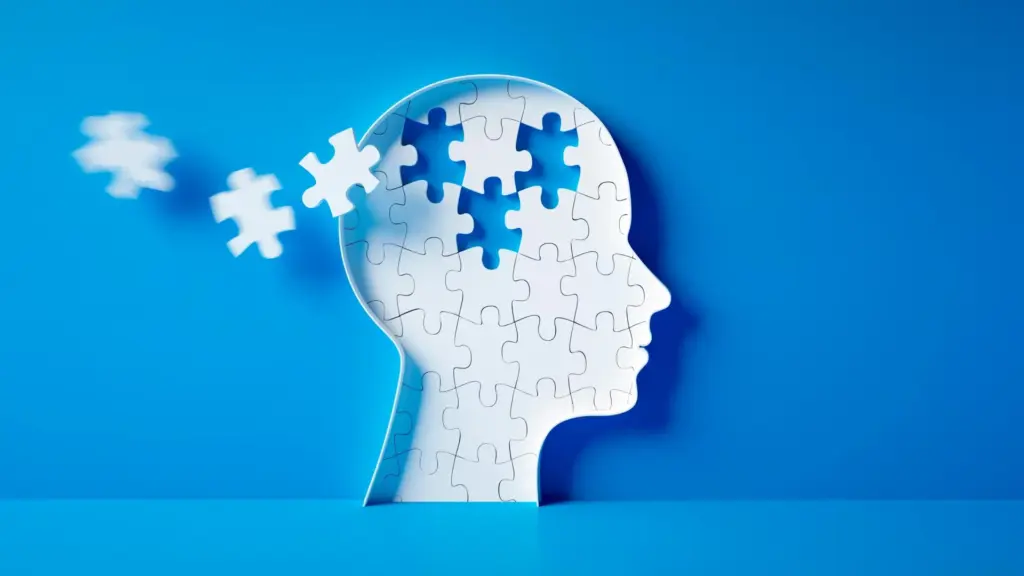
For decades, the prevailing narrative surrounding human aging has been one of inevitable decline. We often speak of the "senior moment," the fading of quick recall, and the gradual erosion of mental sharpness as if they were merely the biological equivalent of a rusting machine. However, a groundbreaking new perspective from researchers at the University of Arizona is challenging this long-held deficit model. By integrating insights from molecular biology, neuroscience, and evolutionary theory, scientists are now proposing that the changes we see in the aging brain are not simply symptoms of deterioration, but rather a deliberate, natural shift in developmental priorities.
This new framework, detailed in a study published in Perspectives on Psychological Science, is being called the "adaptive aging hypothesis." It posits that as humans mature, the brain undergoes a fundamental recalibration, moving away from the high-energy, detail-oriented processing of youth toward a more integrative, meaning-focused approach that prioritizes the wisdom and expertise gathered over a lifetime.
Shifting Gears: From Memory to Meaning
To understand this transition, one must look at the specific architecture of the brain. Two regions, in particular, play pivotal, yet distinct, roles in how we navigate the world: the hippocampus and the frontal cortex. The hippocampus acts as the brain’s librarian, tasked with the preservation of specific, episodic details—the "who, what, where, and when" of our daily experiences. It is essential for learning new information and forming precise memories. The frontal cortex, by contrast, functions more like an editor-in-chief, tasked with distilling broad patterns, synthesizing complex concepts, and extracting the "gist" or central meaning from a collection of experiences.
The researchers suggest that in a healthy adult brain, the balance of power between these two regions shifts over time. In early life, the brain is optimized for the acquisition of new data. A child, for instance, operates like a sponge, with a highly active hippocampus designed to encode massive amounts of context-heavy information. This is necessary because, at the start of life, the individual lacks a foundational knowledge base. They must learn how the world functions from the ground up.
As we progress into middle and later adulthood, however, the brain already possesses an extensive library of experiences, concepts, and semantic knowledge. The adaptive aging hypothesis suggests that it becomes less efficient for the brain to prioritize the acquisition of new, isolated details at the expense of its existing, vast archive. Instead, the brain pivots. By shifting activity away from the hippocampus and toward the frontal cortex, the aging brain becomes better at connecting new information to established patterns. It stops focusing on the individual trees and starts focusing on the shape and health of the forest.
"If we look at normative aging as a story of just decline, we are really missing the boat," says Fabian-José Fernandez, an associate professor of cognition and neural systems at the University of Arizona and coauthor of the study. "The older brain is optimized for different things than the younger brain, predominantly the sharing of stored expertise and social relationships."
An Evolutionary Argument for Wisdom
The consistency of these changes across diverse human populations and even within various animal models suggests that this shift is not a random occurrence, but an evolutionary adaptation. From a biological standpoint, the primary mission of an organism shifts as it reaches its later stages of life. Once an individual has successfully navigated the challenges of development and reached maturity, their role within a community or social group changes.
The adaptive aging hypothesis suggests that evolution has favored brains that can effectively transmit the lessons of a long life to younger generations. By de-emphasizing the need for granular, episodic memory, the brain may be protecting its most valuable resource: the "big picture" wisdom that enables an elder to mentor, teach, and provide guidance.
"Given those goals, it makes sense that you aren’t interested in nitty-gritty details," Fernandez explains. "You are interested in safeguarding the vast knowledge you already have. Evolution may be saying that if you make it long enough, there’s a need to transmit this information, so we put into motion biological changes that enforce and protect your semantic and autobiographical memories."
In this light, the "forgetfulness" often associated with aging might be reclassified as a necessary trade-off—a reduction in the clutter of insignificant details in favor of a clearer view of core truths. This transition is not a failure of the system, but a sophisticated repurposing of biological hardware for the benefit of the group.
Distinguishing Normal Aging from Pathological Decline
A significant portion of the researchers’ work involves clarifying the critical difference between this natural, healthy cognitive evolution and the devastating reality of neurodegenerative conditions like Alzheimer’s disease. For years, the medical community frequently viewed Alzheimer’s as an extreme, accelerated version of the normal aging process. The University of Arizona team argues that this is fundamentally incorrect.
"When I was in grad school, people thought about Alzheimer’s as a more intense version of cognitive aging, but that is just not the case," Fernandez notes. "They are completely different."
In a typical, healthy 70-year-old, the brain is successfully transitioning toward a more frontal-cortex-dominant mode of processing. This is a regulated, orderly shift. In contrast, Alzheimer’s is marked by the presence of pathological proteins—such as amyloid and tau—that disrupt the brain’s ability to function at all. One of the most telling markers of this difference is the activity level of the hippocampus.
In healthy aging, the reduced emphasis on the hippocampus is a functional, adaptive choice by the brain. In Alzheimer’s, however, the hippocampus often displays a state of "hyperactivity" as the brain struggles to compensate for failing networks. This erratic, pathological activity prevents the brain from effectively utilizing its stored lexicon and autobiographical data. The disease does not represent an accelerated form of wisdom; it represents a fundamental breakdown of the circuits that allow us to think about our own lives and vocabulary. By understanding these distinctions, researchers hope to move toward more effective interventions that preserve the natural developmental trajectory of the brain rather than confusing it with disease.
Reimagining the Role of Older Adults
The implications of this hypothesis extend far beyond the laboratory. If we accept that the aging brain is wired for synthesis and mentorship rather than rapid-fire detail acquisition, our societal expectations for older adults must shift as well.
Currently, society often measures cognitive health by the same metrics used for young adults—such as the speed of recall or the ability to perform complex multitasking under pressure. When older adults fail to meet these specific benchmarks, they are often labeled as "declining." However, if we evaluate them based on their capacity for deep pattern recognition, emotional intelligence, and long-term perspective, we see a completely different picture of success.
The researchers argue that society could unlock significant, untapped value by intentionally creating environments that facilitate the transfer of knowledge from older to younger generations. Intergenerational relationships are not just a social nicety; they may be an essential mechanism for the survival of human culture, allowing for the transmission of expertise that is difficult to capture in books or digital databases.
"People see older individuals and look at them as not being on par with younger individuals across a lot of metrics," says Fernandez. "The way I look at it is that you’ve got someone with a brain that has been active for several decades and has seen a lot. There is tremendous value there, and we don’t do a good job of unlocking it."
Ultimately, the adaptive aging hypothesis invites us to move past a narrative of loss and toward one of transition. By recognizing that the brain is not simply decaying, but is instead re-organizing itself to prioritize the wisdom gained from a life fully lived, we can begin to appreciate the unique strengths of older adults. Growing older, it seems, is not merely about surviving the passage of time—it is about evolving into a repository of meaning, a role that remains as essential today as it was in our ancestors’ time. As science continues to uncover the biological underpinnings of this transition, the challenge for society will be to adapt its own structures to honor and utilize the cognitive gifts that only a lifetime of experience can provide.