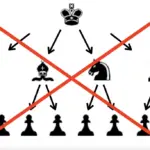




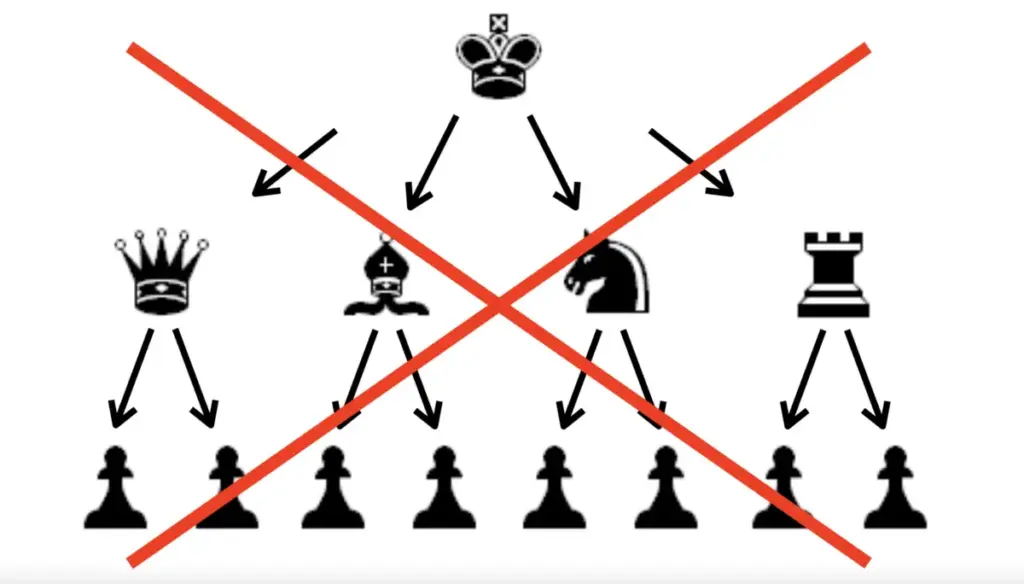
For many autistic individuals, conceptualizing the world through rigid, hierarchical structures presents a profound cognitive challenge. Grounded in human evolutionary history, this difficulty reflects innate collaborative and cultural capacities paired with a significantly reduced capacity for maintaining ongoing cognitive dissonance. These traits, falling well outside the bell curve of modern hypernormativity, shape an entirely different worldview—one that emphasizes relational existence, mutual aid, and human-scale community co-creation.
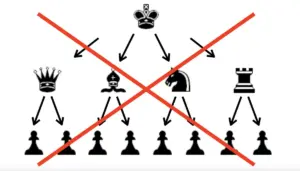
When autistic people encounter the social expectations embedded in hierarchically organized structures of social power, they often struggle to comprehend why such systems are deemed acceptable by mainstream society. There is a keen, conscious awareness of the pain and potential harm inflicted by the exertion of social power over others. Simultaneously, arbitrary demands imposed by authorities that clash with individual sensitivity profiles generate acute internal distress and cognitive dissonance.
Within the framework of internalized ableism, however, these distinct behavioral responses are frequently misinterpreted as social deficits. A reluctance to wield power over others is often framed as an inability to handle leadership responsibilities. Conversely, a refusal to submit to arbitrary authority is penalized as non-compliance, disagreeableness, and a direct threat to the perceived "natural" social order.

Consequently, autistic individuals face contradictory judgments depending on the context. In some environments, they are dismissed as weak or incompetent leaders; in others, they are condemned as aloof, arrogant, insensitive, and inappropriately competitive. Analysts note that both conclusions are deeply misguided. Rather than fitting neatly into conventional corporate or social molds, autistic people are increasingly understood as vital components of the cultural immune system of the human species, well-positioned to reimagine healthier, human-scale, egalitarian cultural organisms.
Modern society remains heavily dominated by what commentators describe as the state religion of Homo Economicus, wherein social hierarchies are treated as immutable laws of nature. This worldview is reinforced by culturally biased frameworks rooted in economics, evolutionary biology, and Western psychology. Emerging from anthropocentric interpretations of monotheistic traditions—accelerated through centuries of colonial and neocolonial history—this dominant culture normalizes systemic inequality and environmental degradation at the expense of communal and ecological well-being.
Traumatised Autistic People
Within this hypernormative landscape, hypersensitive autistic individuals frequently experience trauma from a very young age. Long before they learn about the living world and Gaia, children are immersed in the systems of Homo Economicus by well-intentioned parents and educators. Critics argue this initial socialization is among the most dehumanizing and life-denying aspects of modern civilization.
When early exposure to Homo Economicus intersects with patriarchal or otherwise abusive family dynamics, children face severe psychological risks. Given their unique baseline sensitivity profiles and diminished capacity for ongoing cognitive dissonance, traumatized autistic children often develop a profound distrust of humanity, sometimes struggling to extend trust even to immediate family members.

This extreme isolation can manifest in coping mechanisms similar to those observed in non-autistic trauma survivors, including defensive control tactics or bullying within the immediate family system. While autistic people are neither more nor less likely to perpetuate trauma than anyone else, those who do often exhibit a reduced ability to maintain cognitive dissonance. Consequently, their attempts at social control tend to be transparent and localized, rarely extending into the wider social sphere.
Far more frequently, however, autistic individuals find themselves on the receiving end of bullying and societal abuse due to their refusal to participate in dominant social games or submit to arbitrary demands. This early and pervasive trauma has historically impacted their capacity to build intimate, trusting relationships. However, the advent of the digital age fundamentally shifted this dynamic, enabling autistic people worldwide to connect, share experiences, and forge lifelong bonds based on compatible sensitivity profiles.
These positive developments have nonetheless been complicated by the rise of profit-driven commercial social media platforms. Such environments often promote polarizing dynamics and encourage superficial, hyper-scale networks of acquaintances rather than genuine, intimate community ties.
Autistic Culture
Driven by an innate reluctance or inability to participate in traditional social games, autistic communities are increasingly shifting toward genuinely human-scale online and offline spaces. These spaces foster cosmolocal community co-creation, peer support, and egalitarian relationship-building entirely on autistic terms, far beyond the reach of Homo Economicus.
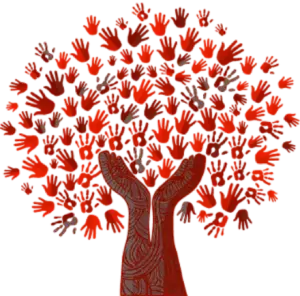
The apparent autistic difficulty with hierarchical thinking is, in practice, a capacity for relational thinking and living. This is evident in the growing global interest in support models such as Ecologies of Care and worker cooperatives like NeurodiVentures. Within hypernormative cultures, explaining the lived experience of healthy autistic culture remains difficult. Mainstream society often fails to grasp how autistic individuals support, love, and care for one another in ways that stretch far beyond neuronormative imaginations.
This evolving web of mutual aid forms what scholars call the "NeurodiVerse"—human-scale cultures created by neurodiversity within the human species. Eschewing the notion that a single village is required to raise a child, autistic cultural philosophy posits that an authentic, autonomous autistic person thrives best within a human-scale autistic family and supportive community ecology.
Because most autistic individuals are not born into culturally aligned families, they must actively co-create these supportive spaces over time. In contrast, many indigenous cultures historically recognized unique individual traits, pairing developing children with adult mentors possessing similar sensibilities and guiding them into specialized community roles. When embedded within an ecology of care, neurodivergent individuals can share both the burdens and joys of life effectively.

Understanding a Cultural Organism as a Set of Relationships
Within autistic culture, a human-scale cultural organism is understood fundamentally as a set of relationships, acknowledging that all humans possess inherent cognitive and emotional limits. This perspective embraces the principle that small is beautiful, fostering an intimate integration with the natural world and Gaia. Institutions operating beyond this human scale are viewed as expressions of anthropocentric hubris, particularly when sustained by permanent hierarchies of social power.
Healthy cultural organisms thrive on interdependencies and diverse complementary relationships without permanent social power differentials. In such systems, no single relationship holds more weight than another, and robust backups exist for any connection critical to group survival. Isolation, conversely, is recognized as a profound violation of relational health and human rights. Urbanized social isolation, removed from direct contact with the natural world, is seen as particularly damaging, emphasizing that individual well-being is merely a derivative of broader relational and communal health.
Understanding the Modern Social World
Comprehending the modern social world requires viewing it from the margins, as mainstream systems of sense-making have grown deeply confused. When a culture dismantles collective deliberation at human scale, individuals experience daily life as incoherent. Commentators point to a long-standing intellectual fusion of media manipulation and bureaucratic control—often described through the lenses of media theorists and social critics—as the foundational reality into which modern citizens are born.
Critics argue that contemporary institutions, legal frameworks, and governmental structures primarily serve to protect capital and maintain existing power dynamics. Rather than addressing root systemic crises, political systems frequently function as reality management authorities, preserving the status quo for wealthy elites while deflecting genuine existential threats. Underneath these complex bureaucratic layers lies a simple, recurring pattern often termed the iron law of social design: everything is permitted to change, provided that established structures of social power remain untouched.
Where to From Here?
As centralized, super-scale institutions grow increasingly brittle and unreliable, observers suggest that systemic reform of the current global model is mathematically and culturally futile. Instead, change is expected to emerge organically from the margins as individuals and small groups gradually withdraw their reliance on failing systems, turning toward human-scale mutual aid and localized resilience.
Drawing biological parallels to insect metamorphosis, theorists suggest that dying cultural institutions may eventually give way to life-affirming, human-scale organisms. Rather than attempting to rescue failing corporate and state structures, emerging communities can focus on cultivating subsistence-level life skills, fostering cross-cultural and neurodivergent solidarity, and repairing the severe inequities left in the wake of the colonial era.
Relearning this cultural adaptivity requires a profound shift in trust away from centralized institutions and toward community co-creation. As scholar Yuria Celidwen notes, doing this difficult work creates the necessary spaces of trust to envision a more life-affirming collective future. Through ongoing, omnidirectional learning and shared practice, emerging networks are actively documenting and building the foundations for a resilient, relational world beyond the limits of Homo Economicus.