





The role of healthcare teams in modern medicine is often characterized by the complex interplay of diagnostic expertise, pharmacological interventions, and surgical precision. Yet, as the medical landscape continues to evolve, the essential contribution of Occupational Therapy (OT) remains a topic of both vital importance and persistent communication challenges. While the efficacy of the profession is well-documented in clinical outcomes, occupational therapists often find themselves grappling with how to articulate their unique value proposition to both the public and their interdisciplinary colleagues.
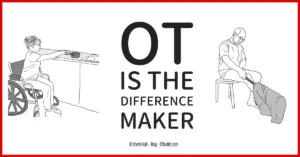
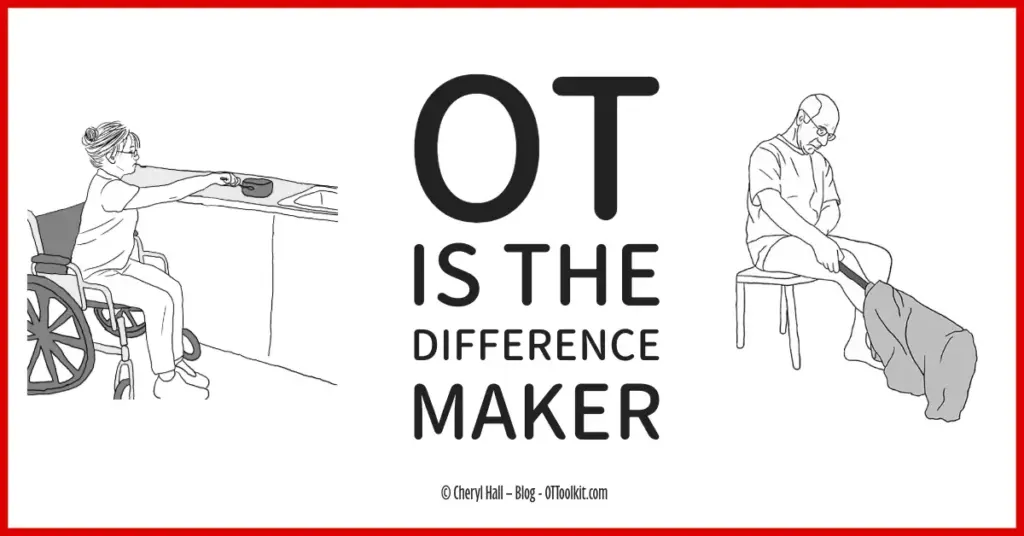
After reflecting on the dynamics of modern health care teams, it becomes increasingly clear that the profession must shift its narrative. Instead of viewing OT as merely one of many services, it should be framed as the "difference maker"—the specialized arm of the care team that bridge the gap between clinical stabilization and the actual, lived experience of the patient. By grounding this identity in concrete, real-world examples, it is possible to illustrate how OTs uniquely meet patients exactly where they are in their recovery journey, fundamentally altering the quality of their daily lives in ways that other disciplines, focused on different benchmarks, might overlook.
Over the course of a career in this field, specific patient encounters often stand out, serving as a testament to the fact that the OT perspective is not just additive, but transformative. These moments of intervention represent instances where, had the occupational therapist not been present to advocate for the patient’s functional independence and emotional well-being, the outcome for the individual would have been markedly different.
Terminal Cancer and the Power of Laughter
One of the most poignant examples of the OT’s role involves a ten-year-old patient named "Paul." Diagnosed with terminal cancer and confined to a wheelchair, Paul had become increasingly withdrawn. His condition had induced a state of deep depression, and despite the diligent efforts of the broader medical team, the emotional toll of his prognosis seemed to loom over every interaction. During daily therapy sessions, the atmosphere remained heavy; the weight of his illness appeared to be winning the battle, as interventions struggled to penetrate his silence.
Recognizing that clinical goals were being overshadowed by psychological despair, a change in approach was required. During one session, a simple reacher-grabber—a standard tool in the OT arsenal—was introduced with a creative intent. Paul’s mother was in the kitchen, momentarily occupied with household chores. Taking advantage of the environment, the grabber was used to snag a dish towel, which was then handed to Paul with the hushed, conspiratorial instruction to hide it under the table.
When his mother returned to the room and began searching for the missing towel, the shift in the room was palpable. Paul’s eyes, previously dimmed by illness, lit up with a spark of genuine mischief. As his mother searched through drawers, Paul eventually broke into laughter, waving the towel in the air. That small moment of play had breached the walls of his depression. For the remainder of his life—which lasted another two weeks—that grabber became a source of joy, used to tease his parents and siblings. After he passed, his parents specifically reached out to express their gratitude, not for the physical therapy he received, but for the moments of fun and humanity that were restored to his final days.
Restoring Dignity and Function Through Adaptation
The value of an OT is perhaps most visible when a patient faces a loss of autonomy due to physical trauma. A patient named "Jack," who suffered from severe, uncontrolled diabetes, faced a life-altering surgery that left him with only his thumbs and half of his dominant index finger. As he worked through the logistics of maintaining independence in his activities of daily living (ADLs), he reached a point of frustration.
He eventually confessed to a deep-seated embarrassment: he was tired of asking for help with basic tasks, but there was one specific, private need he felt ashamed to bring up. Upon gentle encouragement, he admitted, "The most recent surgery took my nose-picking finger." While this might seem trivial to a medical team focused on systemic health, to Jack, it was a profound loss of dignity and normalcy.
By assessing the sensation, skin integrity, and circulation in his residual digit and coordinating with his nursing and medical team, a solution was developed. A custom device was fabricated using Velcro and specialized splinting material. Through a series of iterative adjustments, the device successfully restored Jack’s ability to perform this specific, private task. This was not just about a tool; it was about reclaiming a sense of self and independence that had been stripped away by disease. For Jack, the OT was the only professional who validated his concern as a legitimate part of his rehabilitation.
Breaking the Invisible Barriers of the Home
Sometimes, the most significant barriers to a patient’s independence are not physiological, but environmental. Consider the case of "Dorothy," a 75-year-old patient living with severe rheumatoid arthritis. During a home visit, it was noted that when the door was knocked upon, Dorothy would call out for the visitor to enter rather than opening the door herself.
Following an evaluation, it became clear that for the ten years she had resided in her apartment, she had been physically unable to operate the front door. She had spent a decade relying on the kindness of neighbors to open the door for her, leaving it unlocked to ensure she could receive visitors. It was an invisible prison, one that had been accepted as her reality for a decade.
Upon inspection, the issue was identified: the magnetic seal on the door was extraordinarily strong, requiring more force than Dorothy could exert with her arthritic hands. Using simple masking tape to cover approximately half of the magnetic surface, the resistance was reduced to a level that Dorothy could manage. For the first time in ten years, she could open her own front door. To ensure safety and compliance, the apartment manager and the local fire station were consulted, both of whom confirmed that the modification did not compromise the door’s fire protection standards.
These stories, while varied in their circumstances, share a common thread. They represent the unique, patient-centered lens through which occupational therapists view the world. Whether it is bringing joy to a dying child, restoring dignity to a man who has lost his fingers, or unlocking the front door for an elderly woman, these interventions address the "occupations" of life—the things that truly make us human. None of these needs would have been addressed by other disciplines, yet they were essential to the patients’ quality of life.
The challenge for the profession moving forward is to continue gathering these narratives. When the healthcare team gathers to discuss patient outcomes, these stories serve as a vital reminder that therapy is not just about clinical markers or discharge planning; it is about the difference made in the daily lives of the people being served. Sharing these experiences is the most effective way to communicate the irreplaceable value of occupational therapy to the broader medical community.