


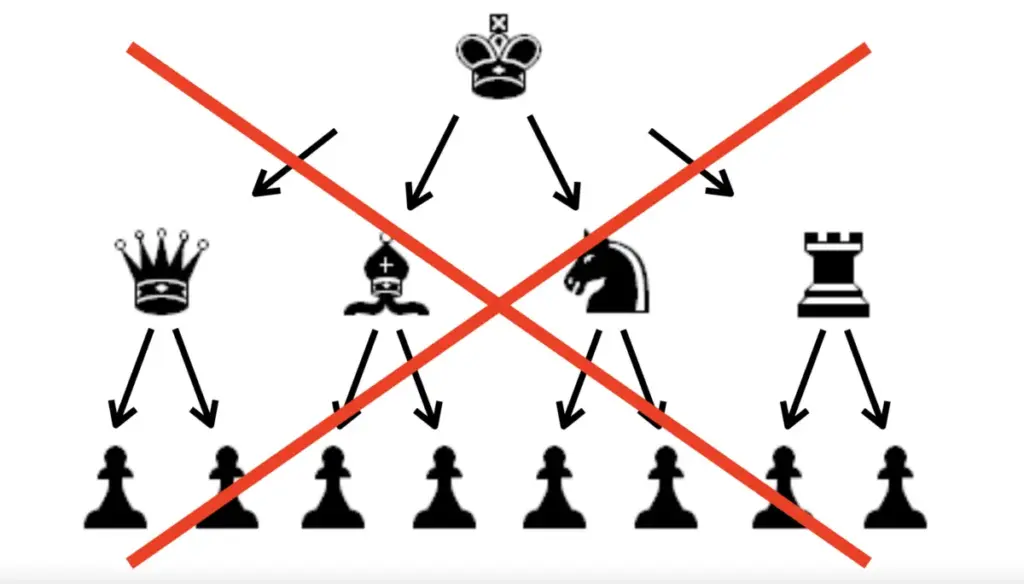
In contemporary discussions surrounding neurodiversity, modern society, and cultural evolution, a growing body of perspective suggests that many autistic individuals possess an innate difficulty in processing the world through hierarchical frameworks. Grounded in our evolutionary history as a cooperative human species, this characteristic reflects a reduced capacity for maintaining ongoing cognitive dissonance. Driven by uncommon sensory and perceptual sensitivity profiles that fall well outside the bell curve of hypernormativity, autistic individuals often view traditional structures of social power with profound skepticism.
When autistic people encounter the social expectations embedded within hierarchically organized structures, they frequently struggle to comprehend why such systems are accepted as normative. They maintain a conscious awareness of the pain and potential harm caused by the exertion of social power over others. Simultaneously, they feel the acute distress and cognitive dissonance that occur when authorities impose arbitrary demands incompatible with their individual sensitivity profiles.
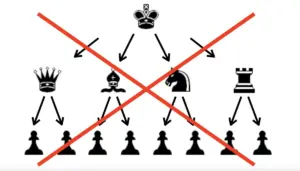
Within the prevailing cultural framework of internalized ableism, this autistic reluctance to exert power over others is frequently misinterpreted as a social deficit—specifically, an inability to be entrusted with leadership responsibilities. Conversely, the refusal to submit to arbitrary social power is similarly mischaracterized as non-compliance, disagreeableness, and a disruption of the so-called "natural" social order. This double standard explains why autistic individuals are sometimes dismissed as weak or incompetent leaders in certain contexts, while in others, they are punished for being aloof, arrogant, insensitive, or inappropriately competitive. In many cases, both diagnostic conclusions are entirely misguided.

Instead, scholars and neurodivergent advocates argue that autistic people are better understood as vital components of the cultural immune system of the human species. In the modern world, they are uniquely positioned to reimagine healthier collective ways of being and to foster human-scale, egalitarian cultural organisms.
The modern world remains heavily dominated by what commentators describe as the state religion of Homo Economicus. Within this paradigm, the majority of people experience social hierarchies as a law of nature, justified by culturally biased evidence derived from disciplines such as economics, evolutionary biology, and Western psychology. This worldview is an outgrowth of historical interpretations rooted in monotheistic traditions, which gained unprecedented momentum throughout colonial and neocolonial history.
Traumatized Autistic People
Within this hypernormative global environment, hypersensitive autistic individuals often experience profound trauma from a very young age. Children across society are exposed to the logic of Homo Economicus by well-intentioned parents and educators long before they develop a substantial understanding of the living world and ecological systems. Critics argue this represents one of the most dehumanizing and life-denying aspects of contemporary civilization.
When early exposure to Homo Economicus combines with rigid power dynamics inside patriarchal or otherwise dysfunctional family systems, children face severe developmental risks. Given their unusual baseline sensitivity profiles and a reduced capacity for maintaining cognitive dissonance, traumatized autistic children are particularly vulnerable to developing a deep distrust of humanity—to the point where they may struggle to extend trust even to immediate family members.
Such highly traumatized individuals can end up profoundly isolated. Their coping mechanisms mirror those found in non-autistic trauma survivors, including defensive behaviors or attempts to exert control over their immediate environment. While autistic people are no more or less likely to perpetuate trauma than anyone else, those who do often differ in their reduced ability to maintain cognitive dissonance. Consequently, their attempts at social control tend to be transparent and typically remain confined to their immediate domestic spheres rather than extending into the wider social realm.

Much more frequently, however, autistic individuals find themselves on the receiving end of bullying and systemic abuse due to their refusal to participate in dominant social games or submit to arbitrary authority. The level of early childhood trauma experienced by many autistic people has historically impacted their ability to forge intimate relationships. Fortunately, the advent of the internet has enabled autistic individuals worldwide to connect, share experiences, and build lifelong relationships based on compatible sensitivity profiles, bypassing the barriers imposed by mainstream culture.
Autistic Culture and Relational Living
Driven by an innate reluctance or inability to participate in conventional social games, many autistic people have increasingly shifted toward human-scale online spaces for cosmolocal community co-creation, peer support, and egalitarian relationship-building. This movement operates entirely on autistic terms and largely outside the influence of the dominant culture of Homo Economicus.
The autistic inability to think hierarchically translates into a profound capacity to think and live entirely relationally. This is demonstrated by growing international interest in human-scale support models, such as Ecologies of Care and egalitarian worker cooperatives designed for engaging with the broader social world. Within hypernormative culture, explaining the experience of healthy autistic culture to non-autistic observers remains a challenge. Mainstream society frequently fails to understand how autistic individuals support, love, and care for one another in ways that transcend neuronormative imagination.
Rather than relying on isolated nuclear units, the evolving web of relationships and mutual aid initiatives reflects emergent ecologies of care. While traditional wisdom suggests it takes a village to raise a child, an autistic, autonomous translation might argue that an autistic person requires a human-scale autistic family and trusted community to feel truly alive and supported. Because most autistic people are not born into culturally aligned environments, they must actively co-create these supportive relational networks over time.
In many indigenous cultures, children with unique perceptual qualities are traditionally recognized, mentored by adults with similar traits, and integrated into specific roles within the local community. When embedded within a genuine ecology of care, neurodivergent individuals can thrive, sharing both the challenges and joys of existence.
Understanding Cultural Organisms as Sets of Relationships
Within autistic culture, human-scale cultural organisms are understood fundamentally as sets of relationships, acknowledging that all humans possess inherent cognitive and emotional limits. This perspective fosters a deep appreciation for the principle that small is beautiful—a scale that remains comprehensible and intimately integrated with the natural world, often referred to as Gaia.
Beyond this scale, institutional structures are viewed as expressions of anthropocentric hubris, particularly when sustained by permanent hierarchies of social power. Healthy cultural organisms celebrate interdependence and the diversity of complementary relationships, ensuring there are no permanent social power differentials and no single relationship is elevated above another. Furthermore, resilient cultural organisms maintain redundancies and backups for any connection critical to group survival.
Individual well-being is viewed as a direct derivative of the health of all human and non-human relationships a person maintains. Consequently, true health is found at the relational and communal levels on a human scale, rather than in isolated individualism. Social isolation, particularly within urbanized environments disconnected from nature, represents a severe deprivation of a fundamental human right to be integrated into the living biosphere.

Navigating the Modern Social World
Comprehending the modern social world often requires viewing it from the margins, as mainstream systems of sense-making have grown increasingly incoherent. When a culture destroys collective deliberative capacity at a human scale, individuals experience profound confusion as they attempt to reconcile daily life with natural human intuition.
Rather than attempting to reform large, deeply entrenched institutional systems that prioritize the preservation of capital and power, many thinkers suggest that attention is better directed toward understanding the symptoms of institutional decline. Observers note that legal and governmental structures frequently operate as protective machinery for abstract financial entities, sometimes behaving with the self-preservation instincts of independent biological organisms.
Governments and corporate entities often prioritize the maintenance of established social narratives and economic stability over substantive change, viewing genuine systemic transformation as an existential threat to their authority. As a result, when polycrises emerge, institutional responses frequently default to public relations management rather than structural adaptation.
From a broader ecological perspective, human-constructed systems of authority and power hold little permanence compared to the natural laws of the biosphere. The iron law of social design in modern Western systems often dictates that all elements of society are permitted to change, provided the established structure of social power remains intact.
Pathways Forward: Adaptivity and Metamorphosis
As super-scale institutions grow increasingly unreliable, individuals and small groups naturally gravitate toward mutual aid and human-scale community co-creation. Drawing on biological metaphors such as holometabolism, or insect metamorphosis, some theorists view the current era of civilizational strain not merely as collapse, but as a potential cultural metamorphosis.
When large institutions decay, communities that have cultivated localized subsistence skills and relational resilience often find new pathways for survival and regeneration. This transition highlights the importance of fostering deep trust, mutual aid, and intersectional solidarity across both local and global communities.
By stepping outside the confines of Homo Economicus, emerging cultural organisms continue to document and share practical knowledge for human-scale living. Through ongoing experimentation, mutual learning, and a return to relational thinking, neurodivergent communities and their allies are charting a path toward a more life-affirming collective future.