




GENEVA — In a decisive move to fortify the continent’s public health architecture against a backdrop of mounting global financial pressures, the World Health Organization (WHO) and the African Union (AU) Commission have officially renewed their longstanding strategic partnership. The formalization of the updated Memorandum of Understanding (MoU) took place on the sidelines of the 78th World Health Assembly in Geneva, marking a critical milestone for multilateral cooperation, health security, universal health coverage, and sustainable development across Africa.
The newly minted agreement arrives at a pivotal juncture in international public health. As the global health landscape confronts unprecedented financial challenges—compounded by significant cuts to bilateral aid that threaten the health and well-being of millions—the renewed accord reaffirms a joint commitment by both organizations to protect vulnerable populations. Furthermore, the partnership underscores the growing leadership of the African Union in fostering collective action, inclusive regional partnerships, and robust institutional resilience. It positions the Department of Health, Humanitarian Affairs, and Social Development of the AU Commission squarely at the heart of the continent’s health policy implementation and governance efforts.
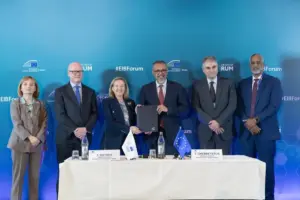
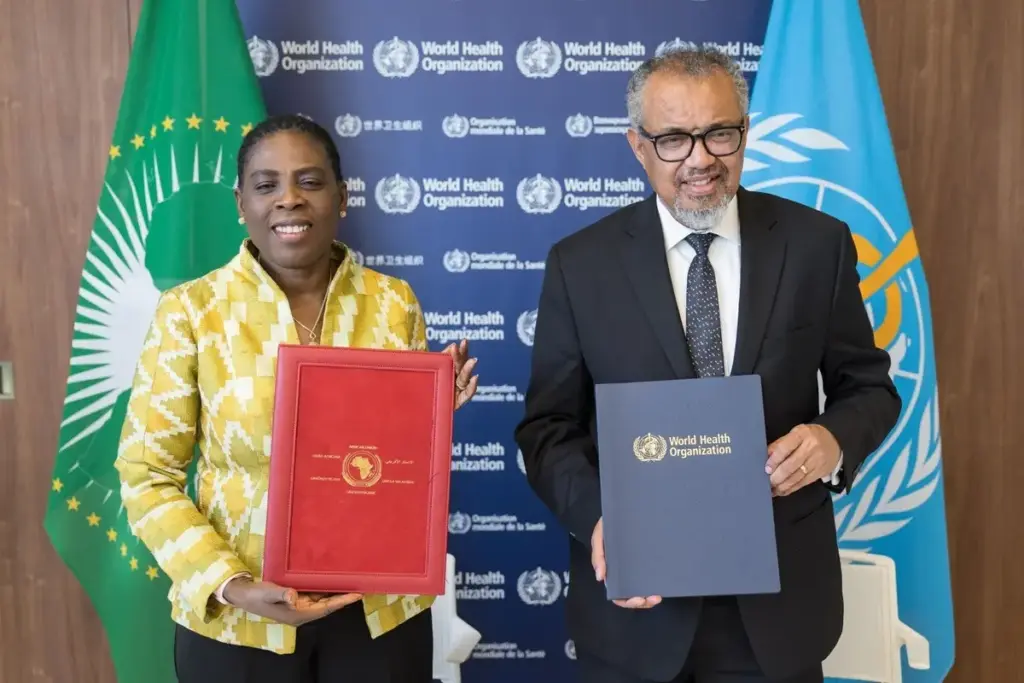
The high-level signing ceremony featured key leadership from both institutions. The agreement was formally executed by Her Excellency Ambassador Amma Adomaa Twum-Amoah, Commissioner for Health, Humanitarian Affairs and Social Development, acting on behalf of His Excellency Mahmoud Ali Youssouf, Chairperson of the African Union Commission. They were joined by Dr. Tedros Adhanom Ghebreyesus, Director-General of the World Health Organization. Together, the leaders framed the updated MoU as a defining moment for the advancement of primary health care and the realization of universal health coverage across member states.

Highlighting the strategic importance of the accord and the pivotal role played by the AU in charting the continent’s future, Commissioner Twum-Amoah spoke passionately about the shift from reactive crisis management to proactive self-reliance. She noted that the agreement establishes a brand-new chapter in the cooperative relationship between the two entities, ensuring that through closer alignment, they can rapidly and effectively respond to the evolving health needs of African populations while leaving no one behind.
"This Agreement marks a new chapter in AU–WHO cooperation," Commissioner Twum-Amoah stated. "By working together more closely, we can better respond to the health needs of our populations and ensure that no one is left behind. The African Union values WHO’s central and leading role in global health and looks forward to deepening this strategic partnership in support of our shared goals."
Underscoring the broader economic and political philosophy underpinning the new accord, she added a call for systemic transformation across the continent’s public sector: "We need to move from budgeting for survival to planning for health sovereignty."
The renewed pact builds directly upon the strong foundations laid by the previous Memorandum of Understanding signed in 2019. By streamlining and strengthening collaboration across all operational AU entities, the updated framework successfully aligns international efforts in rigorous support of Africa’s core health priorities. It sets a comprehensive stage for enhanced, day-to-day cooperation between WHO personnel and AU institutions, while reaffirming WHO’s central technical and normative leadership role in both global and regional health frameworks. Crucially, it cements the organization’s steadfast commitment to backing the AU and its specialized bodies as they strive to achieve the health-related Sustainable Development Goals.
Dr. Tedros Adhanom Ghebreyesus echoed these sentiments, emphasizing the urgent and timely nature of the agreement as international funding streams face severe constraints. He noted that the partnership is specifically designed to counteract the destabilizing effects of retreating international support and to foster sustainable domestic capacities.
"This renewed agreement comes at a critical time, as cuts to bilateral aid imperil the health of millions in Africa," Dr. Tedros remarked. "It reflects our determination to translate our partnership into tangible results for the people of Africa, and support countries to leave behind the era of aid dependency and transition to sustainable self-reliance. We are proud to stand with the African Union in driving forward the health priorities of the continent."
The timing of the refreshed Memorandum of Understanding carries profound diplomatic and operational significance. It mirrors the African Union’s markedly elevated voice and growing influence in global health governance—a status significantly bolstered by the AU’s historic inclusion as a permanent member of the G20. This expanded geopolitical footprint, combined with the WHO’s enduring role as a trusted technical, normative, and operational partner, creates a powerful synergy capable of driving systemic change.
The formal agreement outlines a structured path forward, focusing closely on key areas of institutional collaboration designed to tackle Africa’s most persistent and emerging public health vulnerabilities. By anchoring their collaborative efforts in mutual accountability and shared strategic visions, the WHO and the AU Commission aim to deliver meaningful, lasting health outcomes for citizens across the continent, steering the region steadily toward a resilient and self-reliant future.
For further information regarding the renewed partnership and ongoing joint initiatives, inquiries can be directed to Professor Julio Rakotonirina, Director of the Department of Health, Humanitarian Affairs and Social Development at the African Union Commission, via email at [email protected]. Alternatively, media and institutional representatives may contact Ms. Stéphanie Seydoux, Director and DG Envoy for Multilateral Affairs at the World Health Organization, at [email protected]. Additional institutional media support is available through the WHO Media Team and Mr. King David Cartey of the African Union Commission.