





Philanthropic support has emerged as a cornerstone of modern global health strategy, serving as a vital catalyst for nations striving to build resilient health systems and advance the cause of health equity. In an era marked by increasing global volatility, the contributions of private partners and philanthropic foundations have become indispensable in driving progress across the World Health Organization’s (WHO) most pressing priorities, ranging from the universal rollout of life-saving vaccines to the complex task of long-term pandemic preparedness and the foundational strengthening of primary health care.
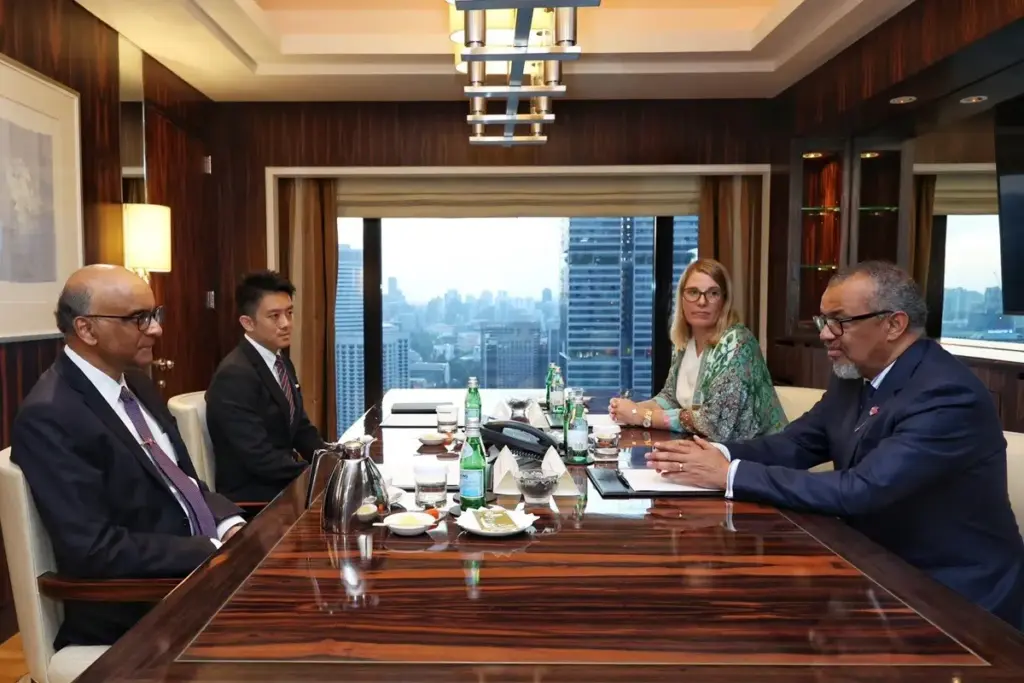
The critical importance of this collaboration was brought into sharp focus during the recent Philanthropy Asia Summit, held in Singapore from May 5–7, 2025. Dr. Tedros Adhanom Ghebreyesus, the Director-General of the World Health Organization, utilized the platform to articulate a vision for a more interconnected health ecosystem, one where the agility of private philanthropy complements the structural reach of international public health institutions. In his address to delegates, Dr. Tedros expressed deep gratitude to the Temasek Foundation and the Philanthropy Asia Alliance for their initiative in organizing the Summit. He emphasized that the role of philanthropy extends far beyond mere financial contribution; it is a strategic partnership that empowers countries to achieve self-reliance while providing the necessary muscle to address health challenges in an increasingly turbulent and unpredictable geopolitical landscape.
The Summit served as a high-level forum for discussing how private capital and expertise can be better aligned with the urgent needs of the global population. Addressing the audience, Dr. Tedros took a moment to formally acknowledge the leadership of His Excellency President Tharman Shanmugaratnam and the government of Singapore. He lauded Singapore for its consistent dedication to global health, noting that the nation’s proactive approach to health security has set a standard for others to follow.

A significant highlight of the Director-General’s remarks was his acknowledgment of the early commitment shown by Singapore and the Temasek Foundation. As the WHO embarks on its ambitious Investment Round—a strategic effort to ensure predictable and sustainable funding for the organization’s core mandates—Singapore and the Temasek Foundation stood out as among the first to pledge their support. This early buy-in is viewed by the WHO as a powerful signal of confidence in the organization’s strategic direction. "We look forward to your continued leadership and partnership as we work together to realize WHO’s founding vision: the highest attainable standard of health—not as a luxury for some, but a right for all," Dr. Tedros stated, reaffirming the moral imperative that underpins all global health work.
The WHO’s current Investment Round is a pivotal moment for the organization, as it seeks to fundamentally broaden its donor base. Historically, the agency has relied heavily on a narrow set of traditional government donors. However, the complexities of 21st-century health challenges—such as the rapid emergence of infectious diseases and the chronic burden of non-communicable illnesses—require a more diverse and stable financial architecture. By engaging strategically with philanthropic organizations, the WHO is not merely seeking funding, but is aiming to integrate the specialized expertise and innovative mindsets that these partners bring to the table.
Dr. Tedros noted that these partnerships are instrumental in helping countries strengthen their essential health services. By focusing on the "last mile" of service delivery and supporting the capacity-building efforts of national health ministries, philanthropic actors are making sustainable progress towards the elusive goal of Universal Health Coverage (UHC) a reality for millions. This synergy between global policy guidance and local implementation is what defines the most successful philanthropic interventions in the health sector today.
The contribution of philanthropic actors to global health outcomes is multifaceted, providing a combination of financial resources, logistical expertise, and intellectual capital that is often difficult to replicate through traditional bureaucratic channels. These investments frequently act as a force multiplier; they do not replace the work of governments or international agencies but rather complement and amplify their efforts. When a government identifies a critical gap in its health infrastructure, a well-timed philanthropic investment can provide the necessary seed funding or technical training to bridge that gap, effectively turning a localized problem into a manageable success story.
Perhaps one of the most unique advantages of philanthropy in the health sector is its ability to operate where traditional funding often fears to tread. Philanthropic organizations have a greater risk appetite, allowing them to support innovative, high-risk, or long-term research initiatives that might be passed over by more conservative, traditional funding sources. This is particularly vital in fields like vaccine development, climate-sensitive health interventions, and the deployment of cutting-edge digital health technologies. By de-risking these projects, philanthropy allows for breakthroughs that can eventually be scaled up by governments and international bodies, leading to systemic improvements in health outcomes worldwide.
Furthermore, philanthropic actors serve as highly effective advocates. Because they are often perceived as independent and mission-driven, they have a unique ability to raise awareness, influence public policy, and galvanize political will. Whether the goal is to address deep-seated health disparities in marginalized communities or to promote policies that prioritize health equity on the global stage, these actors provide a consistent voice for those who are often left behind. Their involvement helps to keep global health high on the political agenda, ensuring that the needs of the vulnerable remain a focal point for international cooperation.
Looking toward the future, the integration of philanthropic collaboration will remain central to the success of the WHO’s Fourteenth General Programme of Work. This framework, which guides the agency’s efforts to improve global health, acknowledges that no single entity can achieve these goals in isolation. Developing strong, transparent, and mutually beneficial partnerships with a range of philanthropic actors is the only way to leverage the diverse strengths of the global health community. By pooling resources and coordinating efforts, the WHO aims to maximize the impact of every dollar and every intervention, bringing better health and improved well-being to people across all corners of the globe.
The spirit of the Philanthropy Asia Summit underscored a fundamental shift in the landscape of international aid. It is no longer enough for agencies like the WHO to work in silos; the challenges of the modern age demand a collaborative model that draws on the strengths of governments, the private sector, and the philanthropic community. As the world navigates the complexities of the post-pandemic era, the partnership between the WHO and its philanthropic allies serves as a blueprint for how collective action can effectively address the most urgent health crises.
As the Summit concluded, the message was clear: the path toward health equity is long and fraught with obstacles, but with sustained leadership, strategic investment, and a shared commitment to the founding principles of the WHO, it is a goal that remains within reach. The continued collaboration between the organization and its partners is not just a strategic necessity—it is a moral imperative, ensuring that the vision of health as a fundamental human right is upheld for generations to come. Through the ongoing Investment Round and the strengthening of these vital philanthropic ties, the WHO continues to position itself as a resilient and capable leader, ready to face the health challenges of a changing world with the support of a global network dedicated to the well-being of all humanity.