





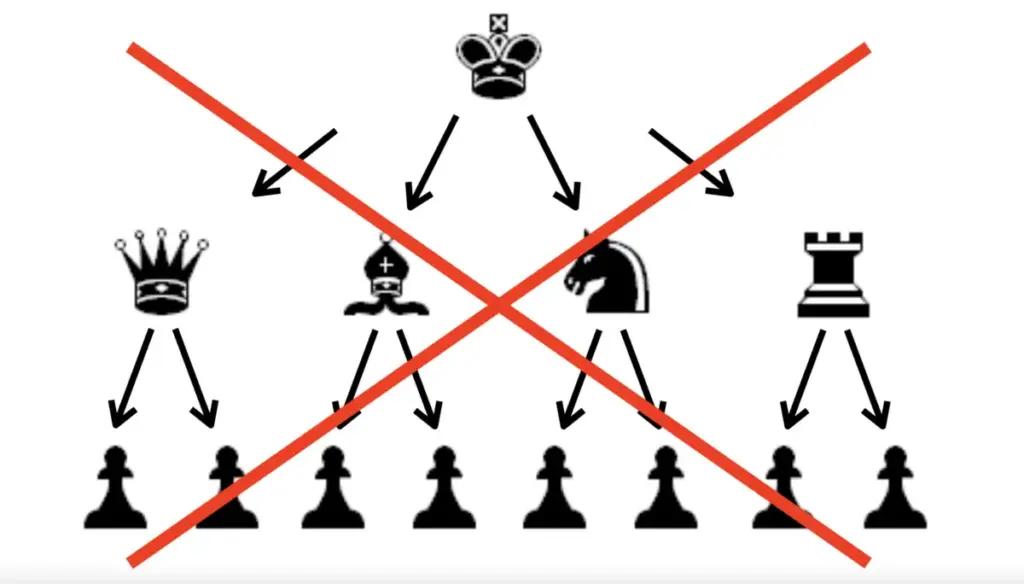
Many autistic individuals experience profound difficulty in perceiving or navigating the world through hierarchical frameworks. According to contemporary insights into human evolutionary paths and neurodiversity, this cognitive trait reflects innate human collaborative cultural capabilities combined with a significantly reduced capacity to sustain ongoing cognitive dissonance. This reduced tolerance for contradiction stems from uncommon sensory and neurological sensitivity profiles that sit outside the bell curve of hypernormative expectations.
When autistic people encounter the social expectations tied to operating within hierarchically structured systems of power, they frequently struggle to comprehend why such structures are considered acceptable or natural. There is a sharp, conscious awareness of the pain and potential harm inflicted when social power is exerted over others. Conversely, individuals on the spectrum experience acute psychological distress and cognitive dissonance when authorities impose arbitrary demands that clash directly with their unique individual sensitivity profiles.
Within a cultural framework dominated by internalised ableism, this autistic reluctance to exert social power over others is often misinterpreted as a social deficit—specifically, an inability to be entrusted with leadership responsibilities. At the same time, the parallel reluctance to submit to arbitrary social power is labeled as non-compliance, disagreeableness, and a disruption of the established social order.
This dynamic explains a persistent paradox in modern social settings. In certain contexts, autistic individuals are dismissed as weak or incompetent leaders because they refuse to command through dominance. In other scenarios, the exact same individuals are penalized for being aloof, arrogant, insensitive, or overly competitive. In reality, both conclusions are deeply misguided.
Instead of viewing these traits through a deficit lens, a more accurate paradigm recognizes autistic people as vital components of the cultural immune system of human societies. In the modern world, autistic individuals are uniquely positioned to reimagine healthier collective ways of living and to foster human-scale, egalitarian cultural organisms.
Yet, contemporary society remains dominated by what scholars describe as the state religion of Homo Economicus. Under this paradigm, the majority of people experience social hierarchies as an immutable law of nature, justified by culturally biased evidence derived from mainstream economics, evolutionary biology, and Western psychology. This worldview is an outgrowth of historical interpretations rooted in anthropocentric readings of monotheistic traditions, which expanded dramatically during eras of colonialism and neocolonialism.
Traumatized Autistic People
Within this modern landscape, hypersensitive autistic children are frequently traumatized from a very young age. Long before they learn about Gaia and the living world, children are immersed in the expectations of Homo Economicus by well-intentioned parents and educators. This early immersion is widely recognized as one of the most dehumanizing and life-denying aspects of contemporary civilization.
When this premature exposure to competitive, hierarchical structures combines with patriarchal or otherwise dysfunctional family dynamics, the risk of severe childhood trauma escalates dramatically. Given their distinct baseline sensitivities and lower thresholds for cognitive dissonance, traumatized autistic children are particularly vulnerable to developing a deep, generalized distrust of humanity, sometimes to the point where they struggle to extend trust even to immediate family members.
Consequently, highly traumatized autistic individuals can find themselves profoundly isolated. Their coping mechanisms mirror those seen in non-autistic trauma survivors, including defensive control tactics or bullying within immediate family units. While autistic people are no more or less likely to perpetuate trauma than anyone else, those who do tend to differ in their reduced ability to maintain cognitive dissonance. Their underlying desire for control is usually transparent and restricted to their immediate environment rather than the broader social sphere.

Much more frequently, however, autistic individuals find themselves on the receiving end of bullying and systemic abuse due to their refusal to participate in mainstream social games or submit to arbitrary demands from authority figures. The cumulative impact of early childhood trauma can severely hinder their ability to build intimate relationships. Fortunately, the advent of the internet has transformed this landscape, enabling autistic adults worldwide to connect, share experiences, and forge lifelong bonds based on compatible sensitivity profiles, bypassing the barriers of mainstream culture.
Autistic Culture and the Shift to Human-Scale Living
Driven by an innate reluctance or inability to participate in traditional social games, autistic communities have increasingly gravitated toward genuine, human-scale online and offline spaces. These environments foster cosmolocal community co-creation, peer support, and egalitarian relationship-building on terms defined by autistic culture, far outside the influence of Homo Economicus.
The apparent autistic difficulty with hierarchical thinking translates functionally into an enhanced capacity to think and live entirely relationally. This relational approach is evident in the growing global interest in the Ecologies of Care support model and the cooperative NeurodiVenture model for engaging with the broader world.
In a hypernormative culture, communicating the experience of a healthy autistic culture to non-autistic observers can be challenging. Mainstream society often fails to grasp how autistic individuals support, love, and care for one another in ways that transcend the limitations of neuronormative imagination. Rather than relying on rigid institutional frameworks, these evolving webs of mutual aid form emergent ecologies of care that span human and non-human relationships.
While the popular proverb states that it takes a village to raise a child, an autistic perspective refines this sentiment: for an autistic person, it takes a human-scale autistic family to feel truly loved and alive. Because most autistic individuals are not born into culturally compatible families, they must actively co-create their support networks over time—a process once supported in many indigenous cultures, where unique children were paired with adult mentors possessing similar traits.
Understanding a Cultural Organism as a Set of Relationships
Within autistic culture, a human-scale cultural organism is understood fundamentally as a network of relationships, acknowledging the natural cognitive and emotional limits of human beings. This perspective nurtures a deep appreciation for the principle that small is beautiful, recognizing a human scale that remains intimately integrated with Gaia. Beyond this scale, large institutions are often viewed as manifestations of anthropocentric hubris, particularly when sustained by permanent hierarchies of social power.
Healthy relationships within these cultural organisms contribute directly to collective wellbeing, devoid of permanent power differentials or rigid hierarchies. Furthermore, resilient cultural organisms maintain functional redundancies to safeguard against the potential loss of any single critical relationship.
In this context, individual wellbeing is understood as a derivative of the health of all human and non-human relationships surrounding a person. True health is fundamentally relational and communal at a human scale, contrasting sharply with the isolating individualism promoted by modern urbanized environments.
Understanding the Modern Social World
Comprehending the modern social world requires observing it from the margins, as mainstream systems of sense-making have grown deeply confused. When a society destroys its collective capacity for deliberation at a human scale, daily life becomes inherently incoherent for individuals striving to make sense of their surroundings.

Critical analysts across various fields have long diagnosed the structural symptoms of this cultural stagnation. From the legal engineering of capital power examined by journalists like Matt Kennard, to the governmental machinery backed by state enforcement highlighted by economists like Jeffrey Sachs, modern institutions function primarily to perpetuate themselves.
Cultural critics like George Tsakraklides have argued that the modern concept of government has evolved into a mechanism that ultimately serves and protects accumulated wealth rather than human populations. In this symbiotic relationship, abstract financial systems behave much like self-preservationist life forms, while governments act as administrative apparatuses designed to manage public narratives and maintain economic status quo.
This dynamic gives rise to what can be termed the iron law of social design: everything is permitted to change, provided that the established structure of social power remains intact.
Where to From Here?
Humans evolved to operate, survive, and thrive as cultural organisms at a human scale, particularly in challenging environments. While this capacity has been eclipsed by global systems of resource extraction and institutional inertia, the potential for renewal remains.
As established super-scale institutions experience decay and unreliability, individuals and small groups increasingly gravitate toward decentralized, life-affirming models of cooperation. Drawing biological parallels to the process of metamorphosis, cultural renewal often begins in the margins as legacy structures reach the limits of their complexity.
Relearning the art of human-scale cultural adaptivity requires a profound shift in trust away from bureaucratic institutions and toward mutual aid, community co-creation, and ecological integration. As indigenous scholars and researchers emphasize, navigating the transition away from destructive cultural narratives demands courage, vulnerability, and a firm commitment to building spaces of genuine trust.
By embracing omnidirectional learning, documenting practical knowledge, and fostering cosmolocal collaboration, emerging communities are laying the groundwork for a more resilient future. Eschewing recipe books and rigid doctrines in favor of timeless, relational values, these human-scale networks continue to chart a path toward life-affirming collective living.