






When people visualize industrial robotics, the image that typically comes to mind is one of rigid, heavy-metal machinery confined to strictly controlled factory floors. These traditional systems demand exhaustive, painstaking programming, massive clusters of training data, and hyper-regulated environments in order to function properly. If a single variable shifts—if a component is misplaced by even a millimeter or lighting conditions alter unexpectedly—the machine falters, resulting in operational failure.
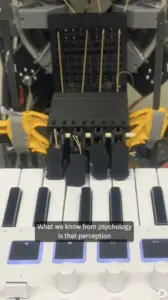
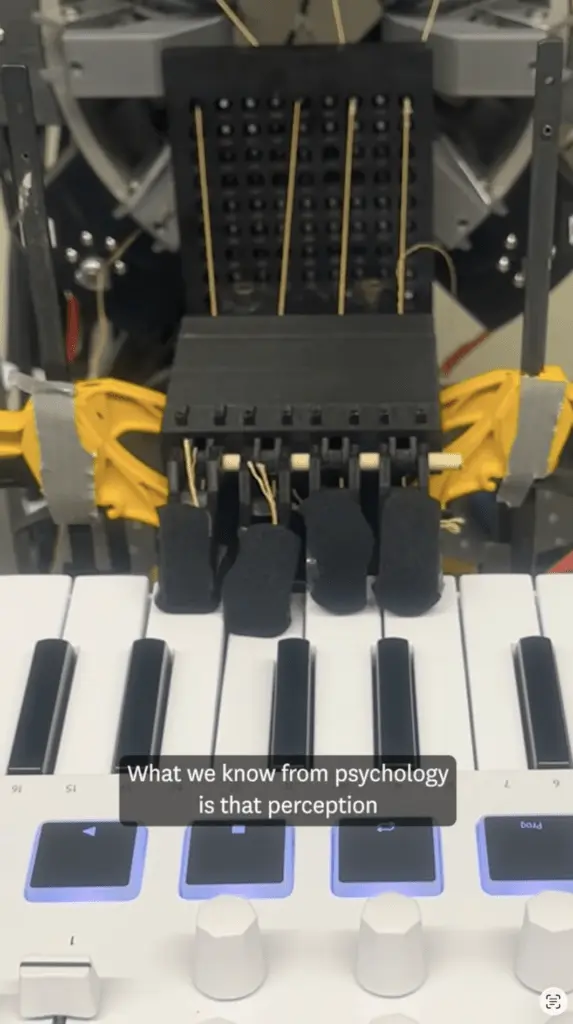
For decades, the robotics industry has accepted this paradigm as a fundamental limitation: machines require structure, predictability, and immense computational power to interact with the physical world. But a groundbreaking development emerging from the laboratories of the USC Viterbi School of Engineering is challenging that entire philosophy. Researchers have successfully engineered a novel robotic system known simply as the "Musician Hand," a tendon-driven prototype that has shattered conventional expectations by teaching itself how to play the piano in a matter of minutes.
The implications of this breakthrough stretch far beyond a robotic novelty capable of performing a musical tune. By demonstrating that a machine can learn through brief, real-world exploration without the crutch of heavy pre-training, this research signals a massive shift in how engineers approach physical and cognitive assistive technology.
How the Musician Hand Works: The Perception-Action Loop
The core innovation behind the Musician Hand is rooted not in complex algorithmic pre-programming, but in a biological concept known to developmental psychologists and neuroscientists as the "perception-action loop." Rather than being fed terabytes of musical scores or given explicit instructions on how to depress specific keys, the robot was designed to first explore and understand its own physical anatomy.
In the initial phase of its operation, the Musician Hand engaged in a process akin to what living infants do when they first discover their limbs—exploratory movements often referred to in developmental robotics as motor babbling. By moving its tendon-driven fingers freely and observing the immediate physical feedback, the robot mapped out its own mechanical properties, tension limits, and spatial relationships in real-time.
Once it had developed an internal comprehension of its own physical structure through this brief two-minute exploratory phase, the system was presented with a new challenge: a completely unfamiliar 30-note musical melody. Remarkably, the robot heard the sequence and played it back flawlessly on an electronic piano keyboard on its very first attempt. There were no weeks of iterative trial-and-error, no massive cloud-based data centers churning through computing power, and no human intervention guiding its mechanical fingers. It simply perceived the auditory input, translated it through its newly mapped self-awareness, and executed the physical action required to produce the correct notes.
Revolutionizing Physical Assistive Tech
The contrast between traditional artificial intelligence architectures and the framework behind the Musician Hand is stark. Contemporary advanced AI systems and autonomous robotics platforms frequently require megawatts of power and years of accumulated data to manage tasks like navigating traffic or manipulating delicate objects. Conversely, the Musician Hand accomplished its musical feat utilizing remarkably efficient, low-power computing hardware—specifically, a standard laptop.
Because this perceptual robotics model operates with such high efficiency and adaptability, the potential applications for physical assistive devices are profound. Traditional prosthetic limbs and assistive exoskeletons often suffer from a steep learning curve and a lack of intuitive responsiveness. Users frequently report that operating advanced prosthetics feels cumbersome because the devices require conscious, deliberate control inputs to execute basic physical tasks.
If applied to the next generation of prosthetics and physical aids, the self-learning perceptual loop demonstrated by the USC Viterbi researchers could enable assistive devices to calibrate and adapt to their individual users dynamically. Instead of a human patient spending months in physical therapy learning to operate a rigid, pre-programmed mechanical limb, a smart prosthetic could theoretically learn the unique movement patterns, muscle signals, and physical habits of the user within minutes of interaction. The device would adapt to the human, rather than forcing the human to awkwardly adapt to the mechanical constraints of the machine.
Beyond the Physical: Abstract and Cognitive Applications
While the physical manifestation of the Musician Hand on a piano keyboard offers a striking visual demonstration of its capabilities, the underlying principles extend far beyond physical mobility aids. The core technological philosophy—leveraging efficient, real-time perception to enable instant adaptation—carries the potential to fundamentally transform how engineers and educators design software, learning tools, and cognitive support systems.
In the realm of cognitive assistive technology, personalization is frequently the bottleneck of effective intervention. Learning disabilities, neurodivergence, and cognitive impairments manifest in deeply individualized ways, meaning that generic software tools often fall short of meeting a user’s specific needs. By implementing architectures inspired by perceptual robotics, future educational and cognitive support tools could instantaneously calibrate themselves to an individual’s cognitive rhythm, processing speed, and learning style.
Just as the Musician Hand mapped its physical environment through brief exploration, cognitive tools could analyze user interactions on the fly, tailoring communication methods, interface layouts, and task structures to match the exact mental state of the user in real-time. This dynamic responsiveness reduces cognitive fatigue and creates a seamless bridge between human intent and technological execution.
The Future is Adaptable
For decades, the historical trajectory of automation has been characterized by an underlying demand for human compliance. Humans have historically been forced to adapt to the limitations of machines—learning specific command languages, structuring data in rigid formats, and operating within strictly defined parameters to ensure computational success.
The successful development of the Musician Hand indicates that the technological landscape is crossing a threshold into an era where machines possess the capacity to intuitively adapt to humans. By pivoting away from brittle, exhaustive programming and toward fluid, perceptual learning models, researchers are laying the groundwork for a new classification of assistive technology.
These forthcoming systems will function as more than static tools deployed for specific chores; they will operate as intelligent, responsive entities capable of comprehending the nuances of human movement, learning, and daily existence. As researchers continue to refine these low-power, self-adaptive frameworks, the boundary between biological learning and machine adaptation continues to blur, paving the way for a more inclusive and intuitively responsive technological future.