







The human capacity for language fundamentally serves to improve understanding and trust, fostering collaboration instead of competition. This core anthropological insight directly contradicts capitalist interpretations of evolution and supports the broader notion of human collaboration as our species’ true survival mechanism. Yet, modern society’s hierarchical structures and conventional wealth creation methods continue to perpetuate widespread exploitation, leading to profound societal sickness. To heal, cultural analysts argue that we must rediscover faith in humanity and focus on building trustworthy, life-affirming relationships within human-scale ecologies of care.
Being Human and the Myth of the Competitive Game
Framing evolutionary processes in terms of collaborative niche construction instead of relentless competition is firmly grounded in what researchers understand about the natural collaborative tendencies of human toddlers. The notion of life as a strictly competitive game only found its way into modern biological science by interpreting Charles Darwin’s theory of evolution through the specific cultural lens of capitalism.
The complementary perspective of life and evolution as a cooperative game—as described by Pyotr Alexeyevich Kropotkin in his 1902 work, Mutual Aid: A Factor of Evolution—was largely ignored in developed capitalist societies throughout most of the 20th century. Through the lenses of evolutionary biology and cultural evolution, small groups of 20 to 100 people are the primary functioning organisms within human society, standing in stark contrast to isolated individuals, massive corporations, and sprawling nation-states. The implications for contemporary civilization are profound.
Humanity is currently experiencing a complex phase transition catalyzed by a combination of new communication technologies, toxic levels of social inequality, and intersecting existential crises. Observers note that it is long past time to put ubiquitous global digital connectivity to good use: to curate and share lessons from marginalized perspectives, and to reflect critically on the human evolutionary journey alongside the real possibilities and limitations of human agency.
In recent literature exploring these themes, such as The Beauty of Collaboration at Human Scale, scholars argue that becoming conscious of human cognitive and emotional limits—and recognizing that these limits are just as real, immutable, and relevant for survival as the laws of physics—may allow society to embark on a necessary path of radical energy descent. The journey of exponentially accelerating cultural evolution spans several hundred thousand years, from the origins of humans right up to the latest significant developments in the early 21st century. These conceptual tools are designed to equip communities and individuals to create resilient organizations capable of shifting value away from a dying ideological system and into an emerging world.
Being Part of a Healthy Cultural Organism
The human capacity for language would not have provided any adaptive ecological advantage if it did not primarily serve the purpose of improving our ability to understand, trust, and rely on one another. Within a healthy cultural organism, every human contributes unique capabilities and lived experiences to the collective whole.

However, the relational nature of the broader cycle of life is heavily obscured as long as society attempts to define cultural organisms solely as isolated groups of people, or even as separate groups of living beings beyond humanity. In reality, humans and all other conscious beings make sense of the world in entirely relational terms. When paying close attention, people even relate deeply to the food they consume and to many elements that in Western, Educated, Industrialized, Rich, Democratic (WEIRD) societies are not traditionally considered to be alive.
The extent to which individuals feel healthy, well, and alive is a direct reflection of the health and aliveness present in all their relationships, as well as their capacity to minimize cognitive dissonance across those connections. Values do not develop in isolation, but emerge within a dynamically evolving social context. The concept of the sovereign, independent "self" is viewed by anthropologists as a WEIRD cultural artifact—an abstraction that neoliberal dogma values above all else. A much healthier approach understands the self through deeply held values produced by lived experiences within an embedded ecology of care, which may or may not be in a thriving state.
Appreciating Timeless Patterns of Human Limitations
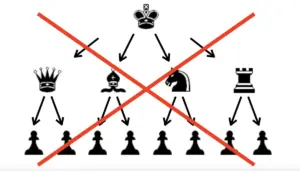
Modern industrial societies have been constructed in such a way that certain forms of exploitation are deemed acceptable, legal, and necessary, while other forms of interpersonal bullying are categorized as unacceptable and illegal. Upon closer examination, this boundary is entirely arbitrary. Laws and social norms in industrialized nations are shaped more than most people realize by the underlying metaphor of society as a factory and people as mere machines.
WEIRD education focuses heavily on turning playful, curious children into self-conscious individuals operating in a competitive environment. Concurrently, dominant psychological frameworks are largely concerned with developing a healthy ego prepared to engage in the game of "earning a living" in competition with others. Medicine in these monocultures increasingly focuses on treating the long-term physiological effects of chronic stress experienced by individuals who are no longer anchored in a supportive ecology of care.
Within the digital technoverse, biological life is frequently perceived as secondary or irrelevant. The industrial metaphor of human biological machines confuses first-order effects—such as the innate human inclination toward mutual aid and collaborative niche construction—with second-order effects like the culturally transmitted normalization of social power gradients.
Societies that construct money as interest-bearing debt and endow it with fungibility to drive economic activity ultimately rely on structural methods of wealth extraction. The common theme across these economic drivers is a willingness to leverage power over others for personal gain, including taking personal credit for the collective results of a team. Such exploitative interdependencies are treated as normal, and individuals who manage to secure financial comfort through these mechanisms are bizarrely labeled as "independent."

These dynamics are justified by a persistent myth of meritocracy and circular reasoning. Realistic paths to professional success often require career climbing within rigid hierarchical organizations or engaging in competitive economic games. People with intact moral compasses frequently discover that conventional investment, charitable endeavors, and traditional entrepreneurship merely reinforce the status quo and widen economic divides. Honest individuals, and particularly neurodivergent people, are frequently systematically disadvantaged in modern society because prevailing social norms are narrowly adapted to serve the dominant economic paradigm.
Denying the Limitations and Living in a Addicted Culture
The prevailing technological and engineering culture is often summarized by the informal ethos of "Shut up and calculate!" This attitude has become standard practice across many domains of engineering, machine learning, finance, and corporate management, fostering a pervasive culture of normalized denial. The normalization of harm caused by structural power gradients remains a central vulnerability of large-scale societies.
Social power differentials carry strong addictive potential for those enabled by the system to wield influence over others. Wielding power via asset ownership is particularly dangerous because owners are often insulated from the direct human and environmental consequences at the receiving end, making denial much easier to maintain. In mainstream economics, this institutionalized denial is legitimized by categorizing real human suffering and ecological destruction as "insignificant externalities."
Addressing wealth inequality alone will not resolve the widespread suffering caused by energy- and resource-intensive lifestyles built on fossil fuel exploitation. Eliminating wealth disparities without a fundamental shift in cultural values, a radical reduction in consumption, and a transformed relationship with the living world will fail to reverse ecological overshoot. Humanity currently consumes natural resources at a rate significantly faster than Earth’s ecosystems can regenerate.
The modern addiction to convenience and consumption manifests in numerous ways, prioritizing sheer quantity over quality. The invisible hand of the market consistently packages modern life to maximize addictive potential, making concepts like "enough" entirely alien to contemporary economic vocabulary. Rather than continually reconfiguring oppressive institutions, many thinkers suggest practicing de-powered dialogue and learning how to de-power relationships independently, emphasizing that genuine cultural transformation cannot be achieved through superficial institutional adjustments alone.
Moving Toward Faith in the Living Planet
In a hypernormative society, neurodivergence frequently takes on a political dimension. Framing neurodivergence through a purely pathological lens allows systemic critiques from neurodivergent perspectives to be dismissed as ideologically inconvenient. Observers note that historical figures who explored cooperative game theory, such as John Nash, often faced institutional marginalization because their work challenged the foundational assumptions of ruthless economic competition.

Humanity has only survived in the face of formidable top predators by collaborating and utilizing symbolic language to coordinate actions and understand intentions. Displacing top predators and becoming prolific primates would have been impossible if language had evolved primarily to facilitate fierce internal competition and deception.
Small-scale initiatives worldwide continue to re-conceptualize human societies in comprehensible, compassionate, and life-affirming ways, drawing on a wealth of knowledge and timeless indigenous wisdom. Nurturing and maintaining mutual trust at a human scale remains the key ingredient for navigating an unpredictable world. As ecological thinkers emphasize, the true measure of success in the natural world is the continuity of life over thousands of generations, achieved by actively creating conditions conducive to life itself.
Healing requires rediscovering faith in humanity, embracing the sacred cycle of life, and stepping away from life-denying monocultures. By returning to collaborative foundations and recognizing the deep interconnectedness of all living systems, communities can begin building resilient, trustworthy ecologies of care for the future.