




I traveled to Venice this past summer with a singular, perhaps naive, objective: to find fresh inspiration. Like many who seek out the storied canals of Italy, I arrived with the expectation that new sights would yield new ideas. I anticipated that the sheer novelty of my surroundings would act as a catalyst for creative breakthroughs. However, upon returning home, I realized that the core of my quest had been misplaced. I did not need to hunt for something entirely new; rather, I needed to learn how to view the familiar through a different lens.
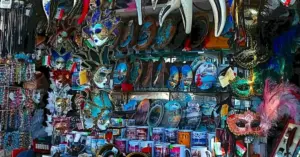
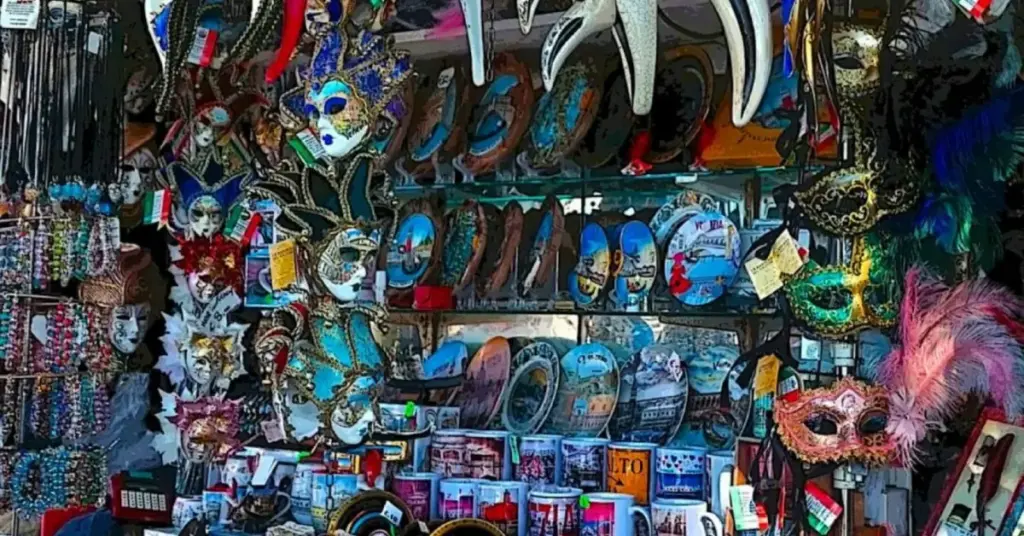
My visits to Venice have become something of a ritual, but this year felt different. On my first day, I found myself navigating the labyrinthine streets with a hurried, dismissive energy. I bypassed the throngs of tourists and deliberately avoided the endless rows of gaudy souvenir stalls, which I perceived as nothing more than repositories of plastic trash—clutter that tarnished the city’s historic majesty. I was on a mission to reach the "authentic" Venice, heading straight for the Ca’ Pesaro International Gallery of Modern Art to witness the Hernan Bas exhibition.
For years, I had held a rather cynical view of portraiture. I considered it an exhausted, archaic genre with little to offer a modern audience. Yet, Bas’s work dismantled that assumption entirely. His paintings depicted tourists standing in front of the very same cheap, mass-produced souvenirs I had spent the morning trying to ignore. To my surprise, Bas did not treat these plastic gondolas and flashing trinkets as mere visual noise. He elevated them to the status of primary subjects.

In doing so, he achieved something remarkable: he bridged the gap between two concepts I had previously deemed dull—traditional portraiture and the commercial detritus of mass tourism. By forcing these two disparate elements together, he compelled me to re-evaluate them. As I stepped back out into the Venetian afternoon, the souvenir stalls I had just dismissed now appeared to me as miniature, unofficial museums. They were no longer just piles of plastic; they were artifacts of human desire, reflecting the complex interplay of identity, personal memory, and the bittersweet ache of nostalgia. What I had actively avoided just hours before, I now found myself wanting to explore with genuine curiosity.
The Psychology of First and Second Glance
The transformation of my perspective was not merely a subjective mood swing; it is a phenomenon deeply rooted in the way our brains process the world. Psychology offers a compelling explanation for why our initial observations are rarely neutral. Our minds are perpetual filtration systems, constantly sorting through an overwhelming barrage of information. We are forced to choose, often unconsciously, what warrants our attention and what can be safely ignored. This cognitive efficiency is essential for survival—without it, the sheer detail of our environment would lead to sensory overload.
Psychologists frequently categorize this process through the framework of System 1 and System 2 thinking. System 1 is our automatic, lightning-fast response mechanism. It is the part of our brain that allows us to walk down a street and immediately categorize a souvenir stall as "cheap tourist stuff" without having to pause and analyze every individual item. This isn’t laziness or a lack of intellect; it is a sophisticated, energy-saving adaptation. However, this speed comes at a cost: it encourages us to engage only with the surface of our reality.
System 2 thinking, conversely, is the slower, more deliberative mode of cognition. It requires us to step off the autopilot track and commit to intentional observation. When we take a "second look," we are engaging System 2. We pause and ask the difficult question: "Wait, what am I actually seeing here?" That single moment of inquiry can fundamentally alter our perception.
At the start of my trip, I viewed the souvenir stalls through the lens of System 1, seeing only clutter to be avoided. But Bas’s work triggered a System 2 response, forcing me to reflect on the meaning of the objects. They became fascinating case studies in the sociology of tourism. My previous disdain for portraiture as a stagnant genre was replaced by an appreciation for how it can capture the intrigue of modern myths and desires. This experience reinforced a fundamental truth about the creative process: innovation often resides in the liminal space between our first, instinctive reaction and our second, more thoughtful engagement.
Looking Again at What Is Under Our Nose
In our pursuit of progress, we often fall into the trap of believing that inspiration is a commodity to be imported from afar. We travel to exotic locales, attend high-profile conferences, and devour books on the latest trends in innovation. We are perpetually chasing the "next big idea," convinced that the breakthrough we need is something no one else has ever encountered. Yet, the most profound creative insights are often found not by searching for something entirely new, but by taking a second look at what has been under our nose all along.
The challenge is to apply this "second look" to the mundane aspects of our daily existence. Consider the routine tasks you perform every day, the products or services that everyone around you overlooks, the corporate or social rules that nobody dares to question, or the persistent problems you have already convinced yourself are unsolvable. Think about the things you once dismissed as boring, cheap, or unimportant.
The first look provides us with an answer—a label, a category, a judgment—that effectively closes the door on further inquiry. The second look, however, transforms that answer into a question. It is in the pursuit of that question—the curiosity about why something is the way it is—that true creative thinking begins.
Hernan Bas did not fundamentally change the souvenir stalls he painted; they remained the same kitschy, mass-produced items they had always been. What he changed was the context of the gaze. He made me realize that I had not truly looked at them before; I had only looked past them. Perhaps the most effective creative habit we can cultivate is not the endless hunt for novelty, but the discipline of learning to see the familiar with fresh eyes. By questioning our initial judgments, we open ourselves to new interpretations of the world we inhabit. It invites us to consider that we are not necessarily lacking in inspiration, but rather lacking in the patience to observe the complexity of what is already in front of us. Have you ever truly stopped to look at something you had long ago decided was not worth your time? The answer to your next big idea might just be waiting in that second glance.