








The human brain is a marvel of constant, high-speed processing, managing an overwhelming volume of data every second of every day. Even mundane tasks—such as navigating a morning commute—require a sophisticated synthesis of disparate mental processes. Behind the wheel, a driver must simultaneously maintain awareness of the route, recall the mechanical nuances of vehicle control, and remain hyper-vigilant for unexpected variables like a sudden road closure or a shift in traffic patterns. This ability to juggle multiple inputs and translate them into coherent action is the hallmark of human cognitive function.
At the heart of this complex operation lies a specialized network known as the frontoparietal cortex. Serving as a critical information hub, this region acts as a clearinghouse for signals arriving from across the brain. It does not merely aggregate data; it actively filters incoming noise, identifies the most salient information, and orchestrates the appropriate response to the world around us.
New research from the University of Iowa has now provided a more granular look at how this vital system functions when human beings are forced to make decisions under conditions of uncertainty. The findings, published in the Journal of Neuroscience, illustrate that the frontoparietal cortex is far more than a static processing station. Instead, it is a dynamic, highly adaptable command center that organizes information and coordinates responses involving both the brain and the body, providing a clearer picture of how we build a coherent understanding of the world from incomplete information.
How the Brain Changes Its Communication
For decades, neuroscientists have understood the frontoparietal cortex to be a cornerstone of human decision-making. Researchers have often likened its role to that of an air traffic controller at a bustling, international airport. Much like a controller managing a crowded airspace, the frontoparietal cortex is constantly inundated with data from diverse brain regions. However, its job is not just to receive these signals; it must determine which planes—or, in this case, which pieces of information—take priority. Depending on the shifting demands of a specific situation, the region filters out irrelevant distractions and amplifies the signals that carry the most weight for the task at hand.
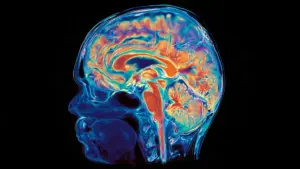
In a recent study, a research team led by Kai Hwang, an associate professor in the Department of Psychological and Brain Sciences at the University of Iowa, utilized a combination of advanced functional MRI (fMRI) brain imaging and sophisticated computational modeling to observe this process in real-time. Their work revealed that the frontoparietal cortex does not communicate with the rest of the brain in a fixed or rigid manner. Rather, its internal connections and pathways shift dynamically based on the type of information required during different phases of a decision.
"Our study shows in more detail how the frontoparietal cortex operates—what kind of information it extracts from other systems and how it uses its connectivity pattern to integrate information that is coming in from different areas of the brain," says Hwang. "That’s the main contribution."
Building a Big Picture From Incomplete Information
The research builds upon a 2025 study in which Hwang and his colleagues established that the frontoparietal cortex generates an ongoing, high-level summary of information arriving from other neural circuits. When various regions of the brain have only partial data, they feed that information to the frontoparietal cortex for guidance. The hub then evaluates these signals—even those that are ambiguous or incomplete—and synthesizes them into a more functional, comprehensive representation of reality. From this vantage point, the hub directs other brain regions toward the most logical course of action.
The latest iteration of this research sought to push those findings further by examining the adaptability of the network. The team aimed to understand exactly how the interactions between the frontoparietal cortex and other brain systems fluctuate as the difficulty or nature of a problem changes.
To investigate this, the researchers recruited a cohort of 38 participants, aged 18 to 35. The experiment was designed to test how people handle shifting associations. Participants were tasked with learning specific pairings between colors, faces, and scenes, which were linked to particular physical responses—specifically, pressing a button with either the index or middle finger of either hand.
Once the participants had mastered these associations, the researchers introduced a twist by altering the pairings. This required participants to realize the rules had changed, learn the new configurations, and execute the correct physical response under pressure.
Creating and Tracking Uncertainty
By forcing the participants to adapt to changing instructions, the researchers effectively introduced a state of uncertainty into the task. This provided a window into how the frontoparietal cortex reconfigures its connections as the participants struggled to determine what had gone wrong.
"If they always get it right, they know they’ve made the correct association, but once they start doing it wrong, they will have to guess, ‘Oh, did the context change, or did I not see the color clearly?’ That creates uncertainty," explains Hwang.
By pairing the behavioral data with high-resolution fMRI scans, the team developed a computational model capable of isolating signals from different brain areas. The results were telling. The researchers observed that the network does not simply become "more active" when a task becomes difficult. Instead, it exhibits a nuanced flexibility, adjusting the specific brain regions it connects with based on the information required at each unique stage of the decision-making process.
This suggests that the frontoparietal cortex is an expert at resource allocation. Rather than relying on brute force or increased metabolic activity, the network optimizes its communication pathways to ensure the right information reaches the right destination at the right time.
Possible Links to ADHD and Other Disorders
The implications of this research extend far beyond the laboratory. By understanding how this information hub functions in healthy brains, scientists hope to gain new insights into neurological and psychiatric conditions where this exchange is disrupted. Disorders such as attention-deficit/hyperactivity disorder (ADHD) and schizophrenia are often characterized by difficulties in regulating behavior when circumstances change—such as struggling to maintain appropriate social conduct or difficulty controlling impulses.
"These are situations where people struggle with regulating their behavior," says Hwang. "That, to me, is an integration problem. If that integration function is not working properly, then that could very likely mean they didn’t use the right context to regulate their behavior."
The study, titled "Frontoparietal hub connectivity integrates information from multiple sources," represents a significant step forward in understanding the fundamental architecture of human thought. The project was a collaborative effort, with Stephanie Leach, a sixth-year graduate student in Hwang’s lab, serving as the study’s first author. Leach played a key role in the project’s design, led the participant experiments, and co-led the preparation of the manuscript.
"Having the opportunity to conduct this research has been especially rewarding because it has allowed me to contribute to answering questions about the most fascinating, mysterious, and complex system we know—the human brain," Leach remarked.
The research team also included Jiefeng Jiang, who spearheaded the computational modeling, and Shannon Stokes, both of the Department of Psychological and Brain Sciences. The study was made possible through funding from the National Institute of Mental Health and the Iowa Neuroscience Institute. As researchers continue to map the complex connectivity of the human brain, these findings offer a clearer understanding of how we navigate a world that is often uncertain, constantly shifting, and demanding of our full cognitive focus.