






You have been locked in a high-intensity session with artificial intelligence for the last hour. The dialogue is brisk, utilitarian, and entirely subservient to your immediate needs. "No, make that shorter," you command. "Try a different angle." "That isn’t what I meant—go back to the previous version." Throughout this exchange, there is no need for pleasantries. You offer no "please" or "thank you," and you certainly don’t pause to wonder if your abrupt critique might have bruised the machine’s ego. The interaction is a model of pure efficiency; you are moving at your own pace, steering the ship, and extracting exactly what you need without the social friction that typically accompanies human collaboration.
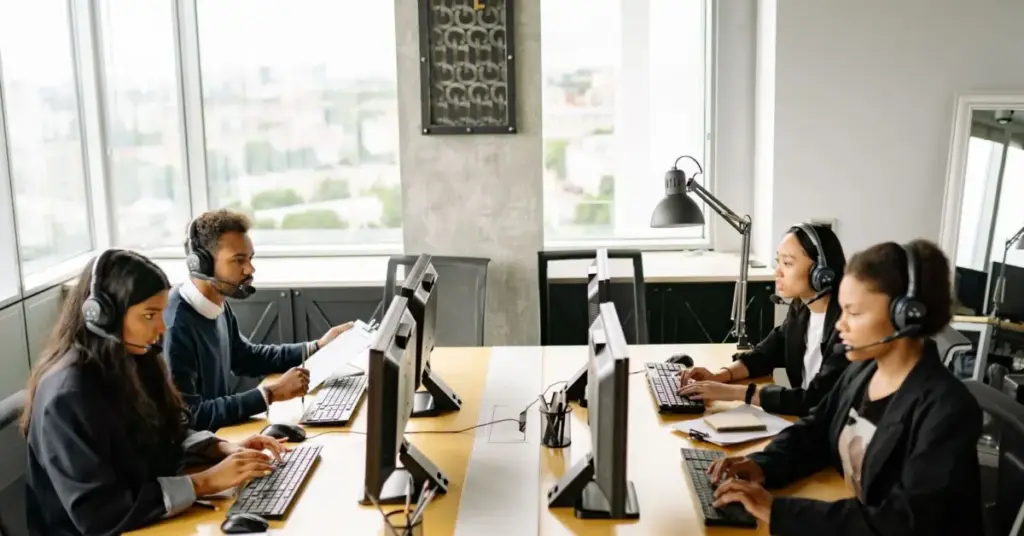
Then, you close the window, push your chair back, and step into a meeting with actual people. The contrast is immediate and, for many, jarring. One colleague wants to spend the first five minutes catching up on the weekend. Another person interrupts to ask for context you feel you have already provided. A third individual begins to brainstorm—tossing out "blue-sky" ideas—when you thought the purpose of the meeting was to make a final, concrete decision. You feel a sudden, sharp surge of impatience. The mental gears have shifted, but the environment has not kept up. You are struggling to navigate a space where, unlike your interaction with the AI, you are not the sole architect of the conversation. You are now dealing with human complexity, nonverbal cues, and emotional undercurrents, and you are finding that humans require a version of you that the AI never does.
We have long understood that we are chameleons in our social lives. We naturally calibrate our communication based on who is standing in front of us. The professional polish we use with a supervisor is fundamentally different from the shorthand we use with a spouse or the casual repartee we share with a friend. These shifts are intuitive; they rely on years of social conditioning, our ability to read body language, our memory of past interactions, and our capacity for humor and restraint. This is the bedrock of human conversation—a fluid, often inefficient, but deeply connective process.

However, the rise of AI has introduced a new, anomalous mode of communication into our daily workflow. While we use AI to draft emails, organize project data, or plan travel, we are participating in a relationship that is fundamentally one-sided. AI does not possess feelings, social status, or a need for rapport. Consequently, we have grown accustomed to a communication style defined by the absence of common courtesy. In these digital silos, we show frustration, interrupt, change direction, or simply vanish from the conversation without consequence. The AI is programmed to adapt to us, not the other way around. This is a radical departure from the human-to-human dynamic, where the burden of adjustment is mutual.
The Challenges of Shifting From AI to Human Meetings
When moving from a solo session with an AI to a team setting, we are expected to pivot instantly toward emotional intelligence. Human interaction requires us to decode how a person enters a room, to interpret the tone of their voice, and to recall the specific interpersonal nuances that build trust. For some colleagues, a brief personal check-in is the necessary prerequisite to effective work; for others, efficiency is the only language they value. These small, seemingly trivial rituals are the glue that holds professional cohesion together and helps alleviate the underlying anxiety or hesitation that people often bring into high-stakes meetings.
The disparity between these two modes is stark. With an AI, you are the pilot. You dictate the trajectory, the pace, and the tone. If the machine provides a response that misses the mark, you redirect it, and it complies without resentment. When you enter a human meeting, however, you must relinquish that absolute control. You are no longer the only one with an agenda. Your coworkers may require context, debate, or even resistance before they are ready to move forward. If you have spent the last hour in a "command-and-control" flow with an AI, this transition can feel like hitting a wall. You may find your listening skills blunted, your threshold for "unnecessary" conversation lowered, or your tendency to interrupt significantly heightened.
Crucially, this does not necessarily indicate a personal failure or a change in your character. It is a physiological and psychological byproduct of the transition itself. Working with AI is mentally demanding; it requires constant evaluation, critical decision-making, and deep, sustained focus. Even though the task is completed efficiently, the brain is exhausted. When you move immediately from that state into a social environment that demands empathy, active listening, and the tolerance of unpredictable outcomes, you are asking your brain to switch gears without a cooling-off period. You are, in effect, trying to run a sprint immediately after completing a marathon.
Establishing a Transitional Ritual
In other areas of our lives, we respect the necessity of transitions. Athletes engage in rigorous warm-ups to prepare their bodies for competition. We have evolved social rituals to separate our professional identities from our home lives. Yet, in the digital age, we often treat the boundary between AI interaction and human interaction as nonexistent. We close a terminal window at 1:59 PM and join a Zoom call at 2:00 PM, assuming our mental state will keep pace with the clock.
To mitigate the friction of this transition, we must be intentional about creating a "buffer zone." This does not require a complex routine. It is as simple as standing up, looking away from the glow of the monitor, stepping away from the desk to hydrate, or taking a moment to move the body. During this brief interlude, the goal is to decouple from the "output" mindset and prepare for the "relational" one. Use this time to ask yourself simple, grounding questions: Who am I about to engage with? Am I prepared to listen rather than just direct? Can I embrace the unpredictability of this conversation? Am I ready to share the lead?
Embracing the Value of Human Inefficiency
Perhaps the most important aspect of this transition is acknowledging that human inefficiency is not a bug—it is a feature. Conversations that include banter, storytelling, or circular debates may seem like a waste of time compared to the instant answers provided by a machine. However, it is within these "inefficient" moments that relationships are forged and long-term trust is built. We learn how others think, what they value, and how they react to pressure. This data, which is invisible to an AI, is what makes human teams resilient and creative.
The goal is not to abandon the benefits of AI or to force our machines to be more human. The efficiency that AI provides is a legitimate, powerful tool for modern work. The objective is to recognize when we are in "AI mode" and when we are in "human mode," and to understand that the rules of engagement are not interchangeable. Human interaction asks more of us because it offers more in return. It requires us to listen, to tolerate friction, to share the spotlight, and to meet others halfway. By becoming more intentional about the transition between the machine and the person, we can leverage the speed of artificial intelligence without sacrificing the humanity that makes our professional relationships meaningful.