







GENEVA — In a comprehensive three-day strategic dialogue, representatives from Belgium and the World Health Organization (WHO) have reviewed the milestones of their longstanding partnership, committing to an elevated level of collaboration aimed at bolstering universal health coverage, strengthening fragile health systems, and ensuring equitable access to essential vaccines, medicines, and cutting-edge health technologies worldwide.
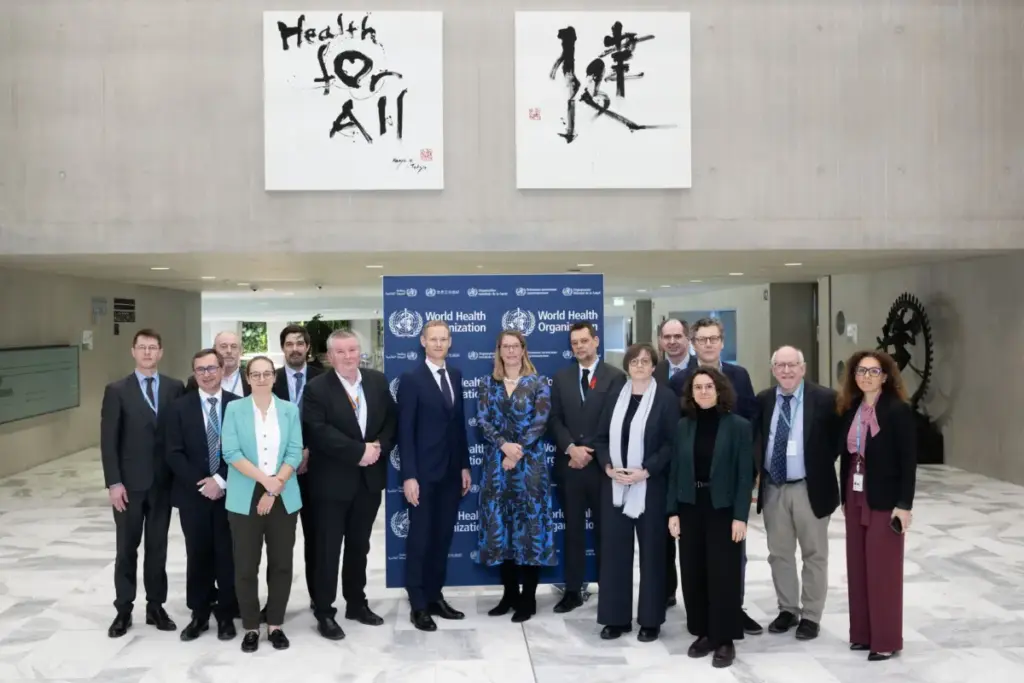
The high-level engagement brought together a diverse Belgian delegation led by His Excellency Christophe Payot, Ambassador and Permanent Representative of Belgium to the United Nations and other international organizations in Geneva. Over the course of the multi-day discussions, the delegates engaged in profound exchanges regarding strategic alignment, exploring how to seamlessly harmonize overarching WHO strategic frameworks with Belgium’s distinct national priorities for development cooperation within a rapidly shifting and increasingly complex global health landscape.
The talks also served as a vital platform to review ongoing international initiatives supported by Belgium, particularly those highlighted during the country’s pivotal presidency of the Council of the European Union in 2024. The WHO was prominently represented by a senior delegation comprising organizational leadership and technical experts hailing from both the Geneva headquarters and the Regional Offices for Africa and for Europe, ensuring a comprehensive multi-level perspective on ongoing global health challenges.
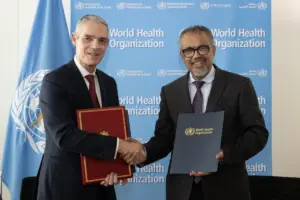
Reflecting on the productive nature of the dialogue, Mr. Koen Van Acoleyen, Minister Counselor at the Permanent Representation of Belgium to the UN, emphasized the value of the direct engagement. "After listening to the leaders and experts of WHO we now better understand how they are navigating these challenging times," Mr. Van Acoleyen noted. "We are honoured that we can walk this road together."
Accelerating Equitable Access to Vaccines, Medicines and Health Technologies
A central pillar of the strategic dialogue was an in-depth review of the current status and tangible achievements generated through the Access to Medicines programme, which receives crucial financial and strategic backing from Belgium. To provide a grounded perspective on these global efforts, the WHO detailed its operational work and the inherent challenges faced during implementation at the country level, spotlighting specific initiatives deployed in Senegal.
Furthermore, the discussions shed light on broader institutional policies concerning equitable access and the promotion of local manufacturing capabilities for health products in developing regions. Both parties reached a strong consensus regarding the critical importance of long-term sustainability for the Access to Medicines initiative. They underscored that sophisticated market-shaping strategies remain an indispensable prerequisite for securing lasting success and ensuring that life-saving innovations reach vulnerable populations without undue delay.
Health Emergencies and Pandemic Prevention, Preparedness and Response
The dialogue naturally gravitated toward the pressing realm of global health security, focusing extensively on the WHO’s central role in reinforcing the global architecture for health emergency prevention, preparedness, response, and systemic resilience. Discussions examined the ongoing, delicate negotiations surrounding the global pandemic agreement, alongside the practical application of the cross-sectoral One Health approach, which recognizes the interconnectedness of human, animal, and environmental health.
To illustrate the real-world impact of these frameworks, the WHO showcased its critical field operations during active health emergencies, presenting a detailed overview of activities currently underway in Gaza. The debate also addressed mounting contemporary threats, including the accelerated evolution of biological risks and zoonotic diseases—diseases that pass between animals and humans—with particular emphasis on proactive WHO engagement in targeted risk mitigation strategies.

Universal Health Coverage and Primary Health Care
Expanding on the momentum generated by the Universal Health Coverage Partnership (UHC-Partnership), participants methodically evaluated the results achieved by the WHO with Belgian backing over the 2021–2024 period, focusing particularly on nations prioritized under Belgium’s bilateral cooperation frameworks. The delegations mapped out the strategic way forward, actively exploring opportunities for enhanced synergy at the country level. This included discussions on aligning WHO country office operational programs more closely with Belgium’s bilateral development efforts.
As a practical case study, representatives reviewed the multifaceted work and complex operational challenges managed at the country level in the Democratic Republic of Congo. Additionally, the visiting delegation received a comprehensive update regarding the WHO’s evolving policies and programmatic work addressing mental health integration within the broader framework of primary health care delivery.
The review extended to other collaborative domains supported by Belgian funding, including targeted programs addressing Neglected Tropical Diseases as well as the promotion of Sexual and Reproductive Health and Rights. Both delegations reiterated that an unwavering commitment to an evidence-based approach remains vital for achieving meaningful and measurable progress in these sensitive domains.
The WHO leadership expressed profound appreciation for Belgium’s steadfast political and financial commitment, which was visibly demonstrated by the broad representation of officials attending from the Belgian Federal government as well as the regional governments of Flanders and Wallonia. "We thank you for your support, honesty, and strong engagement for global health," remarked Dr. Catharina Boehme, WHO Assistant Director-General for External Relations and Governing Bodies. "Your efforts in supporting our work in Mozambique and Senegal are clear examples of the crucial work we accomplish together."
Looking into the Future
As the three-day dialogue drew to a close, the partners turned their attention toward shaping the future trajectory of the Belgium-WHO collaboration framework. Discussions centered on the architecture of an upcoming multi-year agreement and the development of a renewed WHO-Belgium Country Cooperation Strategy, designed to guide collaborative efforts through the coming years.
The reinforced partnership is poised to provide robust backing for the ambitious global health agenda outlined under the WHO’s 14th General Programme of Work (GPW14). Participants shared a unified vision that places universal health coverage and health systems strengthening at the very core of the GPW14 ambitions, ensuring these priorities remain guiding principles across the organization’s ongoing prioritization processes.
Reflecting on the overarching success of the strategic dialogue, Mr. Dirk Brems, Director of Thematic and Multilateral Cooperation at the Directorate-General for Development Cooperation and Humanitarian Aid, offered an optimistic outlook on the road ahead. "We recognize WHO as a trustworthy partner in global health," Mr. Brems stated. "We felt proud hearing how crucial our support is to the Organization and how it is having a positive impact at country, regional, and global levels. It’s important we continue these discussions as we tread uncharted territories, and we look forward to working together for strong and sustained multilateralism."