






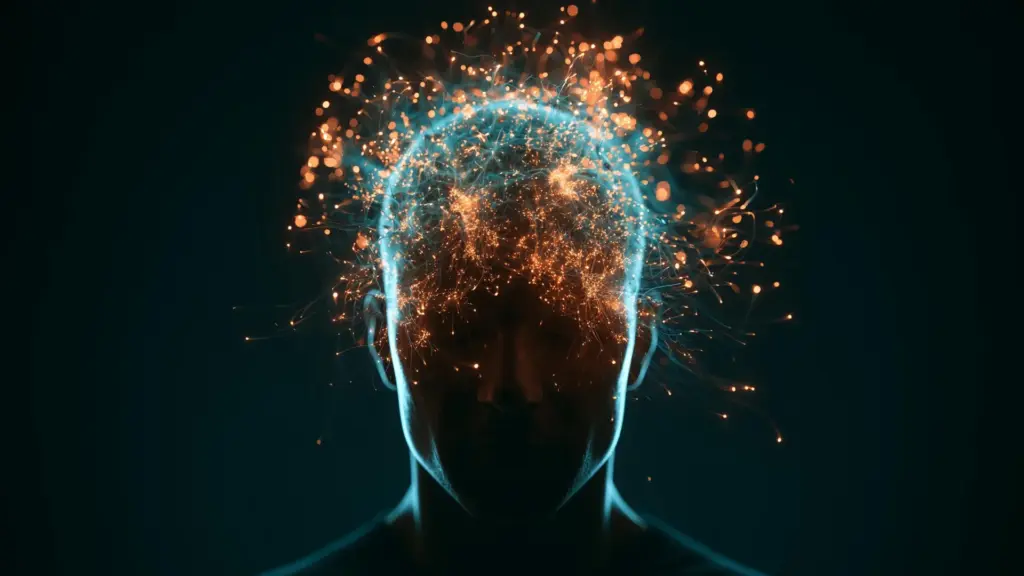
Even when a patient is fully submerged in the profound stillness of general anesthesia, the human brain remains a hive of activity. While the clinical definition of being "under" suggests a complete cessation of cognitive interaction with the world, groundbreaking research from Baylor College of Medicine reveals that the brain continues to perform remarkably sophisticated tasks. Far from being a dormant organ, the unconscious brain appears to be actively processing language, recognizing complex patterns, and even anticipating the future structure of sentences.
The findings, recently published in the journal Nature, offer a paradigm-shifting look at the nature of consciousness. By challenging long-held assumptions about the relationship between awareness and cognitive function, this research opens new doors for understanding how the brain manages memory and language. More importantly, it provides a foundation for future medical technologies that could assist in restoring communication for individuals suffering from severe neurological injuries.
"Our findings show that the brain is far more active and capable during unconsciousness than previously thought," says Dr. Sameer Sheth, professor and Cullen Foundation Endowed chair of neurosurgery and a McNair Scholar at Baylor. "Even when patients are fully anesthetized, their brains continue to analyze the world around them."
Investigating the Unconscious Mind
To peel back the curtain on what transpires inside an unconscious brain, Dr. Sheth and his team, including colleagues at Baylor St. Luke’s Medical Center, turned to a unique clinical cohort: patients undergoing surgical treatment for epilepsy. Because these patients required surgery that necessitated general anesthesia, researchers had a rare, controlled environment in which to observe deep brain activity without the confounding factors of wakefulness.
The focus of the study was the hippocampus, a complex, seahorse-shaped structure tucked deep within the brain’s temporal lobe. Known primarily as the "memory center," the hippocampus is essential for consolidating information and forming the narrative of our lives. Because of its pivotal role in how we store and retrieve information, it served as the ideal subject for testing whether cognitive processing could persist in the absence of conscious awareness.
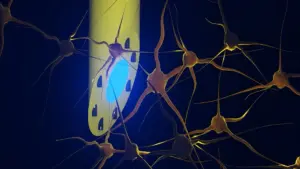
To capture this activity, the researchers utilized high-definition Neuropixels probes. These state-of-the-art recording devices are capable of monitoring electrical signals from hundreds of individual neurons simultaneously. By placing these microscopic sensors into the hippocampus, the team could generate a high-resolution map of neural responses—a feat that had not been previously achieved with this level of granularity in this specific brain region.
Learning Without Awareness
The initial phase of the study involved a simple auditory experiment. Patients under anesthesia were played a series of repeating tones, occasionally interrupted by a rogue sound that deviated from the established pattern. Despite the clinical depth of their anesthesia, the neurons in the patients’ hippocampi exhibited a clear, differential response to the unexpected sounds.
Even more striking was the observed "learning" effect. As the experiment progressed, the neural cells became increasingly adept at distinguishing the unusual tones from the repetitive ones. This improvement is a hallmark of neural plasticity—the brain’s inherent ability to rewire itself and change its responses based on environmental input. The fact that this learning occurred while the patients were completely unconscious suggests that the foundational architecture for acquiring new information remains online, independent of the subjective experience of hearing.
Decoding Language and Prediction
Having established that the unconscious hippocampus can process simple auditory stimuli, the research team sought to determine if the brain could handle the complexities of human language. They shifted the methodology to play short stories to the anesthetized patients while continuing to track real-time neural activity.
The results were profound. The data showed that neural patterns within the hippocampus contained distinct, identifiable information about various categories of words—nouns, verbs, and adjectives. This indicated that the brain was not merely registering acoustic "noise" or vibrations; it was parsing the structural and meaningful components of language.
The most compelling discovery, however, was the brain’s ability to predict upcoming words. The neural activity captured in the hippocampus contained information that could be used to anticipate the next steps in a sentence. Even in a state of total unconsciousness, the brain was actively forecasting the unfolding narrative.
"The brain appears to anticipate what comes next in a story, even without conscious awareness," explains Dr. Sheth, who also serves as Director of The Gordon and Mary Cain Pediatric Neurology Research Foundation Laboratories at Texas Children’s Hospital.
This process, known as predictive coding, is a cornerstone of cognitive neuroscience. It suggests that the brain does not passively wait for input; rather, it is a proactive engine that uses past experiences to build a model of the world and anticipate what happens next. In a waking state, this allows us to follow a conversation even if someone mumbles or if there is background noise. Finding that this predictive machinery operates under anesthesia suggests that these high-level neural processes are deeply embedded and do not necessarily require the "lights" of consciousness to be switched on.
Dr. Benjamin Hayden, a professor of neurosurgery at Baylor, highlights the gravity of this observation: "This kind of predictive coding is something we associate with being awake and attentive, yet it’s happening here in an unconscious state."
Rethinking Consciousness
These findings force a difficult question: If the brain can process syntax, categorize parts of speech, and perform predictive modeling while we are unconscious, what exactly is the role of consciousness?
Historically, consciousness has been linked to the subjective awareness of our environment—the "feeling" of being awake. However, the study suggests that the brain’s machinery for language and interpretation is far more autonomous than previously assumed. This does not imply that anesthetized patients are "hearing" or "understanding" stories in the way we do when awake; rather, it suggests that the brain’s cognitive architecture can perform complex information processing independently of the systems that generate conscious awareness.
The researchers propose that consciousness might not be an all-or-nothing property of a single brain region. Instead, it may rely on the efficient coordination and communication between disparate networks across the brain. Under this framework, the hippocampus may continue its analytical work even when the global synchronization required for a unified, conscious experience is disrupted by anesthesia.
Parallels in Artificial Intelligence
The discovery of this predictive capacity has drawn interesting parallels to the current boom in artificial intelligence. Large language models (LLMs)—the engines behind advanced chatbots—function by predicting the next word in a sequence based on vast amounts of training data.
While the biological brain and digital neural networks function through fundamentally different mechanisms, both share an underlying reliance on pattern recognition and prediction. The fact that the human hippocampus exhibits a similar "predictive" behavior—even without consciousness—suggests that this method of processing information is a universal strategy for managing the complexity of human language. Studying these similarities may provide engineers and neuroscientists with new insights into how to refine AI models while simultaneously deepening our understanding of biological intelligence.
Practical Applications: From Theory to Therapy
Beyond the philosophical implications, the study has tangible medical potential. Brain-computer interfaces (BCIs) are currently being developed to translate neural signals into digital output, offering a lifeline to patients who have lost the ability to speak due to stroke, traumatic brain injury, or neurodegenerative conditions.
If scientists can isolate and decode the specific neural signals associated with language processing and prediction, they may eventually be able to build more robust speech prosthetics. By tapping into the brain’s natural, underlying language-processing pathways, these devices could bypass damaged areas of the brain to restore a voice to the voiceless.
"Can we use these signals to deploy and run a speech prosthetic for some of the parts of the brain that are damaged by stroke or injury? These are questions that we can now consider in relation to this part of the brain," says Dr. Vigi Katlowitz, the study’s first author and a neurosurgery resident at Baylor.
The Limits of the Unconscious
Despite the groundbreaking nature of these results, the researchers maintain a cautious, scientific approach regarding the scope of their findings. The experiments were conducted using one specific type of general anesthesia; therefore, the results cannot be immediately generalized to all forms of sedation or other states of unconsciousness, such as sleep or coma.
Furthermore, the study was localized to the hippocampus. Whether other regions of the brain engage in similar sophisticated processing remains a subject for future investigation. The researchers emphasize that understanding how these different regions interact—or fail to interact—during anesthesia will be the next major hurdle in decoding the mystery of consciousness.
Ultimately, this study serves as a humbling reminder of the brain’s hidden complexity. As Dr. Sheth concludes, "This work pushes us to rethink what it means to be conscious. The brain is doing much more behind the scenes than we fully understand." While the world outside may go quiet for a patient under anesthesia, the internal landscape remains as busy and predictive as ever, quietly parsing the world even when the self is nowhere to be found.