



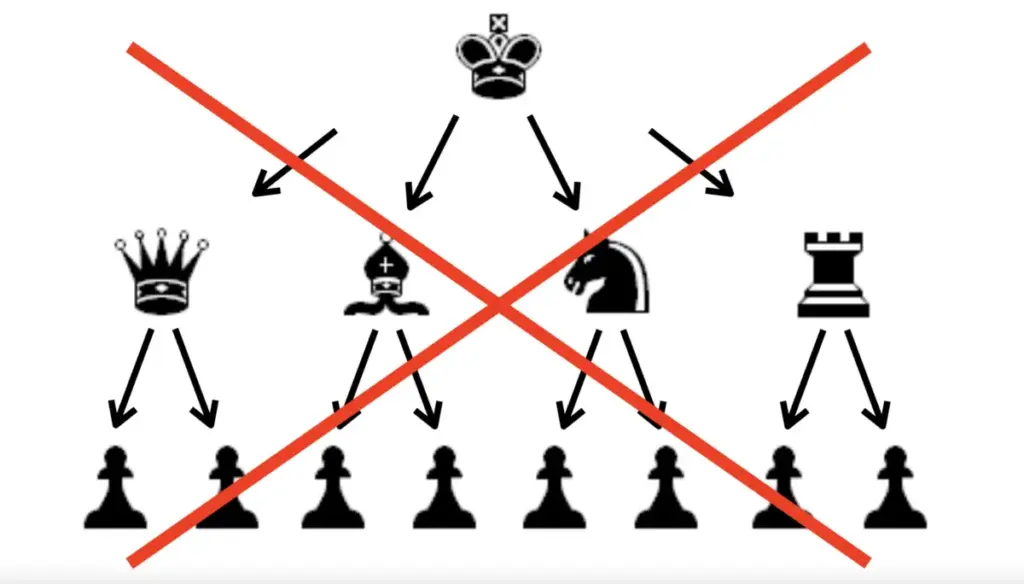
Many autistic people experience profound difficulties thinking of the world in hierarchical terms. According to what researchers and anthropologists understand about human evolutionary history, this cognitive orientation reflects innate collaborative cultural capabilities combined with a significantly reduced capacity for maintaining ongoing cognitive dissonance. This distinct profile stems from uncommon sensitivity profiles that fall well outside the bell curve of hypernormativity.
When autistic individuals encounter the social expectations tied to participating and operating within hierarchically organized structures of social power, they frequently report immense difficulty comprehending why such structures are considered acceptable. Autistic people are often consciously aware of the pain and potential harm caused by exerting social power over others, as well as the acute distress and cognitive dissonance experienced when authorities impose arbitrary demands that clash with their unique sensitivity profiles.
Within the cultural framework of internalized ableism, this autistic reluctance to exert social power is often misinterpreted as a social deficit—specifically, an inability to be entrusted with leadership responsibilities. Simultaneously, the reluctance to submit to arbitrary social power is labeled as non-compliance, disagreeableness, and a disruption of the "natural" social order. This double standard explains why autistic individuals are frequently dismissed in some contexts as weak or incompetent leaders, while in other situations, they are punished for being perceived as aloof, arrogant, insensitive, or inappropriately competitive. In many cases, both conclusions are entirely misguided.
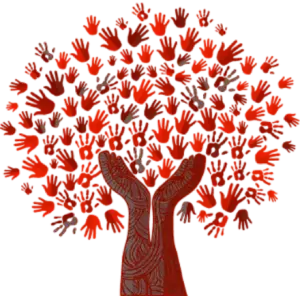
Instead, autistic individuals are much better understood as vital parts of the cultural immune system of the human species. In the modern world, autistic people are uniquely positioned to reimagine healthier collective ways of being and to champion human-scale, egalitarian cultural organisms.
The modern world remains heavily dominated by the implicit state religion of Homo Economicus, wherein the majority of society experiences social hierarchies as an immutable law of nature, justified by culturally biased evidence from economics, evolutionary biology, and Western psychology. This paradigm is an outgrowth of historical interpretations rooted in anthropocentric readings of monotheistic Abrahamic traditions, which gained immense prominence throughout the eras of colonialism and neocolonialism.
Traumatised Autistic People
Within contemporary society, hypersensitive autistic individuals often experience severe trauma from a very young age. Children across society are exposed to the logic of Homo Economicus by well-intentioned parents and educators long before they learn anything substantial about the living world or planetary ecology. This early socialization is frequently noted as a deeply dehumanizing and life-denying aspect of modern life.
When early exposure to hypernormative systems combines with coercive power dynamics within patriarchal or otherwise dysfunctional family systems, children face profound trauma risks. Given their unique baseline sensitivity profiles and limited capacity for prolonged cognitive dissonance, traumatized autistic children are particularly vulnerable to developing a deep distrust of humanity, sometimes to the point where they struggle to extend trust to anyone, including their closest family members.
Such highly traumatized individuals can end up profoundly isolated. Their coping mechanisms mirror those found in non-autistic trauma survivors, including bullying or attempts to exert extreme control over immediate family members, thereby perpetuating intergenerational trauma. Autistic people are neither more nor less likely than others to perpetuate trauma, but those who do often differ in their overt openness due to their reduced capacity to maintain cognitive dissonance. Typically, their desire for control remains limited to their immediate family environment and rarely extends to the broader social sphere.

Far more frequently, due to their distinct sensitivities, refusal to engage in wider societal social games, and rejection of unjustifiable demands from authority figures, autistic individuals find themselves on the receiving end of bullying, exclusion, and institutional abuse.
The scale of early childhood trauma experienced by many autistic people heavily impacts their ability to trust others and build intimate relationships. Fortunately, the advent of the internet has begun to alter this landscape, enabling autistic individuals worldwide to connect, share experiences, and learn from one another. Digital spaces have allowed those who felt alienated by conventional society to forge lifelong relationships founded on compatible sensitivity profiles. However, these positive developments have occasionally been compromised by the rise of profit-driven commercial social media platforms, which introduce well-documented polarizing and traumatizing dynamics, including the pressure to cultivate massive, superficial social networks.
Autistic Culture
In recent years, driven by an innate reluctance or inability to participate in conventional social games, autistic people have increasingly gravitated toward genuinely human-scale online spaces. These environments foster cosmolocal community co-creation, peer support, and egalitarian relationship-building on autistic terms, far removed from the dominant culture of Homo Economicus.
The autistic inclination away from hierarchical thinking translates directly into an ability to think and live entirely relationally. This is evident in the growing participation in human-scale ecologies of care support models and worldwide interest in egalitarian worker cooperative models, such as NeurodiVentures, for engaging with the external world.
Within hypernormative culture, explaining what immersion in healthy autistic culture feels like to non-autistic individuals remains a challenge. Mainstream society often struggles to comprehend how autistic people support, love, and care for one another in ways that far exceed the limitations of neuronormative imagination.
The evolving web of relationships, mutual aid, and peer support initiatives operates as emergent ecologies of care that extend beyond standard human paradigms. While conventional culture relies on the adage that "it takes a village to raise a child," the autonomous autistic translation reframes this sentiment: for an autistic person, it takes a human-scale autistic family to feel truly loved and alive.
Because most autistic people are not born into healthy autistic families, they must actively co-create their support networks in their own spaces and time. In supportive indigenous cultures, children with unique characteristics are traditionally recognized, paired with adult mentors possessing similar traits, and guided into specific community roles. Re-establishing such ecologies of care allows individuals to thrive while sharing the joys and burdens of life together.
Understanding a Cultural Organism as a Set of Relationships
Within autistic culture, a human-scale cultural organism is understood fundamentally as a set of relationships, acknowledging that all humans possess inherent cognitive and emotional limits. This realization fosters a deep appreciation for the principle that small is beautiful—a human scale that remains comprehensible and intimately integrated with the natural world. Beyond this scale, cultural institutions frequently morph into anthropocentric hubris, particularly when sustained by permanent hierarchical structures of social power.

Humans possess the capacity to appreciate the interdependencies and rich diversity of unique, complementary relationships within every healthy cultural organism. In such environments, permanent social power differentials do not exist, and no single relationship holds more intrinsic importance than another. Furthermore, healthy cultural organisms maintain functional redundancies to safeguard against the potential loss of any critical relationship.
The sense of self is a product of relationships. Total isolation reduces the world to a relationship solely with oneself, creating profound psychological distress. Being integrated into the living world of Gaia is viewed as a fundamental right for all living beings, whereas urbanized social isolation inflicts severe psychological harm. True well-being is ultimately a derivative of relational and communal health at a human scale.
Understanding the Modern Social World
The modern social world can often only be understood from the margins, as mainstream collective sense-making has been profoundly compromised. When a society destroys its collective capacity for human-scale deliberation, life feels inherently incoherent from the perspective of individuals attempting to generate personal clarity.
Critics and analysts across various disciplines have long documented the legal engineering behind the power of capital, the machinery of government that enforces economic structures, and the cultural diseases that emerge when human-scale limitations are ignored. As observers like George Tsakraklides have noted, the modern state often functions less as a representative body for citizens and more as a management authority protecting abstract financial systems. Money and bureaucratic institutions frequently behave as self-preservationist entities, utilizing governments as mechanisms to maintain social narratives, control wealth distribution, and resist fundamental systemic change.
This dynamic underpins the universal iron law of social design within Western, Educated, Industrialized, Rich, and Democratic societies: everything is permitted to change, provided that the established structure of social power remains intact or strengthened.
Where to From Here?
Humans evolved to operate, survive, and thrive as cultural organisms at a human scale, particularly in challenging environments. Although this capacity has been eclipsed by global systems, the ongoing decay of hypernormative institutions opens pathways for renewal. When institutional reforms prove futile, communities increasingly explore alternative paths for re-booting healthy cultural organisms.
Drawing parallels from biological metamorphosis, dying macro-institutions cannot simply be reformed; instead, new human-scale ways of living emerge from the margins. As established super-scale institutions become increasingly unreliable, individuals and small groups naturally gravitate toward mutual aid, localized subsistence skills, and cosmolocal collaboration. This transition mirrors a broader reckoning with global polycrises, requiring a rebalancing of global inequities and a return to community resilience.
Relearning human cultural adaptivity demands a profound shift in trust away from centralized institutions and toward community co-creation and mutual aid. As indigenous and marginal scholars emphasize, confronting the flaws of current narratives involves vulnerability, but it also creates the space necessary to build life-affirming futures. Through ongoing, omnidirectional learning and shared practice, emerging networks continue to map out collaborative, human-scale alternatives, moving toward a collective future defined by relational health rather than economic extraction.